
Pelco SRXF3-8360-ERS vs Pelco SRXF3-8360-ES: Specification Comparison
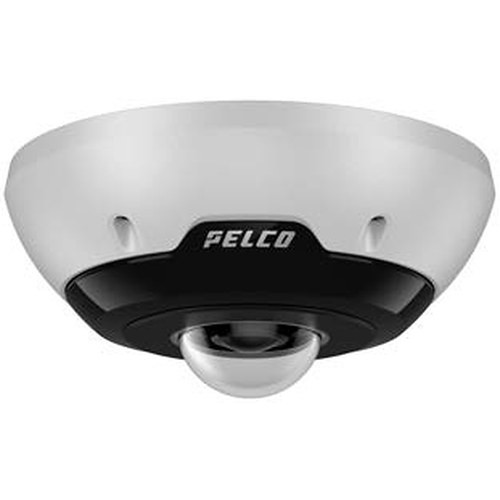
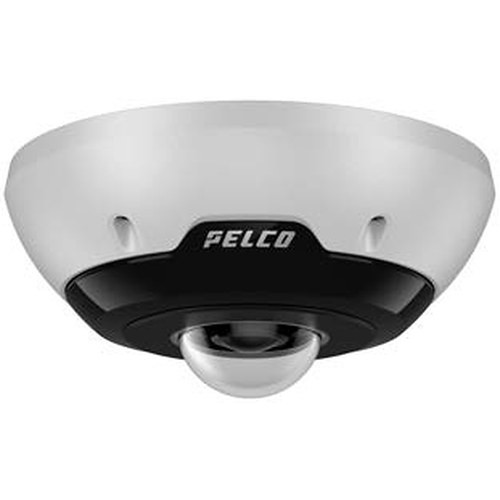
Both the Pelco SRXF3-8360-ERS and SRXF3-8360-ES belong to the Sarix Fisheye 3 series and are 8MP (3264 × 2448) outdoor 360° fisheye cameras powered by PoE+ Class 3. They share the same sensor resolution, lens focal length, frame rate, analytics engine, ONVIF profiles, impact rating, operating temperature range, and five-year warranty. The comparison centers on the key differentiator called out across the specs: the ERS carries integrated IR illumination for active night vision, while the ES relies on passive low-light sensitivity without onboard IR.
In This Guide
How do the imaging specs compare?
Both cameras resolve 8MP at 3264 × 2448 pixels through a 2.7 mm f/2.5 (F2.0 aperture) lens covering 180°/360° fields of view, and both deliver 12.5 fps at full resolution. WDR is listed for each model at up to 83 dB. Video compression supports H.264 and H.265 on both units. On these core imaging parameters the two cameras are functionally identical per the provided specifications.
The meaningful divergence is in low-light and night operation. The SRXF3-8360-ERS specifies 360° integrated IR illumination at 850 nm, enabling active illumination across the full panoramic field after dark. The SRXF3-8360-ES does not list IR illumination; instead it specifies a minimum illumination of 0.10 lux with day/night operation, relying on passive ambient light sensitivity. No minimum illumination figure is provided for the ERS in the supplied specs, and no IR range distance (in meters) is specified for either model.
What about installation and environment?
Both cameras are rated IP66 and IK10. The ERS additionally carries an IP67 rating and NEMA 4X certification per its spec sheet; the ES lists IP66 and IP67 but does not list NEMA 4X in its specifications. Both operate from −40 °C to +60 °C and are explicitly marked Outdoor Ready. Both are powered by PoE+ (802.3at) Class 3 over a single Ethernet run—no separate power supply is required.
Mounting options are identical across both: Wall, Ceiling, Pole, Pendant, and Corner. The ES provides explicit metric dimensions of 153.5 mm × 153.5 mm × 71.3 mm; the ERS lists 6" × 6" × 2.81" (approximately 152.4 mm × 152.4 mm × 71.4 mm). Both weigh 1.001 kg with wall mount. Internal memory is listed as 4 GB RAM and 4 GB Flash on both units.
Which fits your VMS and analytics better?
Both cameras support ONVIF Profile S and Profile T, making them compatible with any conformant VMS platform. Both include Pelco Smart Analytics with 8 configurable behaviors, H.265/H.264 compression with HDSM Smart Codec technology and idle-scene mode for bandwidth management, and microSD on-board storage. Audio microphone support is listed for both models.
No functional difference is evident in the integration or analytics specifications between the two models. VMS compatibility, ONVIF conformance level, analytics behavior count, edge storage type, audio capability, and compression options are identical as documented. Buyers whose VMS manages IR cut-filter switching will benefit from day/night mode support present on both units.
Which should you choose: the SRXF3-8360-ERS or the SRXF3-8360-ES?
Our take: The SRXF3-8360-ERS is the stronger choice when the deployment site has little or no ambient lighting after dark, because it incorporates 360° integrated IR illumination at 850 nm—a capability the SRXF3-8360-ES does not list. Conversely, the SRXF3-8360-ES specifies a 0.10 lux minimum illumination figure for passive low-light sensitivity, which suits environments with sufficient ambient light (parking structures, retail interiors, lit perimeters) where active IR is unnecessary or undesirable. The ERS also adds NEMA 4X certification absent from the ES spec sheet, offering an incremental edge in corrosive or wash-down environments. On every other specified dimension—8MP resolution, 12.5 fps, 83 dB WDR, PoE+ Class 3, IK10, −40 °C to +60 °C, ONVIF Profile S/T, 8-behavior analytics, microSD, and 5-year warranty—the two cameras are equivalent. Choose the ERS for unlit outdoor perimeters requiring active IR; choose the ES for lit sites where passive sensitivity at 0.10 lux is sufficient.
Side-by-Side Comparison
Spec-for-spec, from manufacturer data.
| Specification | Pelco SRXF3-8360-ERS | Pelco SRXF3-8360-ES |
|---|---|---|
| Series | Sarix Fisheye 3 | Sarix Fisheye 3 |
| Max Resolution | 3264 × 2448 (8MP) | 3264 × 2448 (8MP) |
| Lens / Focal Length | 2.7 mm f/2.5 | 2.7 mm f/2.5 |
| Aperture | F2.0 | F2.0 |
| Field of View | 180° / 360° | 180° / 360° |
| Max Frame Rate | 12.5 fps (full resolution) | 12.5 fps (full resolution) |
| Min Illumination | — | 0.10 lux |
| IR Illumination | 360° integrated IR, 850 nm | — |
| WDR | Up to 83 dB | Up to 83 dB |
| Video Compression | H.265 / H.264 | H.265 / H.264 |
| IP Rating | IP66 / IP67 / NEMA 4X | IP66 / IP67 |
| Impact Rating | IK10 | IK10 |
| Operating Temperature | −40 °C to +60 °C | −40 °C to +60 °C |
| Power Input / PoE Class | PoE+ 802.3at, Class 3 | PoE+ 802.3at, Class 3 |
| ONVIF Compliance | Profile S; Profile T | Profile S; Profile T |
| Edge Analytics | Pelco Smart Analytics, 8 behaviors | Pelco Smart Analytics, 8 behaviors |
| Audio | Microphone supported | Microphone supported |
| Edge Storage | microSD | microSD |
| Dimensions | 6" × 6" × 2.81" | 153.5 × 153.5 × 71.3 mm |
| Weight (with wall mount) | 1.001 kg (2.21 lb) | 1.001 kg (2.21 lb) |
| Warranty | 5-year | 5-year |
Frequently Asked Questions
Which should you choose: the SRXF3-8360-ERS or the SRXF3-8360-ES?
The SRXF3-8360-ERS is the stronger choice when the deployment site has little or no ambient lighting after dark, because it incorporates 360° integrated IR illumination at 850 nm—a capability the SRXF3-8360-ES does not list. Conversely, the SRXF3-8360-ES specifies a 0.10 lux minimum illumination figure for passive low-light sensitivity, which suits environments with sufficient ambient light (parking structures, retail interiors, lit perimeters) where active IR is unnecessary or undesirable. The ERS also adds NEMA 4X certification absent from the ES spec sheet, offering an incremental edge in corrosive or wash-down environments. On every other specified dimension—8MP resolution, 12.5 fps, 83 dB WDR, PoE+ Class 3, IK10, −40 °C to +60 °C, ONVIF Profile S/T, 8-behavior analytics, microSD, and 5-year warranty—the two cameras are equivalent. Choose the ERS for unlit outdoor perimeters requiring active IR; choose the ES for lit sites where passive sensitivity at 0.10 lux is sufficient.
Is the SRXF3-8360-ERS or SRXF3-8360-ES better for low light?
The SRXF3-8360-ERS includes 360° integrated IR illumination at 850 nm, making it the specified choice for completely unlit environments where active illumination is required. The SRXF3-8360-ES does not list IR illumination but specifies a 0.10 lux minimum illumination threshold, which is suitable for sites with residual ambient light. No IR range distance in meters is specified for the ERS in the provided data.
Do both cameras work with the same VMS platforms?
Yes. Both the SRXF3-8360-ERS and SRXF3-8360-ES support ONVIF Profile S and Profile T, so either will integrate with any ONVIF-conformant VMS. Both also include Pelco Smart Analytics with 8 configurable behaviors and identical H.264/H.265 compression options, so there is no integration difference between the two models based on the provided specifications.
Are the physical installation requirements the same for both cameras?
Largely yes. Both are PoE+ Class 3 (802.3at) and support identical mounting options: Wall, Ceiling, Pole, Pendant, and Corner. Both weigh 1.001 kg with wall mount and have near-identical dimensions (ES: 153.5 × 153.5 × 71.3 mm; ERS: 6" × 6" × 2.81"). Both are rated IP66 and IK10; the ERS additionally lists IP67 and NEMA 4X, which the ES does not specify.
Get a Second Opinion on Your Camera Choice
Share your site layout, coverage goals, and budget. Our team will validate the camera selection, flag anything we would change, and recommend products that match the use case.