
Pelco SRXE4-2X33-EBT-IR1 vs Pelco SRXE4-6V9-EBT-IR1: Specification Comparison
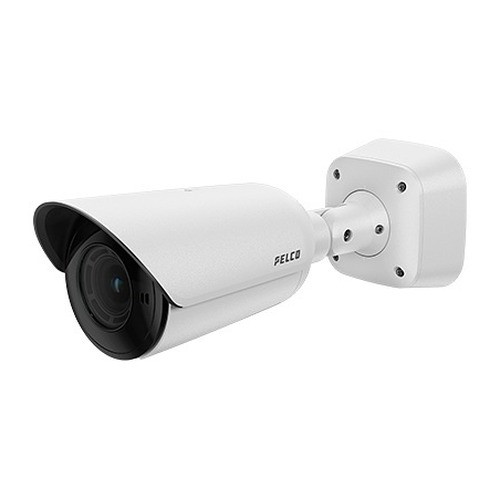
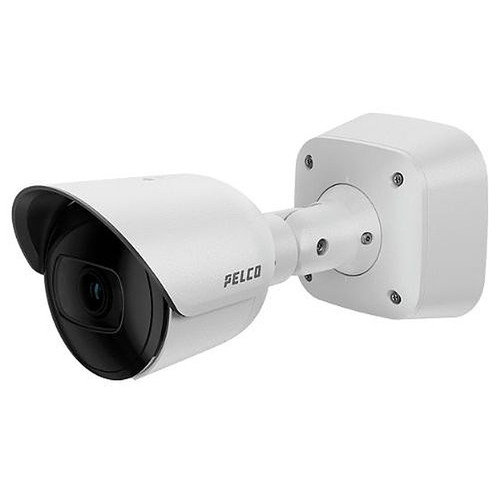
Both the Pelco SRXE4-2X33-EBT-IR1 and SRXE4-6V9-EBT-IR1 are 4MP outdoor bullet cameras from the Sarix Enhanced 4 Series, designed for demanding perimeter and site-security applications. The two models share the same sensor platform, resolution class, and housing family, making them direct cross-shop candidates for integrators evaluating fixed IP bullet cameras. The comparison below is built strictly from the provided specifications; where a value is absent from one model's spec sheet, it is noted explicitly.
In This Guide
How do the imaging specs compare?
Both cameras deliver identical core imaging performance on paper: a 1/1.8-inch progressive-scan CMOS sensor, 2560×1440 (4MP) maximum resolution at up to 60 fps, and a 130 dB SureVision WDR rating. The lens on each unit is described as a 4.4–9.3 mm motorized varifocal covering a 32–109° horizontal field of view, and minimum illumination is stated as 0.003 lux in color mode and 0 lux with IR active. Aperture is F1.4 on both. Neither model has a documented imaging advantage over the other based on the provided specifications.
Integrated IR illumination is cited as an approximately 70 m range at 850 nm on both models. The SRXE4-2X33-EBT-IR1 spec sheet references an 'IR1 module' and one internal field notes '~70 m range'; the SRXE4-6V9-EBT-IR1 spec sheet similarly states '~70 m (850 nm).' Neither datasheet provides a measured lux-at-distance figure or beam angle for the IR module, so a quantitative IR comparison beyond the nominal 70 m rating cannot be made from the provided data. Video compression options are identical: H.265, H.264, and Motion JPEG.
What about installation and environment?
Environmental ratings are identical across both models: IP66, IP67, IP68 (2 m submersion for 2 hours), IPX9K high-pressure wash, and NEMA 4X. Impact resistance is rated IK11 on both. Operating temperature range is -50 °C to +65 °C on each, specified with PoE+ or external power. Both are white-housing outdoor bullet cameras. No dimensional or weight data is present in the provided specifications for either model, so physical installation clearance cannot be compared.
Power delivery is listed as PoE+ (802.3at) for both cameras. The SRXE4-6V9-EBT-IR1 spec sheet additionally notes 12/24 Vdc at approximately 13 W as an alternative power source; the SRXE4-2X33-EBT-IR1 spec sheet does not document a DC voltage input option in the provided data. Installers who require local 12/24 Vdc feed where PoE infrastructure is unavailable should verify whether the SRXE4-2X33-EBT-IR1 supports that input before specifying it. Mounting compatibility—wall, pole, corner—is referenced in the SRXE4-2X33-EBT-IR1 ancillary fields but is not explicitly stated for the SRXE4-6V9-EBT-IR1 in the provided data.
Which fits your VMS and analytics better?
ONVIF compliance is identical on both: Profile S, Profile T, Profile G, and Profile M. Edge analytics capabilities listed are also identical: Person/Vehicle Detection, Direction Violation, Loitering, Beam Crossing, Crowd Detection, Audio Analytics, and Tamper Alert. Neither model is documented as having a vendor-specific VMS integration advantage in the provided specifications; both carry NDAA Section 889 and TAA compliance, and both implement FIPS 140-3 Level 3, TPM, Secure Boot, HTTPS, and 802.1X for cybersecurity.
On-board storage via microSD is supported on both models. Audio capability is referenced in the SRXE4-2X33-EBT-IR1 ancillary fields ('Microphone supported') and is implied by the Audio Analytics listing on both, but neither datasheet specifies whether audio input/output ports are built into the camera body or require an accessory module. Bandwidth management features (Smart Compression, idle scene mode) are noted in the SRXE4-2X33-EBT-IR1 ancillary fields; equivalent detail is not present in the SRXE4-6V9-EBT-IR1 provided data, though the shared platform makes it likely—verify against the full SRXE4-6V9-EBT-IR1 datasheet before assuming parity.
Which should you choose: the SRXE4-2X33-EBT-IR1 or the SRXE4-6V9-EBT-IR1?
Our take: The SRXE4-2X33-EBT-IR1 and SRXE4-6V9-EBT-IR1 are functionally equivalent on every spec the provided data allows a direct comparison to be made: identical 4MP / 60 fps sensor, identical 4.4–9.3 mm motorized varifocal lens, identical 130 dB WDR, identical IP66/IP67/IP68/IK11 environmental ratings, identical -50 °C to +65 °C operating range, and identical ONVIF Profile S/T/G/M and analytics sets. The one documented difference is that the SRXE4-6V9-EBT-IR1 spec sheet explicitly lists 12/24 Vdc as a secondary power option alongside PoE+, while the SRXE4-2X33-EBT-IR1 provided data does not. Integrators on sites with existing low-voltage DC runs but no PoE switches should favor the SRXE4-6V9-EBT-IR1 pending confirmation of that input on the full datasheet. For all other installation scenarios, selection should be driven by part-number availability or accessory compatibility rather than any imaging or feature difference identifiable from the supplied specifications.
Side-by-Side Comparison
Spec-for-spec, from manufacturer data.
| Specification | Pelco SRXE4-2X33-EBT-IR1 | Pelco SRXE4-6V9-EBT-IR1 |
|---|---|---|
| Series | Sarix Enhanced 4 | Sarix Enhanced 4 |
| Camera Type | Bullet | Bullet |
| Resolution | 4MP (2560 × 1440) | 4MP (2560 × 1440) |
| Image Sensor | 1/1.8 in. progressive scan CMOS | 1/1.8 in. progressive scan CMOS |
| Max Frame Rate | 60 fps | 60 fps |
| Lens / Focal Length | 4.4–9.3 mm motorized varifocal | 4.4–9.3 mm motorized varifocal |
| HFOV | 32–109° | 32–109° |
| Aperture | F1.4 | F1.4 |
| Min Illumination | 0.003 lux color / 0 lux IR | 0.003 lux color / 0 lux IR |
| IR Range / Wavelength | ~70 m / 850 nm | ~70 m / 850 nm |
| WDR | 130 dB SureVision | 130 dB SureVision |
| Video Compression | H.265; H.264; Motion JPEG | H.265; H.264; Motion JPEG |
| IP / Ingress Rating | IP66 / IP67 / IP68 / IPX9K / NEMA 4X | IP66 / IP67 / IP68 / IPX9K / NEMA 4X |
| Impact Rating | IK11 | IK11 |
| Operating Temperature | -50 °C to +65 °C | -50 °C to +65 °C |
| Power Input | PoE+ (802.3at) | PoE+ (802.3at) or 12/24 Vdc (~13 W) |
| Edge Storage | microSD | microSD |
| ONVIF Profiles | S, T, G, M | S, T, G, M |
| Cybersecurity | FIPS 140-3 L3; TPM; Secure Boot; HTTPS; 802.1X | FIPS 140-3 L3; TPM; Secure Boot; HTTPS; 802.1X |
| Compliance | NDAA Sec. 889; TAA | NDAA Sec. 889; TAA |
| Warranty | 5 years | 5 years |
Frequently Asked Questions
Which should you choose: the SRXE4-2X33-EBT-IR1 or the SRXE4-6V9-EBT-IR1?
The SRXE4-2X33-EBT-IR1 and SRXE4-6V9-EBT-IR1 are functionally equivalent on every spec the provided data allows a direct comparison to be made: identical 4MP / 60 fps sensor, identical 4.4–9.3 mm motorized varifocal lens, identical 130 dB WDR, identical IP66/IP67/IP68/IK11 environmental ratings, identical -50 °C to +65 °C operating range, and identical ONVIF Profile S/T/G/M and analytics sets. The one documented difference is that the SRXE4-6V9-EBT-IR1 spec sheet explicitly lists 12/24 Vdc as a secondary power option alongside PoE+, while the SRXE4-2X33-EBT-IR1 provided data does not. Integrators on sites with existing low-voltage DC runs but no PoE switches should favor the SRXE4-6V9-EBT-IR1 pending confirmation of that input on the full datasheet. For all other installation scenarios, selection should be driven by part-number availability or accessory compatibility rather than any imaging or feature difference identifiable from the supplied specifications.
Is the SRXE4-2X33-EBT-IR1 or SRXE4-6V9-EBT-IR1 better for low-light performance?
Based on the provided specifications, both cameras are rated identically for low-light performance: 0.003 lux in color mode and 0 lux with IR active, with an approximately 70 m IR range at 850 nm and an F1.4 aperture. Neither model has a documented low-light advantage over the other from the supplied data.
Can either camera be powered without a PoE switch?
The SRXE4-6V9-EBT-IR1 spec sheet explicitly lists 12/24 Vdc (approximately 13 W) as an alternative to PoE+. The SRXE4-2X33-EBT-IR1 provided specifications do not document a DC voltage input option; consult the full Pelco datasheet for that model before assuming it supports direct DC power.
Do both cameras support the same edge analytics and VMS integrations?
Yes, based on the provided specifications. Both list the same Smart Analytics suite—Person/Vehicle Detection, Direction Violation, Loitering, Beam Crossing, Crowd Detection, Audio Analytics, and Tamper Alert—and both carry ONVIF Profile S, T, G, and M compliance. Both also hold NDAA Section 889 and TAA compliance, making them equivalent for federal and regulated-sector deployments.
Get a Second Opinion on Your Camera Choice
Share your site layout, coverage goals, and budget. Our team will validate the camera selection, flag anything we would change, and recommend products that match the use case.