
Pelco IMF82-1I vs Pelco SRXF3-8180-ES: Specification Comparison
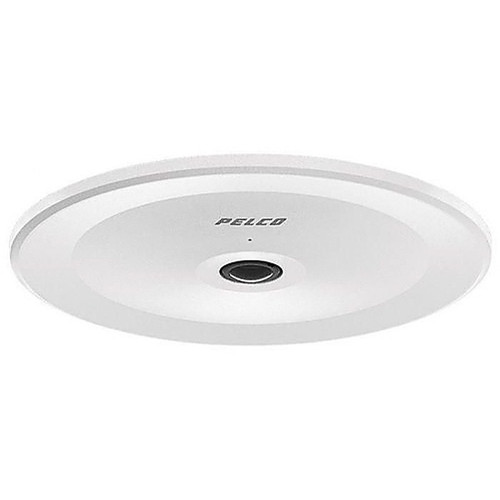
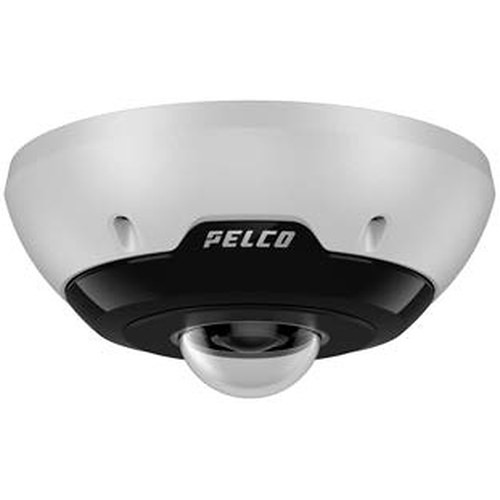
Both the Pelco IMF82-1I and SRXF3-8180-ES belong to the Sarix Fisheye 3 series, sharing an identical 8MP (3264×2448) sensor, 2.7 mm f/2.5 lens, and 180°/360° fisheye field of view. The comparison is therefore a deployment-context decision: the IMF82-1I is specified for indoor use, while the SRXF3-8180-ES carries outdoor-rated ingress protection and an extended cold-temperature floor. Installers cross-shopping these two are typically choosing between a cost-appropriate interior unit and a hardened exterior variant of the same imaging platform.
In This Guide
How do the imaging specs compare?
Both cameras share identical core imaging performance on every measurable axis. Sensor resolution is 3264×2448 on each unit. The lens is 2.7 mm f/2.5 (focal length also listed as 1.4 mm in shared spec fields) with an aperture of F2.0 and a minimum illumination of 0.10 lux for both models. Maximum frame rate at full resolution is 12.5 fps on both. WDR is present on each, rated up to 83 dB per the shared Wdr field.
Video compression support is identical: H.265 and H.264 on both units. The SRXF3-8180-ES spec sheet lists a Resolution Pixels field of 3840×2160, which is absent from the IMF82-1I spec data; that field may reflect a secondary output mode rather than the primary sensor, and no equivalent field is provided for the IMF82-1I, so no comparison can be drawn. IR wavelength is noted as 850 nm with day/night capability on both. In summary, imaging performance between the two is spec-equivalent.
What about installation and environment?
The environmental delta is the primary differentiator. The IMF82-1I carries an IP52 rating (dust-protected, drip-proof) and is classified Indoor, making it appropriate for lobbies, atriums, and climate-controlled spaces. Its operating temperature range is -10°C to +60°C. The SRXF3-8180-ES is rated IP66/IP67 (dust-tight, jet-water and immersion resistant) and IK10, with an operating temperature floor of -40°C — a 30-degree cold advantage over the IMF82-1I, which also carries IK10. The SRXF3-8180-ES is classified Outdoor.
Both units are powered by PoE+ (802.3at, Class 3) over a single Ethernet run, simplifying cabling on either deployment. Mounting options listed for both include wall, ceiling, pole, pendant, and corner. The IMF82-1I dimensions are 6"×6"×2.4"; the SRXF3-8180-ES dimensions are 153.5 mm×153.5 mm×71.3 mm (approximately 6.04"×6.04"×2.81") with a stated weight of 1.001 kg (2.21 lb) including wall mount — no weight is provided for the IMF82-1I. Memory differs: the IMF82-1I lists 2 GB RAM / 512 MB Flash; the SRXF3-8180-ES lists 4 GB RAM / 4 GB Flash.
Which fits your VMS and analytics better?
ONVIF compliance is identical on both: Profile S and Profile T are listed in the primary spec fields; the IMF82-1I additionally lists ONVIF Profile G in its extended fields, which enables on-camera recording and retrieval — no Profile G entry appears in the SRXF3-8180-ES spec data, so Profile G cannot be confirmed for that model. Both cameras support Pelco Smart Analytics with 8 on-camera behaviors, including object detection and loitering per the IMF82-1I supplemental fields; the SRXF3-8180-ES spec data confirms analytics presence but does not enumerate behavior names individually.
Edge storage via microSD is supported on both. Audio input (microphone supported) is listed for both. HTTPS encryption is confirmed for both. Bandwidth management via HDSM Smart Codec technology and idle scene mode is noted in the SRXF3-8180-ES spec data; no equivalent field appears for the IMF82-1I. Both units carry the same certifications base (UL, cUL, CE, RoHS, RCM, EAC, UKCA, KC, BIS, NOM per the IMF82-1I data; the SRXF3-8180-ES certifications field contains mounting-type text rather than certification marks, so a direct comparison cannot be made from spec data alone).
Which should you choose: the IMF82-1I or the SRXF3-8180-ES?
Our take: The SRXF3-8180-ES is the stronger choice when the deployment site is exposed to weather, wash-down, or sustained sub-zero temperatures. Its IP66/IP67 rating versus the IMF82-1I's IP52 is the decisive spec delta for any outdoor or semi-outdoor installation. Its operating temperature floor of -40°C versus -10°C on the IMF82-1I adds a 30-degree cold-margin relevant to parking structures, building exteriors, and unheated enclosures. The SRXF3-8180-ES also specifies 4 GB RAM and 4 GB Flash versus the IMF82-1I's 2 GB RAM and 512 MB Flash, which may benefit edge-analytics workloads and local buffering. For conditioned interior spaces — offices, corridors, retail floors — the IMF82-1I's IP52/IK10 rating is sufficient, and its confirmed ONVIF Profile G support enables on-camera recording workflows not confirmed for the SRXF3-8180-ES. Both models are otherwise spec-equivalent on imaging.
Side-by-Side Comparison
Spec-for-spec, from manufacturer data.
| Specification | Pelco IMF82-1I | Pelco SRXF3-8180-ES |
|---|---|---|
| Series | Sarix Fisheye 3 | Sarix Fisheye 3 |
| Max Resolution | 3264 × 2448 | 3264 × 2448 |
| Lens / Focal Length | 2.7 mm f/2.5 | 2.7 mm f/2.5 |
| Aperture | F2.0 | F2.0 |
| Min Illumination | 0.10 lux | 0.10 lux |
| IR Wavelength | 850 nm | 850 nm |
| WDR | Up to 83 dB | Up to 83 dB |
| Max Frame Rate | 12.5 fps | 12.5 fps |
| Video Compression | H.265 / H.264 | H.265 / H.264 |
| IP Rating | IP52 | IP66 / IP67 |
| Impact Rating | IK10 | IK10 |
| Operating Temperature | -10°C to +60°C | -40°C to +60°C |
| Environment Rating | Indoor | Outdoor |
| Power Input / PoE Class | PoE+ (802.3at) / Class 3 | PoE+ (802.3at) / Class 3 |
| ONVIF Profiles | Profile S, Profile T, Profile G | Profile S, Profile T |
| Edge Storage | microSD | microSD |
| Audio | Microphone supported | Microphone supported |
| On-Camera Memory | 2 GB RAM / 512 MB Flash | 4 GB RAM / 4 GB Flash |
| Dimensions | 6" × 6" × 2.4" | 153.5 mm × 153.5 mm × 71.3 mm |
| Weight | — | 1.001 kg (2.21 lb) w/ wall mount |
| Warranty | 5-year | 5-year |
Frequently Asked Questions
Which should you choose: the IMF82-1I or the SRXF3-8180-ES?
The SRXF3-8180-ES is the stronger choice when the deployment site is exposed to weather, wash-down, or sustained sub-zero temperatures. Its IP66/IP67 rating versus the IMF82-1I's IP52 is the decisive spec delta for any outdoor or semi-outdoor installation. Its operating temperature floor of -40°C versus -10°C on the IMF82-1I adds a 30-degree cold-margin relevant to parking structures, building exteriors, and unheated enclosures. The SRXF3-8180-ES also specifies 4 GB RAM and 4 GB Flash versus the IMF82-1I's 2 GB RAM and 512 MB Flash, which may benefit edge-analytics workloads and local buffering. For conditioned interior spaces — offices, corridors, retail floors — the IMF82-1I's IP52/IK10 rating is sufficient, and its confirmed ONVIF Profile G support enables on-camera recording workflows not confirmed for the SRXF3-8180-ES. Both models are otherwise spec-equivalent on imaging.
Is the IMF82-1I or SRXF3-8180-ES better for low-light performance?
Both cameras are spec-equivalent for low light. Each lists a minimum illumination of 0.10 lux, 850 nm IR, day/night switching, and WDR up to 83 dB. Neither model has a low-light advantage over the other based on the provided specifications.
Can I use the SRXF3-8180-ES indoors instead of the IMF82-1I?
Yes. The SRXF3-8180-ES's IP66/IP67 and IK10 ratings exceed the IMF82-1I's IP52/IK10 ratings, so it is suitable for indoor use as well. The trade-off is typically cost and, in some installations, a slightly larger housing footprint — the SRXF3-8180-ES is 71.3 mm deep versus the IMF82-1I's 2.4" (approximately 61 mm). No ceiling-tile or flush-mount spec is provided for either model.
Do both cameras support on-camera recording without a separate NVR?
The IMF82-1I explicitly lists ONVIF Profile G, which enables on-camera recording and remote retrieval directly from the camera. ONVIF Profile G is not listed in the SRXF3-8180-ES spec data. Both cameras support microSD edge storage, but Profile G support for the SRXF3-8180-ES cannot be confirmed from the specifications provided.
Get a Second Opinion on Your Camera Choice
Share your site layout, coverage goals, and budget. Our team will validate the camera selection, flag anything we would change, and recommend products that match the use case.