
i-PRO S71300A-F3 vs i-PRO U11300-V2: Specification Comparison
Both the i-PRO WV-S71300A-F3 and WV-U11300-V2 are 2MP indoor wired box cameras sharing the same 1/2.8-type CMOS sensor and 30fps frame rate, making them a legitimate cross-shop for installers evaluating indoor box-form-factor IP cameras. The key differentiators are lens architecture (fixed vs. motorized varifocal), low-light capability, dynamic range, and on-board analytics depth. This comparison draws exclusively from the provided specifications for each model.
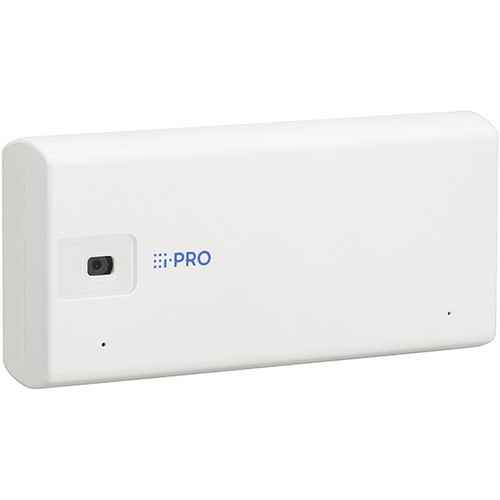
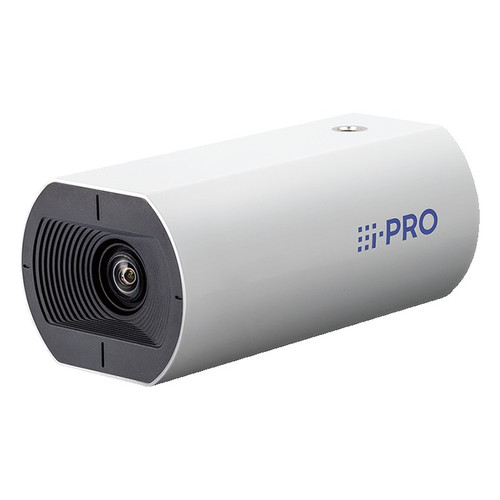
In This Guide
How do the imaging specs compare?
Both cameras use an approximately 1/2.8-type CMOS sensor delivering 1920×1080 at 30fps with H.265/H.264 compression and a shared G.726/G.711/AAC-LC audio codec set. The S71300A-F3 uses a fixed 3.2mm F2.0 lens providing an 81.1° (H) × 51.4° (V) field of view with no optical zoom and a digital extra zoom of 1.0–3.0× at 640×360 resolution. The U11300-V2 features a motorized 2.5× varifocal lens spanning 2.9–7.3mm (F2.0 wide, F3.0 tele), yielding a horizontal field of view of 43°–100°, giving installers post-mount focal-length adjustment without physical lens swaps.
Low-light performance diverges significantly. The S71300A-F3 is rated at 0.2 lux minimum illumination (the spec does not separately list a color figure). The U11300-V2 is rated at 0.1 lx color / 0.04 lx B&W at one sensitivity tier, and 0.006 lx color / 0.0025 lx B&W at its lower limit — a roughly 33× advantage in extreme low light. The U11300-V2 also adds Super Dynamic WDR up to 120 dB (level 0–31 adjustable), a spec absent from the S71300A-F3 provided data. DORI ranges differ accordingly: the S71300A-F3 detects at 44.9m fixed, while the U11300-V2 spans 32.2m (wide) to 97.5m (tele) at the detect tier, reflecting the zoom range trade-off.
What about installation and environment?
Both cameras are rated IP44 (per the S71300A-F3 spec) and indoor-only. The U11300-V2 spec does not list an IP rating in the provided data — installers should confirm before deploying in any wet or dusty area. Neither model lists an IK impact rating in the provided specifications. Operating temperature for the S71300A-F3 is −10°C to +40°C (14°F to 104°F); the U11300-V2 operates across a wider −10°C to +50°C (14°F to 122°F) range, a meaningful advantage in warmer plant or server-room environments.
Power differs in PoE class: the S71300A-F3 is listed as PoE Class 0 (up to ~15.4W allocated by the switch), while the U11300-V2 is PoE Class 2 with a specified 4.3W draw, offering more predictable switch power budgeting. Both use 802.3af. Form factor for both is box-style with RJ45 10/100Base-TX. The U11300-V2 provides published dimensions of 59mm (W) × 49mm (H) × 116mm (D) at approximately 165g; the S71300A-F3 lists 157g but does not provide body dimensions in the supplied spec data.
Which fits your VMS and analytics better?
Both cameras are ONVIF-compliant and support up to 14 simultaneous users. The U11300-V2 specifies ONVIF Profiles G, S, and T explicitly; the S71300A-F3 lists ONVIF compatibility but does not specify which profiles are supported in the provided data. The U11300-V2 publishes an extensive IPv4 and IPv6 protocol stack including RTSP, SRTP, MQTT, SFTP, LLDP, SNMPv1/v2/v3, IEEE 802.1X, and DHCPv6; the S71300A-F3 protocol list is not enumerated in the provided specs. The U11300-V2 also lists UL/c-UL/CE/IEC62368-1 and FCC/ICES/EN safety and EMC certifications; equivalent certifications for the S71300A-F3 are not provided.
Analytics depth favors the S71300A-F3 materially. It carries an Ambarella CV22 SoC and eight AI detection types including people, faces, vehicles, non-mask detection, occupancy, and AI sound classification (gunshot, yell, vehicle horn, glass break), plus scene change detection, audio detection, and signed firmware. The U11300-V2 analytics are limited to VMD (4 areas), SCD (1 area), and audio detection per the provided spec; no AI object classification or sound classification is listed. Both support microSD local storage (the U11300-V2 explicitly supports 2GB–512GB SD/SDHC/SDXC); the S71300A-F3 lists microSD support without capacity range in the provided data. Both include built-in microphones and HTTPS encryption.
Which should you choose: the S71300A-F3 or the U11300-V2?
Our take: The S71300A-F3 is the stronger choice when edge AI analytics are a deployment requirement. It provides eight AI detection types — people, faces, vehicles, non-mask, occupancy, plus audio classification for gunshot, yell, horn, and glass break — on an Ambarella CV22 SoC, none of which appear in the U11300-V2 spec. Conversely, the U11300-V2 is the better fit when optical flexibility or extreme low-light performance are priorities: its 2.5× motorized varifocal lens (2.9–7.3mm, 43°–100° H-FoV) eliminates fixed-lens repointing, its 0.006 lx color minimum illumination is roughly 33× more sensitive than the S71300A-F3's stated 0.2 lux, and its 120 dB Super Dynamic WDR handles high-contrast scenes the S71300A-F3 spec does not address. The U11300-V2 also supports a wider operating temperature (+50°C vs. +40°C) and draws only 4.3W (PoE Class 2). Choose the S71300A-F3 for analytics-driven indoor monitoring with a fixed field of view; choose the U11300-V2 for scenes demanding zoom flexibility, superior low light, or wide dynamic range.
Side-by-Side Comparison
Spec-for-spec, from manufacturer data.
| Specification | i-PRO S71300A-F3 | i-PRO U11300-V2 |
|---|---|---|
| Resolution | 2MP (1920×1080) | 2MP (1920×1080) |
| Image Sensor | Approx. 1/2.8-type CMOS | Approx. 1/2.8-type CMOS |
| Lens / Focal Length | Fixed 3.2mm, F2.0 | Motorized varifocal 2.9–7.3mm, F2.0–F3.0 |
| Optical Zoom | 1.0× (none) | 2.5× motorized |
| Horizontal Field of View | 81.1° (fixed) | 43°–100° (varifocal) |
| Min Illumination | 0.2 lux | 0.006 lx (color) / 0.0025 lx (B&W) |
| WDR / Dynamic Range | — (not specified) | 120 dB (Super Dynamic, level 0–31) |
| Max Frame Rate | 30fps | 30fps |
| Video Compression | H.265, H.264, MJPEG | H.265, H.264 |
| AI / Edge Analytics | 8 AI detection types + AI sound classification | VMD, SCD, audio detection only |
| IP Rating | IP44 | — (not specified in provided data) |
| Operating Temperature | −10°C to +40°C | −10°C to +50°C |
| Power Input / PoE Class | PoE 802.3af, Class 0 | PoE 802.3af, Class 2 (4.3W) |
| ONVIF Profiles | ONVIF (profiles not specified) | ONVIF Profile G / S / T |
| Edge Storage | microSD (capacity not specified) | microSD / SDHC / SDXC up to 512GB |
| Audio | Built-in dual omni mic; G.726/G.711/AAC-LC | Built-in mic; G.726/G.711/AAC-LC; half/full duplex |
| Weight | 157g (excl. base/cover) | Approx. 165g |
| Warranty | 5-Year | 5-Year |
Frequently Asked Questions
Which should you choose: the S71300A-F3 or the U11300-V2?
The S71300A-F3 is the stronger choice when edge AI analytics are a deployment requirement. It provides eight AI detection types — people, faces, vehicles, non-mask, occupancy, plus audio classification for gunshot, yell, horn, and glass break — on an Ambarella CV22 SoC, none of which appear in the U11300-V2 spec. Conversely, the U11300-V2 is the better fit when optical flexibility or extreme low-light performance are priorities: its 2.5× motorized varifocal lens (2.9–7.3mm, 43°–100° H-FoV) eliminates fixed-lens repointing, its 0.006 lx color minimum illumination is roughly 33× more sensitive than the S71300A-F3's stated 0.2 lux, and its 120 dB Super Dynamic WDR handles high-contrast scenes the S71300A-F3 spec does not address. The U11300-V2 also supports a wider operating temperature (+50°C vs. +40°C) and draws only 4.3W (PoE Class 2). Choose the S71300A-F3 for analytics-driven indoor monitoring with a fixed field of view; choose the U11300-V2 for scenes demanding zoom flexibility, superior low light, or wide dynamic range.
Is the S71300A-F3 or U11300-V2 better for low-light indoor surveillance?
The U11300-V2 is significantly more capable in low light. Its specified minimum illumination is 0.006 lx (color) and 0.0025 lx (B&W), compared to 0.2 lux for the S71300A-F3 — approximately a 33× sensitivity advantage. The U11300-V2 also adds ICR with IR control and a 120 dB Super Dynamic WDR mode; equivalent WDR figures are not provided for the S71300A-F3.
Which camera has better built-in analytics — the S71300A-F3 or the U11300-V2?
The S71300A-F3 has substantially deeper analytics per the provided specs: eight AI detection types (people, faces, vehicles, non-mask, occupancy, and more) plus AI sound classification for gunshot, yell, vehicle horn, and glass break, running on an Ambarella CV22 SoC. The U11300-V2 is listed with VMD (4 areas), SCD (1 area), and audio detection only — no AI object or sound classification is specified.
Can I adjust the field of view after mounting on either camera?
Only the U11300-V2 supports post-mount field-of-view adjustment. It has a 2.5× motorized varifocal lens (2.9–7.3mm) with motorized zoom and focus, providing a horizontal FoV of 43°–100°. The S71300A-F3 uses a fixed 3.2mm F2.0 lens with an 81.1° horizontal FoV and a digital extra zoom of up to 3.0× at reduced resolution (640×360) — no optical zoom is available.
Get a Second Opinion on Your Camera Choice
Share your site layout, coverage goals, and budget. Our team will validate the camera selection, flag anything we would change, and recommend products that match the use case.