
Honeywell 8690IB601-2 vs Zebra RS21C0-TS00ZWR: Specification Comparison
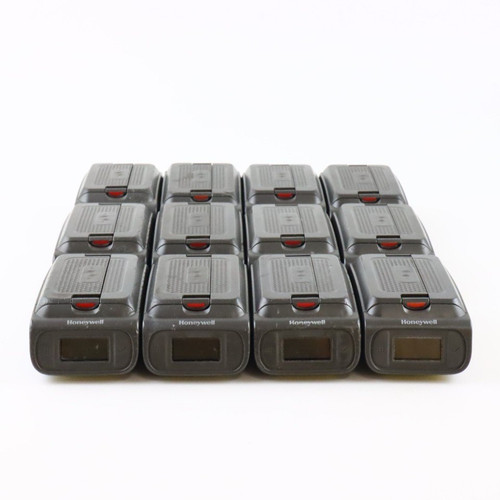
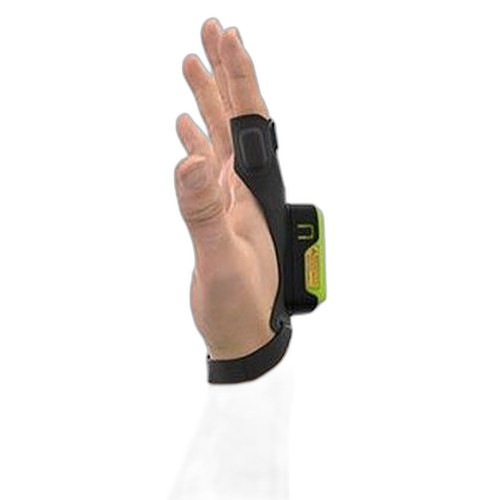
Both the Honeywell 8690IB601-2 and the Zebra RS21C0-TS00ZWR are wearable, hands-free barcode scanners targeting warehouse, logistics, and distribution center workflows where workers need both hands free during picking, packing, and receiving operations. Each captures 1D and 2D symbologies in a body-worn form factor with wireless connectivity. This comparison examines the three dimensions that most directly govern a procurement decision: scan capability and wireless infrastructure, environmental durability and physical ergonomics, and battery and operational autonomy.
In This Guide
- Which scanner offers broader scan capability and better wireless infrastructure fit?
- Which unit is better suited to physically demanding or temperature-extreme environments?
- Which scanner delivers more predictable shift-length battery life?
- Which should you choose: the 8690IB601-2 or the RS21C0-TS00ZWR?
- Side-by-Side Specs
- FAQ
Which scanner offers broader scan capability and better wireless infrastructure fit?
The Honeywell 8690IB601-2 uses Bluetooth (2.4 GHz–2.5 GHz ISM band) for its wireless link, making it dependent on a paired mobile device or Bluetooth access point infrastructure rather than native Wi-Fi. It decodes 1D and 2D barcodes with an omni-directional scan pattern, and its specified read range spans 44 mm to 552 mm (1.7 in to 21.7 in) for UPC symbologies.
The Zebra RS21C0-TS00ZWR connects via 802.11 enterprise Wi-Fi, integrating directly into existing warehouse WLAN infrastructure for real-time WMS data sync without a Bluetooth intermediary. Its scan engine supports 1D linear codes (UPC, Code 128, Code 39) and 2D symbologies (QR Code, Data Matrix), and the spec sheet lists a scan rate of up to 116 scans/sec (maximum, bi-directional). The Zebra's Wi-Fi path suits environments that already run enterprise 802.11 networks and require direct, low-latency backend integration; the Honeywell's Bluetooth link suits environments pairing to a handheld host or where Wi-Fi density is limited.
Which unit is better suited to physically demanding or temperature-extreme environments?
The Honeywell 8690IB601-2 carries an IP55 rating, meaning it is tested against dust ingress (fully protected, no harmful deposit) and low-pressure water jets from any direction. Its operating temperature range is -20°C to 50°C, making it viable in freezer-adjacent or outdoor environments. At 26 g, it is exceptionally light for a ring scanner.
The Zebra RS21C0-TS00ZWR carries an IP54 rating — one step lower on the water-resistance axis (splash protection vs. jet protection). Its storage temperature range is -40°C to 70°C, but the spec data provided does not specify an operating temperature range for active scanning. Dimensionally it measures 1.9 in H × 1.4 in W × 1.9 in D and weighs 56.7 g (2.0 oz.), making it more than twice the weight of the Honeywell unit. Buyers in freezer warehouses or outdoor logistics should note the Honeywell's documented -20°C operating floor and higher IP rating; for the Zebra, active operating temperature limits are not stated in the provided specifications.
Which scanner delivers more predictable shift-length battery life?
The Honeywell 8690IB601-2 carries a 420 mAh battery and is rated by Honeywell for 'all-shift capability,' indicating the design intent of covering a full 8–10 hour shift on a single charge. No runtime hours figure is specified in the provided data, but the all-shift claim is explicitly listed as a spec attribute.
The Zebra RS21C0-TS00ZWR's battery specification states 'Backup Rechargeable UPS battery for operation during [power change]' — a description consistent with a hot-swap or backup cell rather than a primary runtime specification. No mAh capacity or shift-length runtime figure is provided in the specifications supplied. Buyers requiring a quantified battery runtime guarantee will find a direct figure only for the Honeywell. The Zebra's battery architecture appears to include a backup/UPS cell to sustain operation during battery swaps, but primary runtime data is absent from the provided specs.
Which should you choose: the 8690IB601-2 or the RS21C0-TS00ZWR?
Our take: The 8690IB601-2 is the stronger choice when the deployment requires freezer or wide-temperature-range operation, a higher ingress-protection rating, and a quantified battery runtime claim. Spec-for-spec, the Honeywell holds a documented -20°C to 50°C operating range versus no stated operating temperature for the Zebra; an IP55 rating versus the Zebra's IP54; and an explicit 420 mAh all-shift battery spec versus an unquantified backup-cell description on the Zebra. The RS21C0-TS00ZWR is the stronger choice when the facility runs an existing 802.11 enterprise WLAN and needs direct, real-time WMS integration without a Bluetooth intermediary host device, and when scan throughput is a priority — its documented 116 scans/sec maximum rate has no stated equivalent in the Honeywell specs. Warranty also differs materially: Honeywell provides 3 years versus Zebra's 1 year. Platform fit — Bluetooth-dependent host pairing versus native Wi-Fi — is likely the single most decisive infrastructure factor.
Side-by-Side Comparison
Spec-for-spec, from manufacturer data.
| Specification | Honeywell 8690IB601-2 | Zebra RS21C0-TS00ZWR |
|---|---|---|
| Product Type | Wearable Ring Barcode Scanner | Wearable Body-Worn Mobile Computer |
| Series / Family | 8680i | — |
| Scan Capability | 1D and 2D | 1D and 2D (UPC, Code 39, Code 128, QR, Data Matrix) |
| Scan Pattern | Omni-directional | — |
| Scan Rate | — | 92 min / 104 typical / 116 max scans/sec (bi-directional) |
| Wireless Connectivity | Bluetooth 2.4–2.5 GHz (ISM) | 802.11 Enterprise Wi-Fi |
| IP Rating | IP55 | IP54 |
| Operating Temperature | -20°C to 50°C | Not specified in provided specs |
| Storage Temperature | — | -40°C to 70°C |
| Weight | 26 g | 56.7 g (2.0 oz.) |
| Dimensions | — | 1.9 in H x 1.4 in W x 1.9 in D |
| Battery Capacity | 420 mAh | Not specified (backup UPS cell noted) |
| Battery Life Claim | All-shift capability | — |
| Warranty | 3 years | 1 year |
| UPC Read Range | 44 mm to 552 mm (1.7 in to 21.7 in) | — |
| Part Number | 8690IB601-2 | RS21C0-TS00ZWR |
Frequently Asked Questions
Which should you choose: the 8690IB601-2 or the RS21C0-TS00ZWR?
The 8690IB601-2 is the stronger choice when the deployment requires freezer or wide-temperature-range operation, a higher ingress-protection rating, and a quantified battery runtime claim. Spec-for-spec, the Honeywell holds a documented -20°C to 50°C operating range versus no stated operating temperature for the Zebra; an IP55 rating versus the Zebra's IP54; and an explicit 420 mAh all-shift battery spec versus an unquantified backup-cell description on the Zebra. The RS21C0-TS00ZWR is the stronger choice when the facility runs an existing 802.11 enterprise WLAN and needs direct, real-time WMS integration without a Bluetooth intermediary host device, and when scan throughput is a priority — its documented 116 scans/sec maximum rate has no stated equivalent in the Honeywell specs. Warranty also differs materially: Honeywell provides 3 years versus Zebra's 1 year. Platform fit — Bluetooth-dependent host pairing versus native Wi-Fi — is likely the single most decisive infrastructure factor.
Is the 8690IB601-2 or RS21C0-TS00ZWR better for freezer warehouse operations?
Based on provided specifications, the Honeywell 8690IB601-2 is the documented choice for cold environments. It carries a stated operating temperature range of -20°C to 50°C. The Zebra RS21C0-TS00ZWR lists a storage temperature of -40°C to 70°C, but no active operating temperature range for scanning is provided in its specifications, so a direct cold-environment operating comparison cannot be made from the data available.
Which scanner integrates more easily into a warehouse management system (WMS)?
The Zebra RS21C0-TS00ZWR connects via 802.11 enterprise Wi-Fi, enabling direct, real-time data sync to WMS and backend systems without an intermediary device. The Honeywell 8690IB601-2 uses Bluetooth (2.4–2.5 GHz), which typically requires pairing to a host mobile computer or Bluetooth access point before reaching the WMS. In a facility with existing enterprise Wi-Fi infrastructure, the Zebra provides a more direct integration path.
Is there a significant difference in warranty coverage between the two scanners?
Yes. The Honeywell 8690IB601-2 carries a 3-year warranty per its listed specifications. The Zebra RS21C0-TS00ZWR is listed with a 1-year warranty. For high-utilization warehouse deployments where scanner longevity is a total-cost-of-ownership factor, the Honeywell's warranty period is three times longer based on the specifications provided.
More Barcode Scanner Comparisons
- Unitech HT730-LJ6122BG vs Datalogic HS7500SR
- Unitech HT730-LJ6122BG vs Honeywell 8690IB601-2
- Unitech HT730-LJ6122BG vs Honeywell 8690IB201-2-N
- Unitech HT730-LJ6122BG vs Honeywell 8680I400-2
- Unitech HT730-LJ6122BG vs Unitech HT730-LJ6142BG
- Unitech HT730-LJ6142BG vs Datalogic HS7500SR
Barcode Scanner Buying Guides
Get a Second Opinion on Your Camera Choice
Share your site layout, coverage goals, and budget. Our team will validate the camera selection, flag anything we would change, and recommend products that match the use case.