
Unitech HT730-LJ6122BG vs Honeywell 8680I400-2: Specification Comparison
Both the Unitech HT730-LJ6122BG and the Honeywell 8680I400-2 are wearable, hands-free barcode scanners targeting warehouse and logistics environments, capable of reading 1D and 2D barcodes. However, they represent meaningfully different form factors within that class: the HT730-LJ6122BG is a body-worn Android computer with an integrated scan engine, display, and cellular radio, while the 8680I400-2 is a dedicated ring scanner peripheral designed to pair with a separate host device via Bluetooth. A buyer cross-shopping these two should be aware of this architectural distinction.
In This Guide
- What can each scanner read, and how fast does it capture barcodes?
- How long does each unit run per shift, and how well does it withstand warehouse conditions?
- How does each device connect, and what host infrastructure does it require?
- Which should you choose: the HT730-LJ6122BG or the 8680I400-2?
- Side-by-Side Specs
- FAQ
What can each scanner read, and how fast does it capture barcodes?
The Unitech HT730-LJ6122BG uses a 2D area imager operating at 60 frames per second and supports a broad symbology set: all standard 1D linear codes (Code 128, Code 39, UPC, EAN), 2D formats including QR Code, Data Matrix, PDF417, and Dot Code, plus OCR. Its scan pattern incorporates a 30-degree tilt-down design suited to body-worn use.
The Honeywell 8680I400-2 is specified as a 1D/2D wearable ring scanner with an omni-directional scan pattern and day/night vision capability for reliable reads in variable lighting conditions. No scan rate in frames per second is provided in the available specifications for the 8680I400-2.
On documented decode breadth the HT730-LJ6122BG has more explicitly listed symbologies, including Dot Code and OCR, which the 8680I400-2 specs do not enumerate. Buyers requiring OCR or Dot Code support should verify the 8680I400-2's symbology list with Honeywell directly before purchasing.
How long does each unit run per shift, and how well does it withstand warehouse conditions?
The Unitech HT730-LJ6122BG carries a 6700 mAh removable battery rated for 20–26 hours of continuous operation. Its drop specification is 1.8 m to concrete (2.4 m with optional bumper). No IP ingress-protection rating is stated in the provided specifications.
The Honeywell 8680I400-2 houses a 420 mAh battery. Because battery runtime in hours is not stated in the available specifications, a direct hour-for-hour shift comparison cannot be made from the provided data alone. The 8680I400-2 carries an IP55 rating, confirming protection against dust ingress and low-pressure water jets from any direction. No drop rating is provided in the available specifications.
The 6700 mAh vs. 420 mAh capacity difference is stark, but context matters: the HT730-LJ6122BG powers a full Android computer with a 4-inch display, 13 MP camera, and cellular radios, while the 8680I400-2 powers only the ring scanner module itself. The 8680I400-2's IP55 rating is a documented, testable environmental standard the HT730-LJ6122BG cannot be matched against from available specs.
How does each device connect, and what host infrastructure does it require?
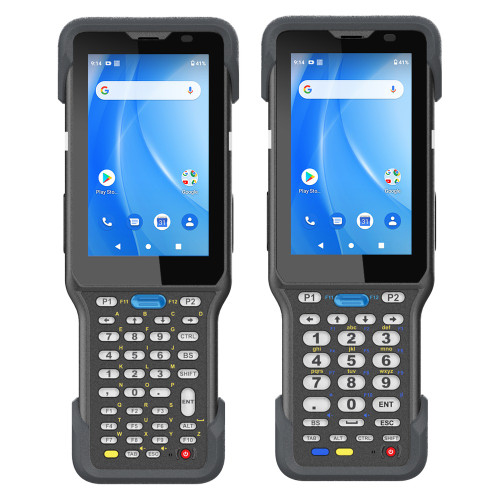
The Unitech HT730-LJ6122BG is a standalone Android 10 computer. It connects via 2×2 MU-MIMO Wi-Fi, Bluetooth, and Dual SIM 4G LTE — no separate host device is required. It runs applications natively on a 4-inch touchscreen with a 29-key physical keypad and a 13 MP camera, making it a self-contained mobile computer.
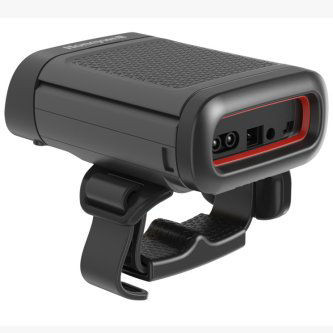
The Honeywell 8680I400-2 connects exclusively via Bluetooth (2.4 GHz–2.5 GHz ISM band) and functions as a peripheral ring scanner. It must be paired with a compatible host device — typically a wearable computer or mobile terminal supplied separately. It weighs only 26 g, enabling low fatigue in high-rep scanning roles.
This architectural difference is the most critical buying decision: the HT730-LJ6122BG is an all-in-one solution requiring no additional host hardware, while the 8680I400-2 is an accessory that adds ring-scan ergonomics to an existing Honeywell-compatible wearable computer ecosystem. Total solution cost for the 8680I400-2 deployment must account for the host device.
Which should you choose: the HT730-LJ6122BG or the 8680I400-2?
Our take: The HT730-LJ6122BG is the stronger choice when a site needs a single self-contained wearable computer with multi-shift battery endurance and cellular fallback, while the 8680I400-2 is the appropriate choice when a site already has a compatible Honeywell wearable host and needs an ultra-light ring scanner add-on. Three concrete spec deltas frame the decision: the HT730-LJ6122BG's 6700 mAh battery versus the 8680I400-2's 420 mAh module battery; the HT730-LJ6122BG's 60 fps documented scan rate and explicit OCR/Dot Code decode versus no scan rate stated and no OCR listed for the 8680I400-2; and the 8680I400-2's documented IP55 rating versus no IP rating stated for the HT730-LJ6122BG. Operations requiring standalone Android application execution, 4G LTE connectivity, or 20-plus-hour shift coverage favour the Unitech. High-rep, two-finger scanning roles on an existing Honeywell wearable platform favour the Honeywell ring scanner.
Side-by-Side Comparison
Spec-for-spec, from manufacturer data.
| Specification | Unitech HT730-LJ6122BG | Honeywell 8680I400-2 |
|---|---|---|
| Product Class | Wearable Body-Worn Computer / Scanner | Wearable Ring Scanner Peripheral |
| SKU / MPN | HT730-LJ6122BG | 8680I400-2 |
| Series / Family | HT730 | 8680i |
| Scan Engine | 2D Area Imager | 1D/2D (type not specified in specs) |
| Scan Rate | 60 fps | — |
| Scan Pattern | 30-degree tilt-down | Omni-directional |
| Symbologies — 1D | Code 128, Code 39, UPC, EAN, all standard linear | 1D (specific codes not listed in specs) |
| Symbologies — 2D | QR Code, Data Matrix, PDF417, Dot Code | 2D (specific codes not listed in specs) |
| OCR Support | Yes | — |
| Battery Capacity | 6700 mAh removable | 420 mAh |
| Battery Runtime | 20–26 hours continuous | — |
| Drop Rating | 1.8 m to concrete; 2.4 m with bumper | — |
| IP Rating | — | IP55 |
| Weight | — | 26 g |
| Connectivity | Wi-Fi (2×2 MU-MIMO), Bluetooth, Dual SIM 4G LTE | Bluetooth 2.4–2.5 GHz |
| Operating System | Android 10 | — |
| Display | 4-inch screen | — |
| Keypad | 29-key | — |
| Camera | 13 MP | — |
| Day/Night Vision | — | Yes |
| Operating Temp | — | -20°C to 50°C |
| Host Device Required | No (standalone) | Yes (paired Bluetooth host) |
| Warranty | Manufacturer Warranty (duration not specified in specs) | 3-year |
Frequently Asked Questions
Which should you choose: the HT730-LJ6122BG or the 8680I400-2?
The HT730-LJ6122BG is the stronger choice when a site needs a single self-contained wearable computer with multi-shift battery endurance and cellular fallback, while the 8680I400-2 is the appropriate choice when a site already has a compatible Honeywell wearable host and needs an ultra-light ring scanner add-on. Three concrete spec deltas frame the decision: the HT730-LJ6122BG's 6700 mAh battery versus the 8680I400-2's 420 mAh module battery; the HT730-LJ6122BG's 60 fps documented scan rate and explicit OCR/Dot Code decode versus no scan rate stated and no OCR listed for the 8680I400-2; and the 8680I400-2's documented IP55 rating versus no IP rating stated for the HT730-LJ6122BG. Operations requiring standalone Android application execution, 4G LTE connectivity, or 20-plus-hour shift coverage favour the Unitech. High-rep, two-finger scanning roles on an existing Honeywell wearable platform favour the Honeywell ring scanner.
Is the HT730-LJ6122BG or the 8680I400-2 better for a worker who needs to scan all day without swapping batteries?
Based on the provided specifications, the HT730-LJ6122BG is rated for 20–26 hours of continuous operation on its 6700 mAh removable battery. The 8680I400-2 spec sheet lists a 420 mAh battery but does not state a runtime in hours, so a direct shift-length comparison cannot be made from available data. Buyers should request Honeywell's published runtime figure for the 8680I400-2 before drawing conclusions.
Do I need to buy a separate device to use the Honeywell 8680I400-2?
Yes. The 8680I400-2 is a Bluetooth ring scanner peripheral; it connects to and depends on a compatible host wearable computer or mobile terminal, which is not included. The Unitech HT730-LJ6122BG, by contrast, is a standalone Android 10 computer that runs applications and connects to networks independently — no separate host device is required.
Which scanner is more rugged or water-resistant?
The Honeywell 8680I400-2 carries a documented IP55 rating, meaning it is tested against dust ingress and water jets. The provided specifications for the Unitech HT730-LJ6122BG state a 1.8 m drop rating to concrete (2.4 m with bumper) but do not include an IP ingress-protection rating. Buyers operating in wet or consistently dusty environments should request IP rating documentation for the HT730-LJ6122BG from Unitech or verify the absence of a rating before deploying it in those conditions.
More Barcode Scanner Comparisons
- Unitech HT730-LJ6122BG vs Datalogic HS7500SR
- Unitech HT730-LJ6122BG vs Honeywell 8690IB601-2
- Unitech HT730-LJ6122BG vs Honeywell 8690IB201-2-N
- Unitech HT730-LJ6122BG vs Unitech HT730-LJ6142BG
- Unitech HT730-LJ6142BG vs Datalogic HS7500SR
- Unitech HT730-LJ6142BG vs Honeywell 8690IB601-2
Barcode Scanner Buying Guides
Get a Second Opinion on Your Camera Choice
Share your site layout, coverage goals, and budget. Our team will validate the camera selection, flag anything we would change, and recommend products that match the use case.