
Unitech HT730-LJ6122BG vs Unitech HT730-LJ6142BG: Specification Comparison
Both the Unitech HT730-LJ6122BG and HT730-LJ6142BG are body-worn, Android 10 wearable 2D scanners from Unitech America, sharing the same HT730 platform. Buyers evaluating these two SKUs are choosing between variants that differ primarily in wireless connectivity and keypad layout — decisions that directly affect workflow integration and data-entry requirements in warehouse, logistics, or field-operations environments. This comparison draws exclusively from the provided specifications for each model.
In This Guide
- Which model offers broader wireless connectivity for your deployment?
- How do the scanning engine and keypad configurations compare for operator workflow?
- Are the durability and battery specs equivalent across both models?
- Which should you choose: the HT730-LJ6122BG or the HT730-LJ6142BG?
- Side-by-Side Specs
- FAQ
Which model offers broader wireless connectivity for your deployment?
The HT730-LJ6122BG specifies dual wireless connectivity: Wi-Fi (2×2 MU-MIMO) plus Bluetooth, and additionally lists Dual SIM 4G cellular. This makes it capable of operating across Wi-Fi infrastructure, paired Bluetooth peripherals, and cellular networks without relying on a fixed WLAN footprint.
The HT730-LJ6142BG lists Wi-Fi (2×2 MU-MIMO) and 4G dual-SIM as primary wireless interfaces, with Bluetooth described as 'standard' in the Interface field — indicating Bluetooth is present but is not a headline differentiator in this model's spec sheet. The Connectivity summary field for this model lists only 'Wi-Fi', which may reflect a configuration difference or a spec-sheet omission; buyers should confirm Bluetooth capability with the manufacturer before specifying.
For deployments that require active Bluetooth pairing — ring scanners, wireless headsets, or BT printers — the HT730-LJ6122BG's explicit Bluetooth specification provides higher confidence. Both models support 4G dual-SIM cellular, making either viable for mixed indoor/outdoor or off-WLAN deployments.
How do the scanning engine and keypad configurations compare for operator workflow?
Both models use a 2D imager operating at 60 fps with a 30-degree tilt-down scan pattern. The HT730-LJ6122BG is described as a '2D Area Imager' and explicitly lists OCR as a supported symbology alongside 1D (all standard linear codes) and 2D (QR Code, Data Matrix, PDF417, Dot Code). The HT730-LJ6142BG is described as a '2D Imager' and lists the same 1D and 2D symbology set but does not specify OCR in its symbology field.
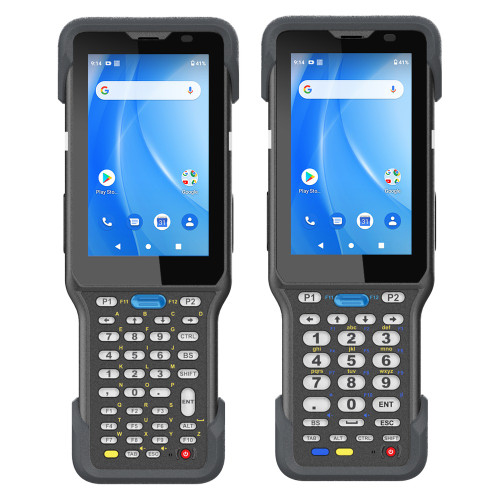
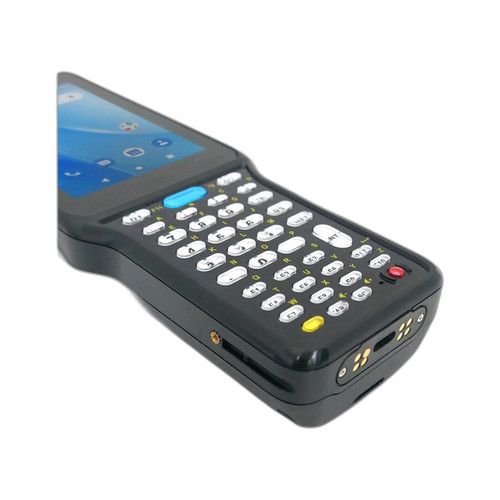
The keypad is a meaningful differentiator: the HT730-LJ6122BG ships with a 29-key layout suited to numeric entry and basic command input, while the HT730-LJ6142BG provides a 47-key layout, adding more alphanumeric or function keys. For workflows requiring manual data entry — lot numbers, operator IDs, or quantity overrides — the 47-key model reduces reliance on the touchscreen and can improve throughput per operator.
If OCR reading (license plates, document text, direct-part marks) is a workflow requirement, the HT730-LJ6122BG's explicit OCR spec is the safer specification to cite; the HT730-LJ6142BG's spec sheet does not confirm OCR support.
Are the durability and battery specs equivalent across both models?
Both the HT730-LJ6122BG and HT730-LJ6142BG share identical published durability and power figures: 1.8m drop rating to concrete (extendable to 2.4m with an optional bumper accessory), a 6700mAh removable battery, and a rated battery life of 20–26 hours of continuous operation.
Both models run Android 10, feature a 4-inch screen, and include a 13MP camera. Neither spec sheet discloses an IP sealing rating; the HT730-LJ6142BG marketing copy references 'sealed industrial construction,' but no IP code is provided in the structured specifications for either unit. Buyers specifying for wet or dusty environments should request IP certification documentation from Unitech before purchasing.
Because durability and battery specs are identical across both SKUs, this dimension does not differentiate the two models and should not be a deciding factor in the selection.
Which should you choose: the HT730-LJ6122BG or the HT730-LJ6142BG?
Our take: The HT730-LJ6122BG is the stronger choice when Bluetooth connectivity is operationally required and OCR symbology support is needed, while the HT730-LJ6142BG is the better fit for workflows that demand richer manual data entry. Three concrete spec deltas drive this: (1) the HT730-LJ6122BG explicitly specifies Bluetooth alongside Wi-Fi and 4G, versus the HT730-LJ6142BG's top-level connectivity field listing only Wi-Fi; (2) the HT730-LJ6122BG's spec sheet confirms OCR support, which the HT730-LJ6142BG's does not; and (3) the HT730-LJ6142BG provides a 47-key keypad versus the HT730-LJ6122BG's 29-key layout, a tangible advantage in high-entry workflows. Both units share identical battery (6700mAh, 20–26 hrs), drop rating (1.8m / 2.4m with bumper), Android 10, and 60 fps 2D imaging. Choose the LJ6122BG for Bluetooth-peripheral-heavy or OCR environments; choose the LJ6142BG for alphanumeric-entry-intensive operations.
Side-by-Side Comparison
Spec-for-spec, from manufacturer data.
| Specification | Unitech HT730-LJ6122BG | Unitech HT730-LJ6142BG |
|---|---|---|
| SKU / MPN | HT730-LJ6122BG | HT730-LJ6142BG |
| Product Type | Wearable 2D Scanner | Wearable 2D Scanner |
| Operating System | Android 10 | Android 10 |
| Scan Engine | 2D Area Imager | 2D Imager |
| Scan Rate | 60 fps | 60 fps |
| Symbologies — 1D | Code 128, Code 39, UPC, EAN, all standard linear | Code 128, Code 39, UPC, EAN |
| Symbologies — 2D | QR Code, Data Matrix, PDF417, Dot Code | QR Code, Data Matrix, PDF417, Dot Code |
| OCR Support | Yes (specified) | — |
| Wi-Fi | 2×2 MU-MIMO | 2×2 MU-MIMO |
| Bluetooth | Yes (specified) | Listed as standard; not in top-level connectivity summary |
| Cellular | Dual SIM 4G | 4G Dual-SIM |
| Keypad | 29-key | 47-key |
| Battery Capacity | 6700mAh removable | 6700mAh removable |
| Battery Life | 20–26 hours continuous | 20–26 hours continuous |
| Drop Rating | 1.8m to concrete; 2.4m with bumper | 1.8m to concrete; 2.4m with bumper |
| Screen / Camera | 4-inch display; 13MP camera | 4-inch display; 13MP camera |
Frequently Asked Questions
Which should you choose: the HT730-LJ6122BG or the HT730-LJ6142BG?
The HT730-LJ6122BG is the stronger choice when Bluetooth connectivity is operationally required and OCR symbology support is needed, while the HT730-LJ6142BG is the better fit for workflows that demand richer manual data entry. Three concrete spec deltas drive this: (1) the HT730-LJ6122BG explicitly specifies Bluetooth alongside Wi-Fi and 4G, versus the HT730-LJ6142BG's top-level connectivity field listing only Wi-Fi; (2) the HT730-LJ6122BG's spec sheet confirms OCR support, which the HT730-LJ6142BG's does not; and (3) the HT730-LJ6142BG provides a 47-key keypad versus the HT730-LJ6122BG's 29-key layout, a tangible advantage in high-entry workflows. Both units share identical battery (6700mAh, 20–26 hrs), drop rating (1.8m / 2.4m with bumper), Android 10, and 60 fps 2D imaging. Choose the LJ6122BG for Bluetooth-peripheral-heavy or OCR environments; choose the LJ6142BG for alphanumeric-entry-intensive operations.
Does the HT730-LJ6142BG support Bluetooth like the HT730-LJ6122BG?
The HT730-LJ6142BG lists Bluetooth as 'standard' in its Interface field, but its top-level Connectivity summary lists only 'Wi-Fi.' The HT730-LJ6122BG explicitly calls out Bluetooth as a headline connectivity feature. Buyers who need confirmed Bluetooth pairing — for ring scanners, label printers, or headsets — should verify the LJ6142BG's Bluetooth support directly with Unitech before specifying.
Which model is better for warehouse workers who need to type in data manually?
The HT730-LJ6142BG's 47-key keypad gives it a clear advantage for manual data entry — lot numbers, quantity adjustments, or operator authentication — reducing touchscreen dependence in gloved or high-motion environments. The HT730-LJ6122BG's 29-key layout handles numeric and basic command input but offers fewer dedicated keys.
Are the battery life and drop rating the same on both models?
Yes. Both the HT730-LJ6122BG and HT730-LJ6142BG specify a 6700mAh removable battery with 20–26 hours of continuous operation, and both carry a 1.8m drop-to-concrete rating (extendable to 2.4m with a bumper). Neither model's published specs include an IP ingress-protection rating.
More Mobile Computer Comparisons
- Honeywell CW45-X0N-AND10XG vs Unitech HT730-LJ6122BG
- Honeywell CW45-X0N-AND10XG vs Unitech HT730-LJ6142BG
- Honeywell CW45-X0N-AND10XG vs Unitech HT330-QA62TM3G-Z3
- Honeywell CW45-X0N-AND10XG vs Zebra TC2205-0G1250SS-US
- Honeywell CW45-X0N-AND10XG vs Honeywell CW45-X0N-AND10SG
- Honeywell CW45-X0N-AND10XG vs Honeywell CW45-X0N-BND10XG
Mobile Computer Buying Guides
Get a Second Opinion on Your Camera Choice
Share your site layout, coverage goals, and budget. Our team will validate the camera selection, flag anything we would change, and recommend products that match the use case.