
Best RFID Handhelds for Inventory
RFID handheld readers for inventory and asset tracking — UHF read range, read rate, and combined RFID plus 2D barcode capture.

Karl Wilson
Warehouse & Mobile Computing Specialist · Working integrator
Bottom line
For most commercial inventory and asset-tracking deployments, the decision comes down to environment harshness, read-range demands, and whether you need an integrated trigger-grip gun or a sleeker sled-style form factor. Zebra's MC3390XR platform is purpose-built for high-throughput UHF RFID scanning in demanding warehouse or dock environments, while the Janam XT40 and XT3 offer versatile all-in-one handhelds that combine RFID with full mobile-computer capability for field-mobility and mixed-task workflows. Match the IP rating and form factor to your site conditions before anything else.
What This Setup Needs
UHF RFID handhelds have converged around a few spec clusters, but the wrong choice for your environment means missed reads, broken workflows, or hardware failures within a season. Here is what separates a good spec-fit from a costly mismatch.
- UHF Read Range and Antenna Design: Read range is driven by the RFID module's output power, antenna gain, and whether the unit uses a pistol-grip antenna (longer range, directional) versus an integrated sled antenna. Gun-style readers like the MC3390XR are engineered for longer standoff distances and bulk-scanning dense tag fields; compact handhelds trade peak range for portability. Confirm your tag density and aisle geometry before assuming any handheld will replicate fixed-reader performance.
- Read Rate (Tags Per Second): High-velocity environments — receiving docks, cycle counts on dense shelving — demand readers that can decode hundreds of tags per second without stalling the worker. Industrial-class UHF modules (Impinj, Zebra-integrated) handle tag storms better than entry-level RFID modules embedded in general-purpose handhelds. If you are scanning mixed pallets or bulk bins, read rate matters as much as range.
- IP Rating and Drop Spec: IP54 tolerates dust ingress and splash; IP65 adds complete dust-tight protection with low-pressure water jets; IP67 means full dust-tight plus temporary immersion to 1 meter. Warehouses with wash-down, outdoor yards, cold-chain receiving, or wet docks require IP65 minimum. Light office or retail stockroom work may be fine with IP54, but IP67 buys meaningful insurance in mixed-use deployments.
- Form Factor — Gun vs. Integrated Handheld: Pistol-grip RFID guns (MC3390XR family) are ergonomically optimized for sustained, high-volume scanning in both hands-on and hands-free configurations and keep the antenna further from the operator's body. Integrated RFID handhelds (Janam XT-series) let a single device handle RFID, 2D barcode, and general mobile-computing tasks without swapping hardware — a strong fit for field technicians, asset auditors, and smaller teams where device consolidation reduces cost and training overhead.
- Barcode + RFID Convergence: Many real-world workflows still mix RFID-tagged assets with barcoded items (legacy labels, supplier cartons, shipping labels). A device with a high-performance 2D imager alongside the RFID module eliminates the need to carry a second scanner. Confirm imager decode engine and supported symbologies — not all embedded 2D imagers perform equally on damaged or low-contrast labels.
- Wireless Stack — Wi-Fi Band and Bluetooth Version: 802.11a/b/g/n limits you to 2.4 GHz and 5 GHz legacy rates; newer dual-band 802.11 implementations with faster PHYs reduce roaming dead-spots in large facilities. Bluetooth 5.0/5.1 improves range and throughput for peripheral pairing (ring scanners, printers, vehicle mounts). Verify your site's Wi-Fi infrastructure before assuming seamless roaming on older access points.
- OS, MDM, and Enterprise Integration: Android-based handhelds integrate with modern MDM platforms (SOTI, VMware Workspace ONE, Zebra's own OEMConfig) for zero-touch provisioning and remote management. Zebra's Mobility DNA suite adds a layer of enterprise tooling (StageNow, Device Tracker, PowerPrecision battery management) that matters at fleet scale. Janam units also support standard Android MDM, but evaluate your MDM vendor's certified device list before committing to a large rollout.
Our Picks
Selected from our catalog by spec-fit. All channel-direct and factory-new — not ranked by price.
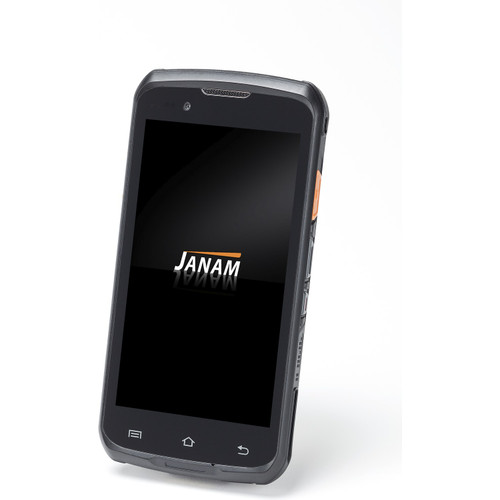
Janam XT40-ATHKRMGW00
RFID Handheld
The Janam XT40 is well-suited for mixed-task field deployments where workers need a single device to handle UHF RFID, 2D barcode capture, and general mobile-computing — its Bluetooth 5.1 and 802.11 Wi-Fi connectivity support modern enterprise wireless stacks, and the IP65 rating makes it a strong fit for light-industrial, facilities-management, or outdoor asset-tracking environments where splash and dust exposure are routine but full immersion is not a concern.
View product →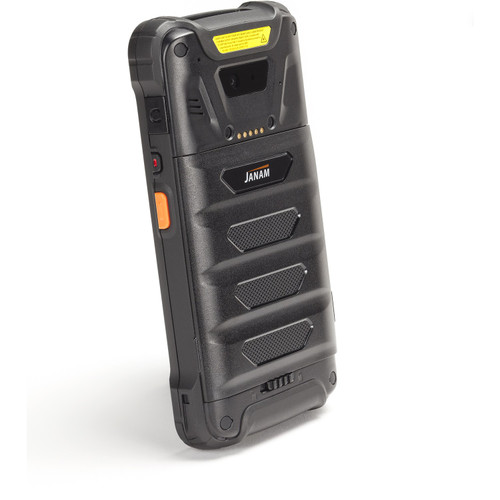
Janam XT3-STHGBMGW01
RFID Handheld
The Janam XT3 steps up to IP67 ingress protection, making it a strong fit for environments with wash-down exposure, wet receiving docks, or cold-chain operations where temporary immersion risk is real; Bluetooth 5.0 and 802.11a/b/g/n dual-band Wi-Fi support reliable connectivity in larger facilities, and the integrated form factor suits technicians or auditors who need RFID plus mobile-computing capability without carrying a separate gun-style reader.
View product →Zebra MC3390XR
RFID Handheld
The Zebra MC3390XR in gun configuration is well-suited for high-throughput warehouse and distribution-center environments where the pistol-grip form factor reduces operator fatigue during sustained bulk scanning, and the directional UHF antenna geometry is optimized for longer standoff reads across dense tag fields — a strong fit for receiving, put-away, and cycle-count operations where read rate and range are the primary performance drivers.
View product →Zebra MC3390XR
RFID Handheld
This MC3390XR configuration carries an IP54 rating, making it well-suited for controlled indoor environments such as retail stockrooms, light manufacturing, or general warehouse interiors where dust and incidental splashes are the extent of exposure — it brings the same Zebra UHF RFID engine and enterprise platform as the higher-rated variant but is a better spec-fit for deployments where the harsher IP rating is not operationally required and cost-per-unit efficiency matters across a larger fleet.
View product →Frequently Asked Questions
What UHF read range should I expect from an RFID handheld?
Practical read range on a handheld RFID reader typically falls between 15 and 30 feet under ideal conditions, but real-world range depends heavily on tag orientation, tag quality, RF environment, and the reader's antenna design. Pistol-grip guns with dedicated antenna assemblies generally outperform integrated handhelds at standoff distance. Always validate range in your actual facility with your specific tag population before finalizing a device selection.
Can these handhelds read both RFID tags and standard barcodes?
Most enterprise RFID handhelds in this class combine a UHF RFID module with an integrated 2D barcode imager, allowing a single device to handle both label types in mixed workflows. This is particularly valuable in environments where legacy barcoded inventory coexists with RFID-tagged assets. Confirm the specific imager engine and supported symbologies for each model against your label stock, especially if you rely on damaged or small-pitch codes.
What IP rating do I need for a warehouse or distribution center?
IP65 is the practical minimum for most active warehouse environments — it provides full dust-tight protection and resistance to low-pressure water jets, covering forklift wash-downs, outdoor receiving areas, and typical spill exposure. IP67 adds protection against temporary immersion up to one meter and is worth specifying for cold-chain receiving, food-and-beverage facilities, or any environment with standing water risk. IP54, which only resists dust ingress and splash from any direction, is better suited to controlled indoor environments like retail back-of-house or light assembly.
How do RFID handhelds integrate with warehouse management systems (WMS)?
Enterprise RFID handhelds running Android connect to a WMS via standard Wi-Fi using browser-based, native Android, or Telnet terminal applications depending on your WMS vendor's client. Most major WMS platforms (Manhattan, Blue Yonder, SAP EWM, and others) publish certified device lists and SDKs for Zebra and other enterprise handheld brands. Zebra's Mobility DNA toolset adds StageNow for mass provisioning and OEMConfig for MDM policy management, which simplifies large fleet rollouts. Validate your WMS vendor's current certified device list before purchasing.
What is the difference between a gun-style RFID reader and an integrated RFID handheld?
A gun-style reader like the MC3390XR uses a pistol-grip form factor with a dedicated UHF antenna positioned away from the operator, optimizing for range, read rate, and ergonomics during sustained high-volume scanning. An integrated RFID handheld like the Janam XT-series combines RFID with a full mobile computer in a single compact device, which is better for mixed workflows where workers alternate between RFID scanning, barcode capture, and application use. Gun-style readers generally win on pure RFID throughput; integrated handhelds win on device consolidation and versatility.
Do I need special Wi-Fi infrastructure to support RFID handheld deployments?
RFID handhelds rely on the same 802.11 infrastructure as any other enterprise mobile device, but high-density scanning deployments add unique demands: workers moving quickly through aisles generate frequent roaming events, and simultaneous bulk-read sessions can create bursty data traffic. A properly designed enterprise Wi-Fi network with fast BSS transition (802.11r) and adequate AP density is important for maintaining read reliability during active scanning. Audit your existing AP layout against expected worker density and movement patterns before deploying a large handheld fleet.
Related Resources
- Mobile Computer comparisons — head-to-head spec matchups
- Rugged Mobile Computer Buying Guide
- Best Rugged Mobile Computers for Warehouse Operations
- Best Rugged Tablets for Field Service
- All product comparisons
Speccing this for a project?
Send us your requirements and our senior specialists will confirm specs, compatibility, availability and pricing — free, usually within one business day. Channel-direct, factory-new, serving commercial integrators since 2014.
Get a Free QuoteComparing for a project?
Send us the models you are weighing and our team will confirm specs, compatibility, availability, and pricing — free, usually within one business day.