
Rugged Mobile Computer Buying Guide
How to choose a rugged enterprise mobile computer — handheld vs tablet vs wearable, scan engine, OS and durability (IP rating, drop spec) for warehouse and field work.

Karl Wilson
Warehouse & Mobile Computing Specialist · Working integrator
Bottom line
Rugged mobile computers are a long-term infrastructure investment — the right choice depends on your scan environment (1D/2D, near/far), whether workers need two-hand data entry or one-hand trigger scanning, and how harsh the operating conditions really are. Wi-Fi-only handhelds cover the vast majority of fixed-site warehouse deployments; add cellular only when workers go beyond your network perimeter. Match form factor to the task first, then validate OS, scan engine, and drop/IP specs against your actual environment before committing to a platform.
How to Choose
Rugged mobile computers span handheld pistol-grips, full-touch slabs, gun-style scanners, and tablets — and the wrong form factor will hurt productivity regardless of specs. Before evaluating individual models, work through these decision factors in order:
- Form factor vs. workflow: Gun-style and traditional handheld devices with physical keyboards suit high-volume scan-and-key workflows (receiving, put-away, cycle count with lot/serial entry). Full-touch display handhelds and tablets suit task-switching, inspection, or supervisor roles where the screen is primary. Wearables (not covered here) suit pick operations where hands-free is mandatory.
- Scan engine class and range: A standard 2D imager reads barcodes at roughly 0–50 cm; a mid-range imager reaches ~1–3 m (useful for pick-to-light shelving or conveyor scanning); an extended-range engine covers 5–15 m for high-bay racking. Confirm the engine class matches your label distances — a mismatch here is the single most common field-deployment failure.
- Operating system and MDM ecosystem: Android (GMS or AOSP) dominates new deployments for app availability and MDM toolchain breadth (SOTI, Jamf, Workspace ONE, Zebra OEMConfig). Verify the OS version, the manufacturer's committed security patch cadence, and your EMM vendor's support matrix before selecting a platform.
- IP rating and drop specification: IP65 means dust-tight and protected against water jets — adequate for most warehouse and light outdoor use. IP66 adds resistance to powerful water jets. Check drop-to-concrete specs (typically 1.2–1.8 m for enterprise-class devices) and whether the rating applies at operating temperature extremes, which matters in cold-storage and outdoor field environments.
- Connectivity tier — Wi-Fi vs. cellular: Wi-Fi 6 (802.11ax) handles most high-density warehouse floors. Wi-Fi 6E adds the 6 GHz band for reduced congestion in very dense environments. Cellular (4G LTE or 5G) is only necessary for true field mobility beyond your AP coverage — it adds cost, SIM management overhead, and a new attack surface. Bluetooth 5.2/5.3 matters for paired peripherals (ring scanners, printers).
- Thermal operating range: Standard devices are rated to roughly 0°C lower bound. Cold-storage and freezer environments require a device rated to -20°C or below — both the device and the battery must carry that rating. Confirm the battery's cold-temperature discharge curve, not just the device's ambient spec.
- Total cost of ownership — accessories, batteries, and support: Cradles, spare batteries, screen protectors, and holsters are often 30–50% of the 3-year device cost. Evaluate vendor repair programs (depot vs. advance-exchange), battery replacement pricing, and whether the device takes a shared battery platform across your existing fleet before finalizing a selection.
Models to Consider
Selected from our catalog by spec-fit. All channel-direct and factory-new — not ranked by price.
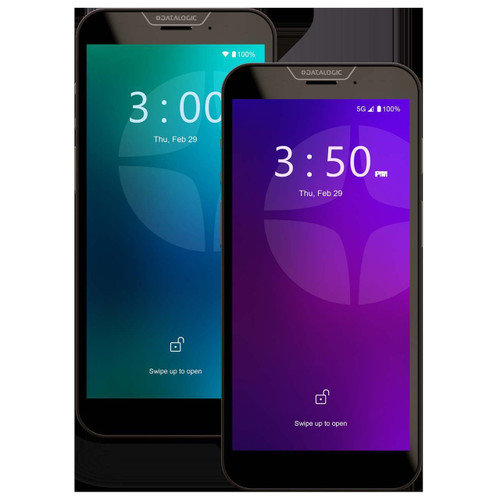
Datalogic 944850001
Handheld
The Datalogic 944850001 is a Wi-Fi 6 handheld with USB 3.2 Type-C and Bluetooth 5.2, well-suited for fixed-site warehouse environments where workers need a modern touch-display form factor, fast wired sync for cradle charging, and IP65 protection against dust and water jets without the added cost and complexity of cellular radio management.
View product →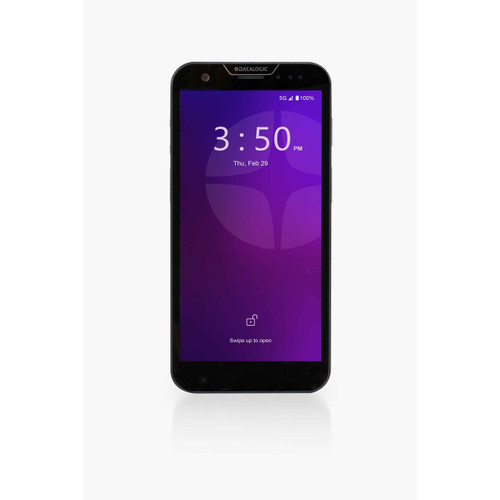
Datalogic 944950001
Handheld
The Datalogic 944950001 steps up to Wi-Fi 6E, Bluetooth 5.3, and integrated cellular connectivity, making it a strong fit when workers move between warehouse floors and outdoor yards, loading docks, or field service routes where Wi-Fi coverage gaps require a persistent cellular data path alongside the enhanced 6 GHz Wi-Fi band for congested indoor environments.
View product →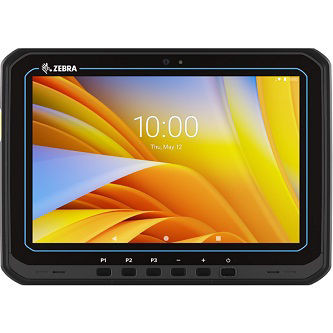
Zebra ET60AW-0HQAGN00A0-NA
Tablet
The Zebra ET60AW-0HQAGN00A0-NA is a Wi-Fi tablet with USB Type-C Power Delivery 3.0 and IP66 sealing, well-suited for supervisor, inspection, or task-management roles where a larger display is the primary interface, USB-PD fast-charging via standard infrastructure is a priority, and the IP66 rating provides a meaningful step up in protection against high-pressure wash-down environments.
View product →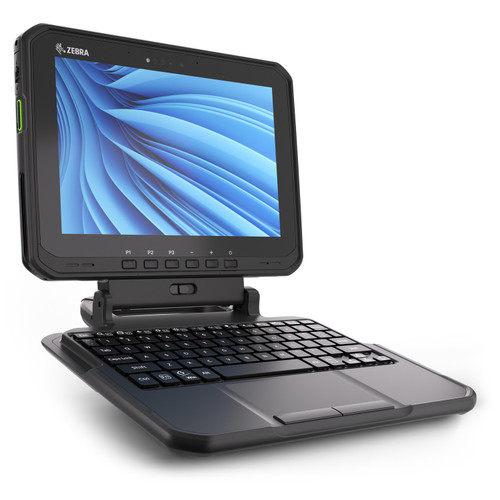
Zebra ET60AW-0SQAGN00A0-NA
Tablet
The Zebra ET60AW-0SQAGN00A0-NA adds Wi-Fi 6E and NFC to the ET60 tablet platform, making it a strong fit for facilities that are deploying or planning Wi-Fi 6E infrastructure for high-density coverage, or that need NFC tap-to-pair or tap-to-authenticate workflows (access control, asset tagging) alongside the large-format display.
View product →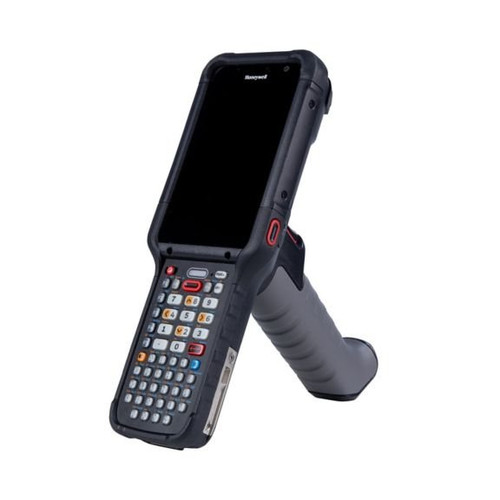
Honeywell CK67-X0N-5EC1C2G
Handheld
The Honeywell CK67-X0N-5EC1C2G is a Wi-Fi handheld rated from -20°C to 50°C, well-suited for cold-storage warehouses, freezer environments, or outdoor field operations where the lower thermal bound is a hard requirement and IP65 protection covers the dust and moisture exposure typical of those environments.
View product →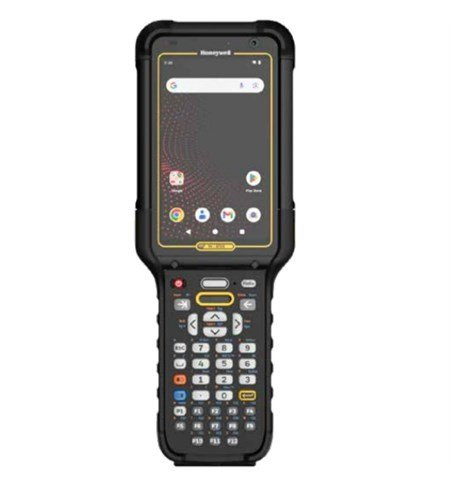
Honeywell CK67-X1N-58A1B1G
Handheld
The Honeywell CK67-X1N-58A1B1G shares the CK67 platform's -20°C to 50°C operating range and IP65 rating, making it a strong fit alongside the X0N variant for cold-chain deployments where you need differentiated scan engine or keyboard configurations within a single device family — simplifying spare parts, battery pooling, and technician training across the same platform.
View product →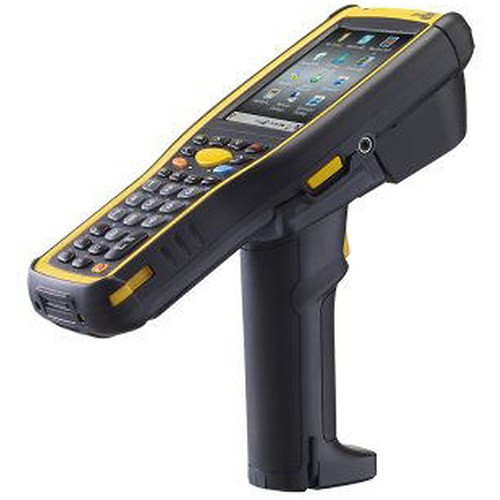
CipherLab A9700PSTNNN01
Gun-Style
The CipherLab A9700PSTNNN01 is a gun-style Wi-Fi scanner with a physical trigger grip and Bluetooth Class II, well-suited for high-volume, dedicated scan roles — receiving, shipping, or pick-and-pack — where the pistol grip reduces hand fatigue during repetitive scanning, the gun-style form factor discourages repurposing as a general-purpose device, and IP65 protection covers typical warehouse conditions.
View product →Frequently Asked Questions
What is the difference between IP65 and IP66 on a rugged mobile computer?
Both ratings are fully dust-tight (the '6' first digit). IP65 means the device withstands low-pressure water jets from any direction — adequate for rain, splashing, and most warehouse cleaning routines. IP66 means it survives high-pressure, high-volume water jets, which matters in food processing, pharmaceutical, or wash-down environments where hoses are used directly on equipment. Neither rating covers submersion; you need IP67 or IP68 for that. Specify the rating your cleaning and environmental protocols actually demand — over-specifying adds cost, but under-specifying voids warranties and causes field failures.
Do I need Wi-Fi 6E or is Wi-Fi 6 sufficient for a warehouse deployment?
Wi-Fi 6 (802.11ax on 2.4/5 GHz) handles the overwhelming majority of warehouse deployments — it delivers higher throughput and better multi-client performance than ac/Wave 2 in dense environments. Wi-Fi 6E adds the uncongested 6 GHz band, which is valuable only if your AP infrastructure supports 6 GHz and you're experiencing genuine channel congestion or co-channel interference at scale. If your facility has not yet deployed 6E-capable APs, a 6E device will fall back to 5 GHz and provide no advantage over a Wi-Fi 6 device. Evaluate your AP roadmap before paying the 6E premium on devices.
Can rugged handhelds run in a walk-in freezer or cold-storage environment?
Standard rugged devices are typically rated to 0°C operating temperature — they will malfunction or shut down in freezer environments (typically -18°C to -25°C). Devices with a rated operating range extending to -20°C or below are specifically engineered for cold-chain use: the battery chemistry, LCD, and touch sensor are all validated at those temperatures. When evaluating cold-storage devices, check both the device's ambient spec and the battery's cold-temperature capacity rating, since lithium cells lose significant discharge capacity below -10°C and your shift endurance will be shorter than at room temperature.
Gun-style scanner vs. handheld slab — which form factor is right for my operation?
Gun-style (pistol-grip) devices are well-suited for dedicated, high-repetition scanning tasks where workers perform thousands of scans per shift — the trigger mechanism and grip geometry reduce wrist fatigue compared to holding a slab device at arm's length repeatedly. Touch-display handhelds and tablets suit mixed workflows where the worker needs to interact with forms, menus, or rich applications between scans. A practical rule: if scanning is 70%+ of the interaction, a gun-style or traditional keyboard handheld is typically faster and more ergonomic; if screen interaction dominates, a touch-display device is a better fit. Many operations run both form factors on different roles.
What Android OS version and security patch support should I require?
For a new deployment in 2026, require Android 13 or higher at minimum, and verify the manufacturer's committed enterprise support lifecycle — leading vendors publish support timelines of 5–8 years from device launch, including quarterly or monthly security patches. Ask specifically for the OEM's patch cadence SLA and whether security updates are delivered independently of OS version upgrades. Devices that fall off the manufacturer's patch schedule become a compliance and security liability in PCI, HIPAA, or SOC 2 environments regardless of physical condition.
How do I calculate how many spare batteries I need per shift?
A practical starting formula: divide your shift length (in hours) by the rated battery life under your actual workload (not the vendor's best-case figure — assume 60–70% of rated capacity in a real mixed-use, Wi-Fi-active environment), then round up and add one spare per device for charging overlap. For a 10-hour shift with a device rated at 12 hours best-case, assume 7–8 hours real-world, meaning you need at least one spare per device to cover the full shift with swap margin. In cold-storage environments, add an additional spare because low-temperature discharge can cut effective capacity by 20–40% depending on the battery chemistry and temperature.
Related Resources
- Mobile Computer comparisons — head-to-head spec matchups
- Best Rugged Mobile Computers for Warehouse Operations
- All product comparisons
Speccing this for a project?
Send us your requirements and our senior specialists will confirm specs, compatibility, availability and pricing — free, usually within one business day. Channel-direct, factory-new, serving commercial integrators since 2014.
Get a Free QuoteComparing for a project?
Send us the models you are weighing and our team will confirm specs, compatibility, availability, and pricing — free, usually within one business day.