
Honeywell CW45-X0N-AND10XG vs Unitech HT730-LJ6142BG: Specification Comparison
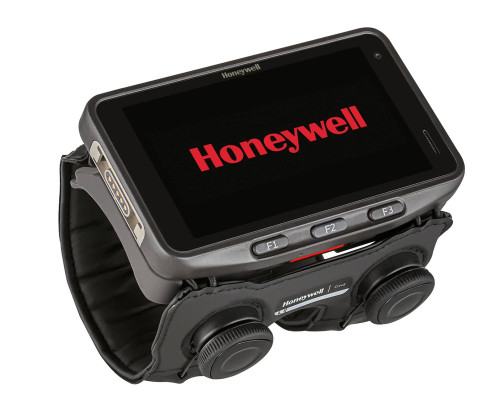
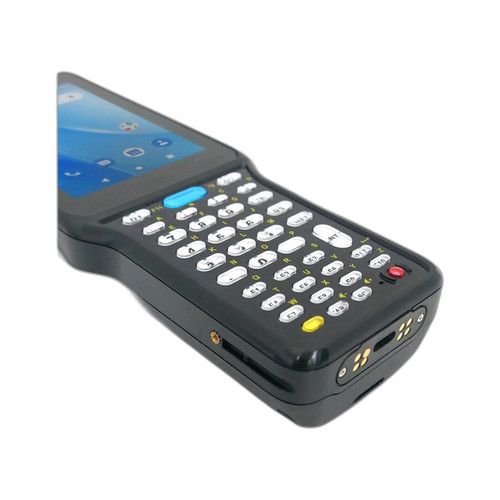
Both the Honeywell CW45-X0N-AND10XG and the Unitech HT730-LJ6142BG are wearable form-factor devices targeting warehouse and industrial mobility workflows. The CW45 is a full wearable mobile computer with an arm-mount design, running Android on a multi-core processor with a 4.7-inch display and integrated NFC. The HT730 is a wearable 2D scanner with a 47-key keypad, 4-inch screen, and dual-SIM 4G capability. Buyers evaluating hands-free picking or data-capture solutions will find these two models occupy overlapping but distinct positions in the wearable device category.
In This Guide
- Which device offers more processing power and usability for running warehouse applications?
- How do the two devices compare on scan capability, wireless connectivity, and peripheral integration?
- Which device is better suited to demanding physical environments and full-shift operation?
- Which should you choose: the CW45-X0N-AND10XG or the HT730-LJ6142BG?
- Side-by-Side Specs
- FAQ
Which device offers more processing power and usability for running warehouse applications?
The CW45-X0N-AND10XG is built around a Qualcomm QCS4290 octa-core processor running at 2.0 GHz, paired with 6 GB of RAM and 64 GB of onboard flash storage with microSD expansion. Its 4.7-inch HD display is protected by Corning Gorilla Glass 5, providing a larger viewing area suited for running WMS applications, image buffers, and offline work batches. The operating system is Android (non-GMS).
The HT730-LJ6142BG provides a 4-inch screen and runs Android 10. Its processor, RAM, and onboard storage specifications are not provided in the available spec data. The HT730 includes a 47-key physical keypad, which can support data entry without relying exclusively on a touchscreen. Buyers requiring a known compute baseline for application performance should note that only the CW45 supplies those figures; the HT730's compute specs are absent from the provided specifications.
How do the two devices compare on scan capability, wireless connectivity, and peripheral integration?
The HT730-LJ6142BG is purpose-built around its 2D imaging engine, supporting QR Code, Data Matrix, PDF417, Dot Code, Code 128, Code 39, UPC, and EAN symbologies at a specified 60 fps scan rate, with a 30-degree tilt-down scan pattern. Its wireless stack includes WiFi 2×2 MU-MIMO and 4G dual-SIM, plus Bluetooth. The 4G dual-SIM capability is a meaningful differentiator for deployments that span areas without reliable WiFi coverage.
The CW45-X0N-AND10XG connects via WiFi 6 (802.11 a/b/g/n/ac/ax), Bluetooth 5.1 BLE, NFC, and USB. Its scan engine type and symbology support are not specified in the provided specs; what is documented are an 8 MP front camera and a 13 MP side camera. NFC is included and absent from the HT730's documented specs. Buyers needing a specific barcode engine specification or 4G failover will find the HT730 more explicitly documented on scanning; buyers needing NFC or WiFi 6 will find those only on the CW45.
Which device is better suited to demanding physical environments and full-shift operation?
The CW45-X0N-AND10XG carries an IP65/IP67 ingress protection rating, meaning it is rated against dust ingress and immersion. Its operating temperature range is -20 to 50 °C (-4 to 122 °F) and its storage temperature range is -30 to 70 °C (-22 to 158 °F). The battery is a 6800 mAh Li-Ion unit described as hot-swappable. A drop rating is not provided in the available specifications.
The HT730-LJ6142BG specifies a 1.8 m (6 ft) drop rating to concrete, extendable to 2.4 m with a bumper case. Its battery is a 6700 mAh removable unit with a documented 20–26 hours of continuous operation. An IP rating, operating temperature range, and storage temperature range are not present in the provided specifications. Buyers operating in environments with temperature extremes or liquid/dust exposure will find only the CW45 has documented ingress protection; buyers prioritizing documented drop survivability and shift-length battery life will find those explicitly stated only on the HT730.
Which should you choose: the CW45-X0N-AND10XG or the HT730-LJ6142BG?
Our take: The CW45-X0N-AND10XG is the stronger choice when the deployment demands a fully specified mobile computing platform with documented ingress protection, WiFi 6, and NFC integration. It carries IP65/IP67 sealing versus no stated IP rating on the HT730, a 6800 mAh hot-swappable battery versus 6700 mAh on the HT730, and a known compute baseline of a Qualcomm QCS4290 octa-core 2.0 GHz CPU with 6 GB RAM versus no processor or RAM data available for the HT730. Conversely, the HT730-LJ6142BG is the stronger choice when documented drop resilience (1.8 m to concrete), 4G dual-SIM failover connectivity, a 60 fps 2D scan engine with explicit symbology coverage, and a 20–26 hour continuous battery-life rating are the primary selection criteria. Buyers standardizing on Android enterprise or NFC-based workflows should weight the CW45; buyers needing cellular fallback or a ruggedized scanner with a physical 47-key keypad should evaluate the HT730.
Side-by-Side Comparison
Spec-for-spec, from manufacturer data.
| Specification | Honeywell CW45-X0N-AND10XG | Unitech HT730-LJ6142BG |
|---|---|---|
| Product Type | Wearable Mobile Computer | Wearable 2D Scanner |
| Operating System | Android (non-GMS) | Android 10 |
| Processor | Qualcomm QCS4290 Octa-Core 2.0 GHz | — |
| RAM | 6 GB | — |
| Internal Storage | 64 GB Flash | — |
| Storage Expansion | microSD | — |
| Display Size | 4.7 in HD Gorilla Glass 5 | 4 in |
| Physical Keypad | Arm Mount Comfort Pad | 47-key |
| Scan Engine | — | 2D Imager (60 fps) |
| Symbologies | — | QR, Data Matrix, PDF417, Code 128, Code 39, UPC, EAN, Dot Code |
| Camera | 8 MP front, 13 MP side | 13 MP |
| WiFi | WiFi 6 (802.11 a/b/g/n/ac/ax) | WiFi 2×2 MU-MIMO |
| Cellular | — | 4G dual-SIM |
| Bluetooth | 5.1 BLE | Bluetooth (standard; version not specified) |
| NFC | Included | — |
| Battery Capacity | 6800 mAh Li-Ion (hot-swappable) | 6700 mAh (removable) |
| Battery Life (rated) | — | 20–26 hours continuous |
| IP Rating | IP65/IP67 | — |
| Drop Rating | — | 1.8 m to concrete (2.4 m with bumper) |
| Operating Temperature | -20 to 50 °C (-4 to 122 °F) | — |
| Storage Temperature | -30 to 70 °C (-22 to 158 °F) | — |
| Weight | 263 g (9.3 oz) with standard battery | — |
| Dimensions | 133 x 86 x 14 mm | — |
| Mount / Form Factor | Arm Mount | Wearable Handheld |
| FCC Approval | Yes | — |
Frequently Asked Questions
Which should you choose: the CW45-X0N-AND10XG or the HT730-LJ6142BG?
The CW45-X0N-AND10XG is the stronger choice when the deployment demands a fully specified mobile computing platform with documented ingress protection, WiFi 6, and NFC integration. It carries IP65/IP67 sealing versus no stated IP rating on the HT730, a 6800 mAh hot-swappable battery versus 6700 mAh on the HT730, and a known compute baseline of a Qualcomm QCS4290 octa-core 2.0 GHz CPU with 6 GB RAM versus no processor or RAM data available for the HT730. Conversely, the HT730-LJ6142BG is the stronger choice when documented drop resilience (1.8 m to concrete), 4G dual-SIM failover connectivity, a 60 fps 2D scan engine with explicit symbology coverage, and a 20–26 hour continuous battery-life rating are the primary selection criteria. Buyers standardizing on Android enterprise or NFC-based workflows should weight the CW45; buyers needing cellular fallback or a ruggedized scanner with a physical 47-key keypad should evaluate the HT730.
Is the CW45-X0N-AND10XG or the HT730-LJ6142BG better suited for sites without reliable WiFi coverage?
Based on the provided specifications, the HT730-LJ6142BG is the only model with documented 4G dual-SIM connectivity, making it the candidate for sites where WiFi coverage is unreliable or absent. The CW45-X0N-AND10XG is documented only for WiFi 6, Bluetooth 5.1, NFC, and USB; no cellular radio is listed in its specifications.
Which device has stronger drop protection for use in a high-traffic warehouse floor environment?
The HT730-LJ6142BG specifies a 1.8 m (6 ft) drop rating to concrete, extendable to 2.4 m with a bumper accessory. A drop rating for the CW45-X0N-AND10XG is not present in the provided specifications. If documented drop survivability is a procurement requirement, only the HT730 supplies that figure.
Does either device support NFC, and does it matter for warehouse workflows?
NFC is listed as an included feature on the CW45-X0N-AND10XG. NFC is not mentioned in the HT730-LJ6142BG's provided specifications. NFC is relevant for workflows involving smart labels, access control integration, or NFC-based asset tracking; buyers with those requirements should note it is documented only on the CW45.
More Mobile Computer Comparisons
- Honeywell CW45-X0N-AND10XG vs Unitech HT730-LJ6122BG
- Honeywell CW45-X0N-AND10XG vs Unitech HT330-QA62TM3G-Z3
- Honeywell CW45-X0N-AND10XG vs Zebra TC2205-0G1250SS-US
- Honeywell CW45-X0N-AND10XG vs Honeywell CW45-X0N-AND10SG
- Honeywell CW45-X0N-AND10XG vs Honeywell CW45-X0N-BND10XG
- Honeywell CW45-X0N-AND10SG vs Unitech HT730-LJ6122BG
Mobile Computer Buying Guides
Get a Second Opinion on Your Camera Choice
Share your site layout, coverage goals, and budget. Our team will validate the camera selection, flag anything we would change, and recommend products that match the use case.