
Honeywell CW45-X0N-AND10SG vs Unitech HT730-LJ6122BG: Specification Comparison
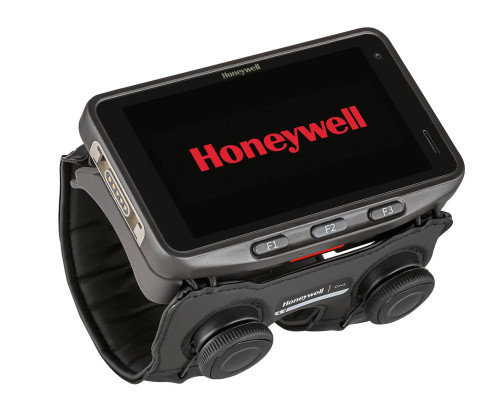
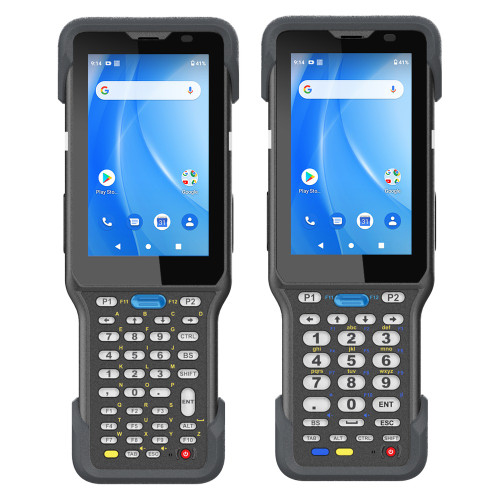
Both the Honeywell CW45-X0N-AND10SG and the Unitech HT730-LJ6122BG are arm- or body-worn Android devices designed for hands-free warehouse scanning operations. While the CW45 is classified as a full wearable mobile computer and the HT730 as a wearable 2D scanner, buyers evaluating either for pick-pack and fulfillment workflows will directly cross-shop these two products on battery endurance, processing capability, ruggedness, and scanning performance. This comparison presents spec-by-spec data to help integrators and IT buyers select the right platform for their deployment.
In This Guide
- Which device delivers more processing power and display capability for WMS and real-time app workloads?
- Which device is better suited for full-shift, high-motion warehouse environments in terms of battery life and drop/ingress protection?
- Which device provides broader scanning capability and wireless connectivity for modern distribution and logistics environments?
- Which should you choose: the CW45-X0N-AND10SG or the HT730-LJ6122BG?
- Side-by-Side Specs
- FAQ
Which device delivers more processing power and display capability for WMS and real-time app workloads?
The Honeywell CW45-X0N-AND10SG is built on a Qualcomm QCS4290 Octa-Core processor running at 2.0 GHz, paired with 6 GB RAM and 64 GB onboard flash storage. Its 4.7-inch HD display is protected by Corning Gorilla Glass 5, providing a full-color touchscreen interface suitable for complex WMS applications, multi-tab workflows, and real-time data entry. The CW45 also supports microSD expandable storage.
The Unitech HT730-LJ6122BG specifies a 4-inch screen and runs Android 10, but its processor model, RAM, and internal storage capacity are not disclosed in the provided specifications. Buyers relying on the HT730 for application-intensive tasks should request processor and memory specs from Unitech directly before committing to a deployment. For organizations running demanding WMS, ERP, or real-time analytics software, the CW45's documented 6 GB RAM and octa-core CPU provide a verifiable baseline the HT730 cannot currently match on spec sheet alone.
Which device is better suited for full-shift, high-motion warehouse environments in terms of battery life and drop/ingress protection?
Battery capacity differs significantly: the CW45-X0N-AND10SG carries a 3,400 mAh hot-swappable Li-Ion battery, while the HT730-LJ6122BG ships with a larger 6,700 mAh removable battery rated for 20–26 hours of continuous operation. For extended single-shift or multi-shift deployments without access to charging infrastructure, the HT730's battery capacity is nearly double and its documented runtime is a concrete advantage.
On ruggedness, the CW45 carries IP65 and IP67 ratings for dust and water ingress protection per its specifications, and its display is reinforced with Gorilla Glass 5. The HT730 is rated for 1.8-meter drops to concrete, with an optional bumper extending that to 2.4 meters; however, its IP ingress rating is not specified in the provided data. The CW45's documented IP67 means it can withstand temporary submersion, which the HT730 cannot be confirmed to match without additional spec disclosure.
Which device provides broader scanning capability and wireless connectivity for modern distribution and logistics environments?
The Unitech HT730-LJ6122BG specifies a 2D area imager engine operating at 60 frames per second, reading all standard 1D symbologies (Code 128, Code 39, UPC, EAN), 2D symbologies (QR Code, Data Matrix, PDF417, Dot Code), and OCR text. Its 30-degree tilt-down scan pattern is optimized for wearable scanning postures. The HT730 also supports Dual SIM 4G cellular connectivity in addition to Wi-Fi and Bluetooth, enabling use in facilities or yard environments without full Wi-Fi coverage.
The Honeywell CW45-X0N-AND10SG uses a 13 MP side-mounted camera for barcode scanning and an 8 MP front camera; however, its dedicated scan engine model, supported symbologies, and scan rate are not enumerated in the provided specifications. Its wireless connectivity includes Wi-Fi 6 (802.11 a/b/g/n/ac/ax) and Bluetooth 5.1 BLE, but no cellular option is specified. The CW45's Wi-Fi 6 support is a meaningful differentiator in high-density RF environments with modern access-point infrastructure. The HT730's cellular dual-SIM capability has no equivalent in the CW45's disclosed specs.
Which should you choose: the CW45-X0N-AND10SG or the HT730-LJ6122BG?
Our take: The CW45-X0N-AND10SG is the stronger choice when the deployment demands a fully documented compute platform, Wi-Fi 6 performance in dense RF environments, and verified IP67 ingress protection. Its Qualcomm QCS4290 octa-core CPU with 6 GB RAM and 64 GB storage provide a verifiable hardware baseline the HT730 does not disclose. However, three spec deltas favor the HT730-LJ6122BG: its 6,700 mAh battery is nearly double the CW45's 3,400 mAh with a documented 20–26 hour runtime, its dedicated 2D area imager reads at 60 fps with full symbology and OCR coverage not confirmed for the CW45, and its Dual SIM 4G connectivity supports environments without full Wi-Fi coverage. Buyers operating in large distribution centers with modern Wi-Fi 6 infrastructure and demanding WMS applications should favor the CW45; buyers prioritizing all-day battery endurance, proven scan engine performance, and cellular fallback should evaluate the HT730, contingent on Unitech disclosing processor and IP rating specs.
Side-by-Side Comparison
Spec-for-spec, from manufacturer data.
| Specification | Honeywell CW45-X0N-AND10SG | Unitech HT730-LJ6122BG |
|---|---|---|
| Product Type | Wearable Mobile Computer | Wearable 2D Scanner |
| Operating System | Android (non-GMS) | Android 10 |
| Processor | Qualcomm QCS4290 Octa-Core 2.0 GHz | — |
| RAM | 6 GB | — |
| Internal Storage | 64 GB Flash | — |
| Expandable Storage | microSD | — |
| Display Size | 4.7 in HD Gorilla Glass 5 | 4 in |
| Battery Capacity | 3,400 mAh Li-Ion (hot-swappable) | 6,700 mAh removable |
| Battery Runtime | — | 20–26 hours continuous |
| IP Rating | IP65 / IP67 | — |
| Drop Rating | — | 1.8 m to concrete (2.4 m with bumper) |
| Wi-Fi Standard | Wi-Fi 6 (802.11 a/b/g/n/ac/ax) | 2x2 MU-MIMO Wi-Fi |
| Bluetooth | 5.1 BLE | Bluetooth (version not specified) |
| Cellular | — | Dual SIM 4G |
| Scan Engine | 13 MP side camera (engine model not specified) | 2D Area Imager, 60 fps |
| Symbologies | — | 1D, 2D (QR, Data Matrix, PDF417, Dot Code), OCR |
| Camera | 8 MP front, 13 MP side | 13 MP |
| Keypad | — | 29-key |
| Operating Temperature | -20 to 50 C (-4 to 122 F) | — |
| Storage Temperature | -30 to 70 C (-22 to 158 F) | — |
| Dimensions | 133 x 86 x 14 mm | — |
| Weight | 263 g (9.3 oz) with standard battery | — |
| NFC | Included | — |
| Approvals | FCC | — |
Frequently Asked Questions
Which should you choose: the CW45-X0N-AND10SG or the HT730-LJ6122BG?
The CW45-X0N-AND10SG is the stronger choice when the deployment demands a fully documented compute platform, Wi-Fi 6 performance in dense RF environments, and verified IP67 ingress protection. Its Qualcomm QCS4290 octa-core CPU with 6 GB RAM and 64 GB storage provide a verifiable hardware baseline the HT730 does not disclose. However, three spec deltas favor the HT730-LJ6122BG: its 6,700 mAh battery is nearly double the CW45's 3,400 mAh with a documented 20–26 hour runtime, its dedicated 2D area imager reads at 60 fps with full symbology and OCR coverage not confirmed for the CW45, and its Dual SIM 4G connectivity supports environments without full Wi-Fi coverage. Buyers operating in large distribution centers with modern Wi-Fi 6 infrastructure and demanding WMS applications should favor the CW45; buyers prioritizing all-day battery endurance, proven scan engine performance, and cellular fallback should evaluate the HT730, contingent on Unitech disclosing processor and IP rating specs.
Is the CW45-X0N-AND10SG or the HT730-LJ6122BG better for multi-shift operations without frequent charging?
Based on disclosed specs, the HT730-LJ6122BG has a significant battery advantage: its 6,700 mAh battery is rated for 20–26 hours of continuous operation, versus the CW45's 3,400 mAh battery, which carries no published runtime figure in the provided specifications. The CW45 does offer a hot-swappable battery, which can mitigate charging downtime if spare batteries and charging infrastructure are available. If charging stations are limited or shifts exceed 10–12 hours, the HT730's battery capacity is the stronger spec on paper.
Which device is more rugged for environments with frequent drops and exposure to liquids?
The CW45-X0N-AND10SG specifies IP65 and IP67 ratings, meaning it is confirmed dust-tight and can withstand temporary submersion in water. Its display is protected by Corning Gorilla Glass 5. The HT730-LJ6122BG is rated for 1.8-meter drops to concrete (2.4 meters with optional bumper), but its IP ingress protection rating is not stated in the provided specifications. For environments with liquid exposure — washdowns, cold storage condensation, or outdoor rain — the CW45's IP67 is a documented advantage. For high-drop-frequency applications, the HT730's drop rating is explicit while the CW45's drop rating is not disclosed.
Does either device support cellular connectivity for use in yard management or areas with limited Wi-Fi coverage?
Yes — the Unitech HT730-LJ6122BG specifies Dual SIM 4G connectivity in addition to Wi-Fi and Bluetooth, making it suitable for yard management, loading dock, or off-network scanning scenarios. The Honeywell CW45-X0N-AND10SG specifies Wi-Fi 6 and Bluetooth 5.1 only; no cellular option is listed in the provided specifications. If your deployment includes areas outside Wi-Fi coverage, the HT730 is the only one of these two products with a confirmed cellular capability.
More Mobile Computer Comparisons
- Honeywell CW45-X0N-AND10XG vs Unitech HT730-LJ6122BG
- Honeywell CW45-X0N-AND10XG vs Unitech HT730-LJ6142BG
- Honeywell CW45-X0N-AND10XG vs Unitech HT330-QA62TM3G-Z3
- Honeywell CW45-X0N-AND10XG vs Zebra TC2205-0G1250SS-US
- Honeywell CW45-X0N-AND10XG vs Honeywell CW45-X0N-AND10SG
- Honeywell CW45-X0N-AND10XG vs Honeywell CW45-X0N-BND10XG
Mobile Computer Buying Guides
Get a Second Opinion on Your Camera Choice
Share your site layout, coverage goals, and budget. Our team will validate the camera selection, flag anything we would change, and recommend products that match the use case.