
Honeywell CW45-X0N-AND10XG vs Unitech HT730-LJ6122BG: Specification Comparison
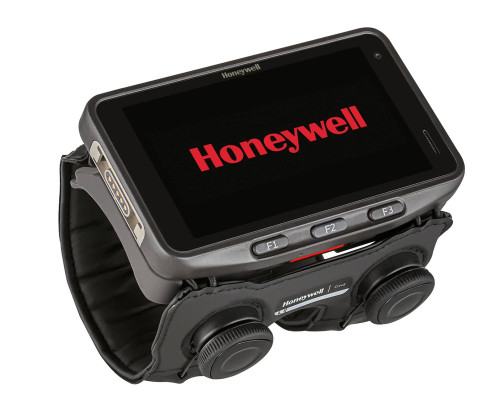
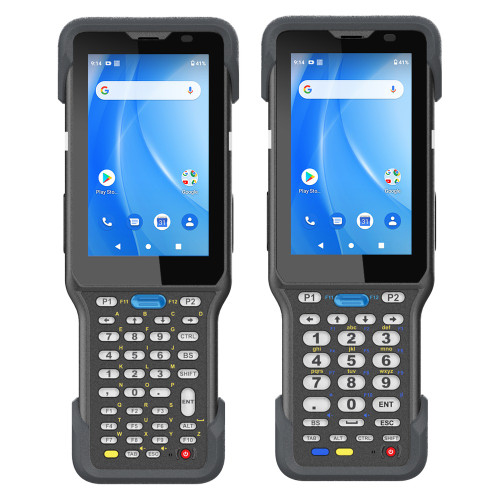
Both the Honeywell CW45-X0N-AND10XG and the Unitech HT730-LJ6122BG are body-worn, hands-free devices targeting warehouse and distribution-center workers who need mobile scanning without occupying their hands. The CW45 is a full wearable mobile computer built around a Qualcomm octa-core SoC running Android, while the HT730 is a wearable 2D scanner that also runs Android 10 and includes a 29-key keypad. Both support Wi-Fi and Bluetooth, carry large batteries exceeding 6,500 mAh, and are rated for drop and ingress environments. A buyer choosing between them is balancing compute depth and display size against dedicated scanning ergonomics and extended shift battery life.
In This Guide
- Which device offers stronger compute, scanning capability, and display for warehouse workflows?
- How do the two devices compare on ruggedness, environmental protection, and operating temperature?
- Which device provides better wireless connectivity options and longer shift coverage?
- Which should you choose: the CW45-X0N-AND10XG or the HT730-LJ6122BG?
- Side-by-Side Specs
- FAQ
Which device offers stronger compute, scanning capability, and display for warehouse workflows?
The CW45-X0N-AND10XG is powered by a Qualcomm QCS4290 octa-core processor running at 2.0 GHz paired with 6 GB RAM and 64 GB of onboard Flash storage, with additional expansion via microSD. This positions it as a general-purpose mobile computer capable of running WMS clients, VoIP, and image-intensive applications concurrently. Its 4.7-inch HD display with Corning Gorilla Glass 5 provides a larger viewing area suited to multi-field WMS screens and navigation UIs.
The HT730-LJ6122BG's processor, RAM, and storage capacity are not specified in the provided data, making a direct CPU-to-CPU or memory comparison impossible. Its 4-inch screen is smaller than the CW45's 4.7-inch panel. Where the HT730 leads on scanning is specificity: it documents a 2D area imager with a 30-degree tilt-down scan pattern operating at 60 fps, reading 1D linear codes, 2D symbologies (QR Code, Data Matrix, PDF417, Dot Code), and OCR. The CW45's scan engine and symbology support are not specified in the provided data. The HT730 also includes a 29-key physical keypad, which is absent on the CW45's documented package contents (arm mount and comfort pad only).
For compute-heavy workflows—voice-directed picking, multi-app task switching, or real-time analytics at the edge—the CW45's documented processor and memory give it a clear specification advantage. For dedicated, high-throughput scanning with physical key entry and documented OCR capability, the HT730's scan specs are more thoroughly defined in the available data.
How do the two devices compare on ruggedness, environmental protection, and operating temperature?
The CW45-X0N-AND10XG carries IP65 and IP67 dual ratings, meaning it is fully dust-tight and protected against low-pressure water jets (IP65) as well as temporary immersion up to 1 meter (IP67). Its operating temperature range is specified as -20 °C to 50 °C (-4 °F to 122 °F), and storage temperature extends from -30 °C to 70 °C (-22 °F to 158 °F). No drop rating is provided in the available specifications for the CW45.
The HT730-LJ6122BG specifies a 1.8-meter drop rating to concrete, extending to 2.4 meters when fitted with an optional bumper. This is a concrete ruggedness metric relevant to high-bay environments where devices fall from conveyors, lifts, or elevated pick stations. However, no IP ingress protection rating, operating temperature range, or storage temperature range is provided in the available HT730 specifications.
Neither device's ruggedness profile is fully documented in the provided data, which prevents a complete side-by-side comparison. The CW45 has the stronger ingress-protection story (dual IP65/IP67 with a -20 °C cold-start floor); the HT730 has the only documented drop specification. Buyers operating in wet or washdown environments should note the CW45's IP ratings; buyers prioritizing drop survivability should note that only the HT730 provides a certified drop height.
Which device provides better wireless connectivity options and longer shift coverage?
The CW45-X0N-AND10XG supports WiFi 6 (802.11 a/b/g/n/ac/ax), Bluetooth 5.1 with BLE, NFC, and USB. WiFi 6 is the current-generation 802.11ax standard offering improved throughput and reduced latency in dense AP environments—relevant in large DCs where dozens of devices share the same spectrum. Bluetooth 5.1 supports BLE for low-energy peripheral pairing. NFC is included. The CW45's 6,800 mAh Li-Ion battery is described as hot-swappable, which means batteries can be exchanged mid-shift without powering down the device—a significant operational advantage in continuous 24/7 operations.
The HT730-LJ6122BG specifies 2x2 MU-MIMO Wi-Fi, Bluetooth, and Dual SIM 4G LTE connectivity. The addition of Dual SIM 4G extends its usable range beyond warehouse Wi-Fi coverage zones to yard management, delivery docks, or off-site logistics—a capability the CW45 does not document. The HT730's 6,700 mAh battery is described as removable and rated for 20–26 hours of continuous operation. Whether it supports hot-swap is not specified in the provided data.
The CW45 leads on Wi-Fi generation (802.11ax vs. undocumented ax support on the HT730) and documents hot-swap battery capability. The HT730 leads on cellular connectivity with documented Dual SIM 4G—a differentiator for any deployment extending beyond a fixed Wi-Fi footprint. Battery capacity is comparable (6,800 mAh vs. 6,700 mAh); the HT730's 20–26-hour runtime figure is the only documented shift-life estimate, as no runtime figure is provided for the CW45.
Which should you choose: the CW45-X0N-AND10XG or the HT730-LJ6122BG?
Our take: The CW45-X0N-AND10XG is the stronger choice when the deployment demands a full-featured mobile computer with confirmed WiFi 6 (802.11ax), a documented hot-swappable 6,800 mAh battery, dual IP65/IP67 ingress protection, and a large 4.7-inch HD Gorilla Glass 5 display backed by a Qualcomm QCS4290 octa-core CPU and 6 GB RAM. Key spec deltas: the CW45 offers a 100 mAh larger battery with confirmed hot-swap versus no hot-swap documentation on the HT730; IP65/IP67 dual-rated ingress protection versus no IP rating disclosed for the HT730; and a 4.7-inch display versus the HT730's 4.0-inch screen. Conversely, the HT730-LJ6122BG is the stronger choice when Dual SIM 4G cellular coverage is required, when a documented 1.8-meter drop rating to concrete is the decisive safety criterion, or when a 29-key physical keypad and a documented 60 fps 2D/OCR scan engine are priorities over general computing depth. Platform-wise, buyers standardizing on Honeywell Mobility Edge or requiring confirmed WMS-client compute should favor the CW45; buyers needing cellular-ready wearable scanning across hybrid indoor/outdoor logistics sites should evaluate the HT730.
Side-by-Side Comparison
Spec-for-spec, from manufacturer data.
| Specification | Honeywell CW45-X0N-AND10XG | Unitech HT730-LJ6122BG |
|---|---|---|
| Product Type | Wearable Mobile Computer | Wearable 2D Scanner |
| Operating System | Android (non-GMS) | Android 10 |
| Processor | Qualcomm QCS4290 Octa-Core 2.0 GHz | — |
| RAM | 6 GB | — |
| Onboard Storage | 64 GB Flash + microSD | — |
| Display Size | 4.7 in HD Gorilla Glass 5 | 4.0 in |
| Scan Engine | — | 2D Area Imager (60 fps) |
| Symbologies | — | 1D, 2D (QR, Data Matrix, PDF417, Dot Code), OCR |
| Keypad | Arm Mount / Comfort Pad | 29-key |
| Camera | 8 MP front, 13 MP side | 13 MP |
| Wi-Fi | WiFi 6 (802.11 a/b/g/n/ac/ax) | 2x2 MU-MIMO Wi-Fi (generation not specified) |
| Cellular | — | Dual SIM 4G LTE |
| Bluetooth | 5.1 BLE | Bluetooth (version not specified) |
| NFC | Yes | — |
| Battery Capacity | 6,800 mAh Li-Ion (hot-swappable) | 6,700 mAh (removable) |
| Documented Battery Life | — | 20–26 hours continuous |
| IP Rating | IP65 / IP67 | — |
| Drop Rating | — | 1.8 m to concrete (2.4 m with bumper) |
| Operating Temperature | -20 to 50 °C (-4 to 122 °F) | — |
| Storage Temperature | -30 to 70 °C (-22 to 158 °F) | — |
| Form Factor / Mount | Arm Mount | Body Worn |
| FCC Approval | Yes | — |
Frequently Asked Questions
Which should you choose: the CW45-X0N-AND10XG or the HT730-LJ6122BG?
The CW45-X0N-AND10XG is the stronger choice when the deployment demands a full-featured mobile computer with confirmed WiFi 6 (802.11ax), a documented hot-swappable 6,800 mAh battery, dual IP65/IP67 ingress protection, and a large 4.7-inch HD Gorilla Glass 5 display backed by a Qualcomm QCS4290 octa-core CPU and 6 GB RAM. Key spec deltas: the CW45 offers a 100 mAh larger battery with confirmed hot-swap versus no hot-swap documentation on the HT730; IP65/IP67 dual-rated ingress protection versus no IP rating disclosed for the HT730; and a 4.7-inch display versus the HT730's 4.0-inch screen. Conversely, the HT730-LJ6122BG is the stronger choice when Dual SIM 4G cellular coverage is required, when a documented 1.8-meter drop rating to concrete is the decisive safety criterion, or when a 29-key physical keypad and a documented 60 fps 2D/OCR scan engine are priorities over general computing depth. Platform-wise, buyers standardizing on Honeywell Mobility Edge or requiring confirmed WMS-client compute should favor the CW45; buyers needing cellular-ready wearable scanning across hybrid indoor/outdoor logistics sites should evaluate the HT730.
Is the CW45-X0N-AND10XG or HT730-LJ6122BG better for large multi-shift DC operations?
The CW45-X0N-AND10XG documents a hot-swappable 6,800 mAh battery, which allows workers to swap batteries mid-shift without device downtime—a practical advantage in 24/7 distribution centers. The HT730-LJ6122BG specifies 20–26 hours of continuous operation from its 6,700 mAh battery, but hot-swap capability is not confirmed in the available specs. For operations that cannot tolerate device downtime between shifts, the CW45's documented hot-swap is the differentiating specification.
Which device is better suited for outdoor yard management or delivery dock use beyond the warehouse Wi-Fi footprint?
The HT730-LJ6122BG specifies Dual SIM 4G LTE connectivity in addition to Wi-Fi and Bluetooth, making it operable in locations without Wi-Fi coverage such as outdoor yards, loading docks, or delivery routes. The CW45-X0N-AND10XG does not document any cellular radio in the provided specifications. If the deployment extends beyond a fixed Wi-Fi infrastructure, the HT730 is the only device of the two with a documented cellular connectivity option.
Does either device support scanning OCR text, and what barcode symbologies are confirmed?
The HT730-LJ6122BG explicitly documents OCR support alongside 1D linear codes (Code 128, Code 39, UPC, EAN), and 2D symbologies including QR Code, Data Matrix, PDF417, and Dot Code, at a scan rate of 60 fps via a 2D area imager. The CW45-X0N-AND10XG's scan engine type, supported symbologies, and scan rate are not specified in the available product data. Buyers for whom OCR or specific 2D symbology support is a requirement should confirm the CW45's scan capabilities directly with Honeywell before selecting it over the HT730.
More Mobile Computer Comparisons
- Honeywell CW45-X0N-AND10XG vs Unitech HT730-LJ6142BG
- Honeywell CW45-X0N-AND10XG vs Unitech HT330-QA62TM3G-Z3
- Honeywell CW45-X0N-AND10XG vs Zebra TC2205-0G1250SS-US
- Honeywell CW45-X0N-AND10XG vs Honeywell CW45-X0N-AND10SG
- Honeywell CW45-X0N-AND10XG vs Honeywell CW45-X0N-BND10XG
- Honeywell CW45-X0N-AND10SG vs Unitech HT730-LJ6122BG
Mobile Computer Buying Guides
Get a Second Opinion on Your Camera Choice
Share your site layout, coverage goals, and budget. Our team will validate the camera selection, flag anything we would change, and recommend products that match the use case.