
Best Wearable Computers for Warehouse Picking
Wearable computers and ring scanners for hands-free picking — wrist terminals, Bluetooth ring scanners, and all-shift battery for fulfillment.

Karl Wilson
Warehouse & Mobile Computing Specialist · Working integrator
Bottom line
For warehouse picking, the right wearable computer comes down to three non-negotiables: all-day battery life, a scan engine that acquires barcodes without breaking stride, and an IP rating that survives your floor environment. The Honeywell CW45 and Zebra TC2205 lines cover the rugged end with IP65/IP67 ratings and wide thermal ranges, while the Unitech HT730 variants add dual-SIM 4G flexibility for facilities where Wi-Fi coverage is patchy or for yard/dock work. Match the unit to your scanning workflow, WMS platform support, and shift length — and pair any of these with a Bluetooth ring scanner to keep workers' hands free at the point of pick.
What This Setup Needs
Warehouse picking puts wearable computers through continuous abuse: repetitive motion, drop exposure, temperature swings between refrigerated zones and loading docks, and operators who cannot afford to stop and fiddle with a device mid-pick. These are the spec dimensions that determine whether a unit survives a full deployment or gets pulled from rotation in six months.
- IP/Ingress Rating: IP65 keeps out dust and low-pressure water jets — adequate for ambient dry warehouses. IP67 adds submersion tolerance (1 m for 30 min) and is the right call for food & beverage, produce cold chain, or any area with wash-down or condensation risk. Neither rating protects against all chemical cleaners, so verify the MIL-spec sheets if you run aggressive sanitation protocols.
- Operating Temperature Range: A wide thermal spec (-20 °C / -4 °F on the low end) matters the moment any part of your pick path runs through a freezer or cooler. Wrist-worn units with batteries rated to -20 °C avoid the sudden power drop and scan failures that happen when consumer-grade hardware hits freezer temps mid-shift.
- Connectivity Architecture — Wi-Fi vs. Wi-Fi + 4G Dual-SIM: Pure Wi-Fi units are the right fit for facilities with dense, well-maintained 802.11 infrastructure. Adding dual-SIM 4G gives you a live WMS connection in yards, cross-docks, and satellite sites where Wi-Fi simply does not reach — it also serves as a failover during AP outages that would otherwise stall a Wi-Fi-only fleet.
- Form Factor and Wearability: Wrist terminals replace a handheld but still occupy one hand. True hands-free picking pairs a wrist-worn terminal with a Bluetooth ring scanner worn on the trigger finger — verify that the wearable you select has Bluetooth support and that your ring scanner is on the vendor's certified peripheral list.
- Scan Engine Performance: Confirm 1D/2D decode capability and omnidirectional scanning. In a pick environment, workers present barcodes at varied angles under warehouse lighting — an aggressive decode engine with a wide field of view cuts scan time per pick and reduces misreads that generate re-work.
- Battery Life and Hot-Swap Support: A standard two- or three-shift operation demands a battery strategy. Look for rated shift-length specs, and if your operation runs 24/7, prioritize units with hot-swappable or field-swappable batteries so workers do not lose their WMS session during a swap. Factor charging infrastructure (multi-bay cradles) into your total cost.
- WMS and MDM Ecosystem Compatibility: Android-based wearables integrate with most modern WMS platforms, but validate the specific OS version and whether your WMS vendor has a tested build. MDM support (SOTI, VMware Workspace ONE, Honeywell Operational Intelligence, Zebra Visibility Services) dictates how efficiently you can push firmware, lock down apps, and monitor device health across a fleet.
Our Picks
Selected from our catalog by spec-fit. All channel-direct and factory-new — not ranked by price.
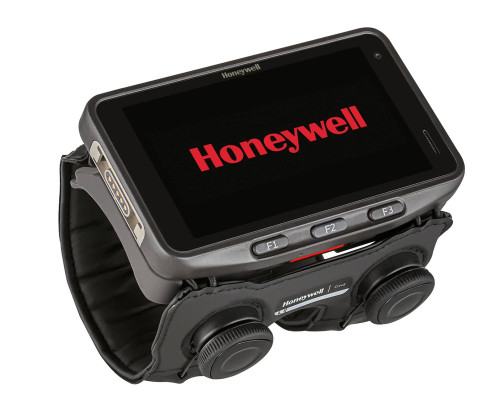
Honeywell CW45-X0N-AND10XG
Wearable
The Honeywell CW45 in this configuration is well-suited for ambient and moderate-cold warehouse picking operations where a rugged IP65-rated wrist terminal with a broad thermal tolerance (-20 to 50 °C) is required — a strong fit for operations spanning receiving docks to cooler anterooms on a single device and shift.
View product →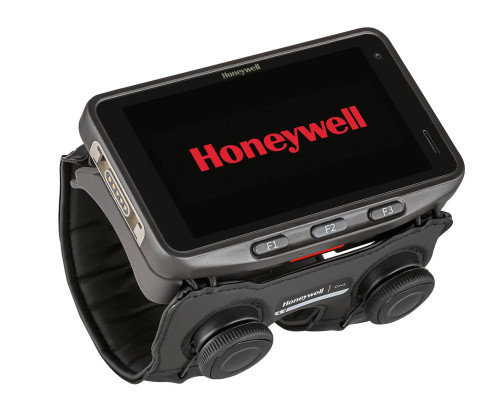
Honeywell CW45-X0N-AND10SG
Wearable
Sharing the same IP65 rating and -20 to 50 °C thermal range as its sibling, this CW45 variant suits facilities standardizing on a specific Android software or accessory configuration while staying on the same rugged Honeywell wearable platform — evaluate both CW45 SKUs side by side against your WMS vendor's certified build list to select the right configuration for your deployment.
View product →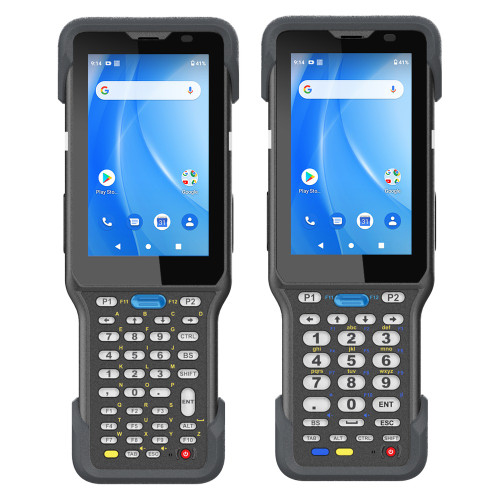
Unitech HT730-LJ6122BG
Wearable
The Unitech HT730 in this configuration is well-suited for multi-site or yard-intensive operations where dual-SIM 4G connectivity provides a live WMS link independent of fixed Wi-Fi infrastructure — Bluetooth support makes it a practical candidate for pairing with a ring scanner for true hands-free picking on loading docks or external staging areas.
View product →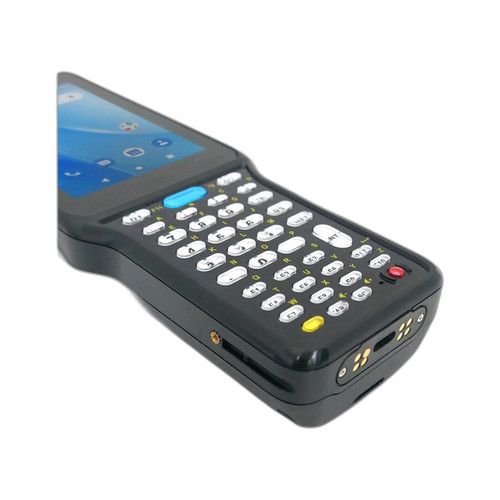
Unitech HT730-LJ6142BG
Wearable
This HT730 variant covers the same wearable 4G dual-SIM and Wi-Fi connectivity profile and is a strong fit when you need fleet flexibility across both indoor warehouse Wi-Fi zones and outdoor or remote areas — verify the specific 4G band support against your carrier's coverage map for your facility region before committing to a fleet order.
View product →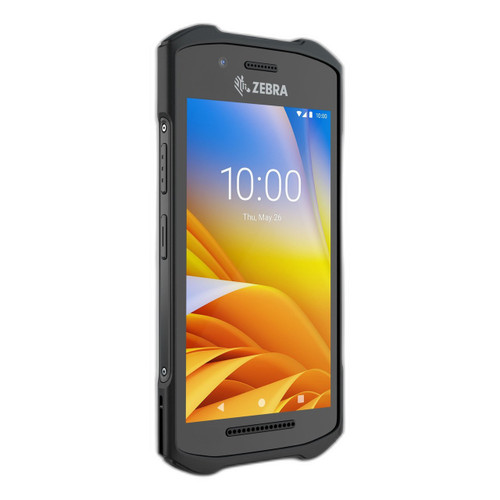
Zebra TC2205-0G1250SS-US
Wearable
The Zebra TC2205 in US configuration carries an IP67 rating, making it well-suited for food and beverage, produce, or any picking environment with wash-down procedures or condensation from freezer transitions — buyers standardized on the Zebra MDM and accessory ecosystem (ring scanners, multi-bay cradles, Zebra Visibility Services) will find this a natural fleet fit.
View product →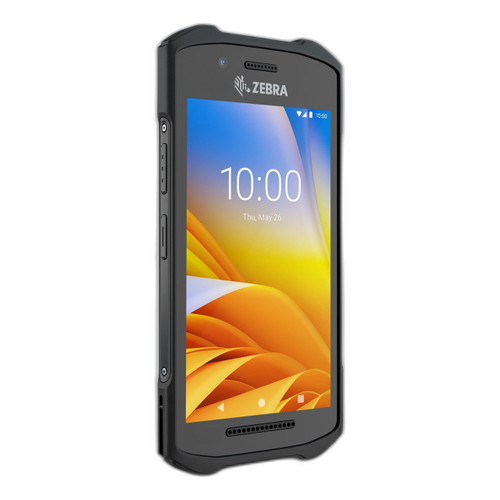
Zebra TC2205-0G1250SS-FT
Wearable
The TC2205 in FT (freezer/temperature-specific) trim targets cold-storage and freezer picking directly — the IP67 seal combined with hardware rated for low-temperature operation makes this a strong fit for facilities where pickers move continuously between ambient and deep-freeze zones and device reliability in sub-zero conditions is a hard requirement.
View product →Frequently Asked Questions
What is the difference between IP65 and IP67 for warehouse wearables?
IP65 is dust-tight and resists low-pressure water jets from any direction — sufficient for most dry or lightly damp warehouse floors. IP67 adds the ability to withstand immersion in up to 1 meter of water for 30 minutes, which matters in food processing, produce cold chain, and any area subject to floor wash-down or heavy condensation. If your operation includes those conditions, do not accept IP65 as a substitute; the failure mode from water ingress in a scanner is usually sudden and non-repairable in the field.
Do I need 4G dual-SIM on a wearable if my warehouse already has Wi-Fi?
For a fully covered indoor facility with a well-maintained 802.11 network, a Wi-Fi-only wearable is the simpler and typically less expensive choice. The case for dual-SIM 4G is specific: yard management and dock operations where workers move outside Wi-Fi coverage, satellite or spoke facilities that lack enterprise-grade Wi-Fi infrastructure, and continuity during Wi-Fi outages or maintenance windows. If your pick paths are entirely indoors and your AP coverage is solid, 4G adds cost and a carrier data plan without a material operational benefit.
How do I choose between a wrist terminal and a handheld mobile computer for picking?
The deciding factor is how frequently workers need both hands free at the point of pick. In a pick-and-place or put-to-light operation where the picker's hands are on the product or tote constantly, a wrist-worn terminal paired with a Bluetooth ring scanner eliminates the put-down/pick-up motion that adds seconds to every pick cycle — those seconds compound significantly across thousands of picks per shift. Handheld mobile computers remain the right choice for tasks requiring a larger screen for complex data entry, receiving verification with multiple field inputs, or workflows where scan frequency is low enough that ergonomics are not the binding constraint.
What Bluetooth ring scanners are compatible with these wearables?
Compatibility depends on the specific wearable platform and the ring scanner vendor's certified peripheral list. Honeywell CW45 units are typically validated against Honeywell's own 8675i ring scanner family. Zebra TC-series wearables pair with Zebra RS series ring scanners (RS5100, RS6100) and that pairing is covered under Zebra's enterprise support contract. Unitech HT730 supports standard Bluetooth HID and SPP profiles, which gives broader ring scanner compatibility, but verify your specific WMS software handles the scan output format correctly before finalizing the peripheral selection. Always test the complete pairing — wearable, ring scanner, WMS scan handler — in a lab environment before fleet rollout.
How do I plan battery strategy for 10-hour warehouse shifts?
Start with the manufacturer's rated battery life under your expected scan duty cycle — rated hours at 'typical' use are usually derived at moderate scan frequency and screen-on time; heavy scanning or continuous screen use will reduce that. For shifts approaching or exceeding 8 hours, evaluate whether the device supports hot-swap or field-swap batteries, and plan multi-bay charging cradles scaled to your headcount so batteries rotate through charge without devices going offline. For 24/7 operations with multiple shifts, a swap station at each picking zone with pre-charged batteries is standard practice; build the cradle and spare-battery cost into your total cost of ownership when comparing device options.
Which Android MDM platforms work with these wearables?
All three brands in this lineup — Honeywell, Unitech, and Zebra — run Android and support major enterprise MDM platforms including SOTI MobiControl, VMware Workspace ONE (Intelligent Hub), and Microsoft Intune with Android Enterprise enrollment. Honeywell additionally offers Operational Intelligence for device health monitoring. Zebra has deep OEMConfig integration with most major MDMs and Zebra DNA device intelligence. Before selecting an MDM, confirm that your chosen platform supports the specific Android OS version shipped on the device and that your WMS vendor's app is deployable via managed Google Play or silent APK push — gaps here are a common post-deployment surprise in fleet rollouts.
Related Resources
- Mobile Computer comparisons — head-to-head spec matchups
- Rugged Mobile Computer Buying Guide
- Best Rugged Mobile Computers for Warehouse Operations
- Best Rugged Tablets for Field Service
- All product comparisons
Speccing this for a project?
Send us your requirements and our senior specialists will confirm specs, compatibility, availability and pricing — free, usually within one business day. Channel-direct, factory-new, serving commercial integrators since 2014.
Get a Free QuoteComparing for a project?
Send us the models you are weighing and our team will confirm specs, compatibility, availability, and pricing — free, usually within one business day.