
Honeywell 8675I505-RHGM-PS vs Zebra RS21C0-TS00ZWR: Specification Comparison
Both the Honeywell 8675I505-RHGM-PS and the Zebra RS21C0-TS00ZWR are wearable barcode scanners designed for hands-free operation in warehouse and logistics environments. The Honeywell unit is a Bluetooth ring scanner accessory within the 8675i family, while the Zebra is a wrist-worn mobile computer with 802.11 wireless. Both support 1D and 2D symbologies and carry IP-rated dust and moisture protection, placing them in the same cross-shop category for buyers evaluating wearable scanning solutions for pick-pack, receiving, or cycle-counting workflows.
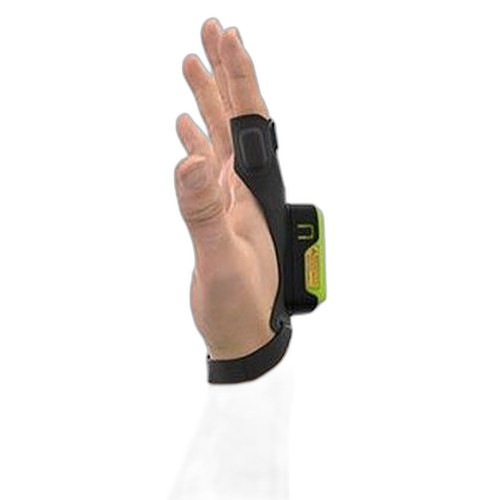
In This Guide
- What symbologies and scan performance does each device support?
- How do the two devices compare in durability rating, weight, and physical form factor?
- How do wireless connectivity, battery, and deployment ecosystem compare between the two?
- Which should you choose: the 8675I505-RHGM-PS or the RS21C0-TS00ZWR?
- Side-by-Side Specs
- FAQ
What symbologies and scan performance does each device support?
The Honeywell 8675I505-RHGM-PS is specified as a 1D/2D ring scanner, covering the full range of linear and matrix codes encountered in warehouse environments. No scan rate or specific symbology list is provided in the available specifications.
The Zebra RS21C0-TS00ZWR lists supported symbologies explicitly: UPC, 1D linear codes (including Code 39 and Code 128 per the enriched spec), and 2D codes (QR Code and Data Matrix). Its scan rate is documented at 92 scans/sec minimum, 104 typical, and 116 maximum (bi-directional). The structured specification field labels it a 1D Scan Engine, while the enriched description references a 2D imager — buyers should verify final engine configuration against the datasheet.
For operations requiring confirmed 2D throughput with a published scan rate, the Zebra provides more documented performance data. The Honeywell's scan capability is asserted but not quantified in the provided specifications.
How do the two devices compare in durability rating, weight, and physical form factor?
The Honeywell 8675I505-RHGM-PS carries an IP55 rating, meaning it is tested against dust ingress and low-pressure water jets from any direction — one step above the Zebra's IP54, which protects against dust and water splash but not directed water jets. The Honeywell weighs 28 g, making it one of the lightest wearable scanners in its class.
The Zebra RS21C0-TS00ZWR is rated IP54 and weighs 56.7 g (2.0 oz), approximately twice the Honeywell's weight. Its dimensions are documented at 1.9 in. H × 1.4 in. W × 1.9 in. D with a ±35° roll tolerance. No comparable dimensional data is provided for the Honeywell in the available specifications.
For environments with incidental water spray or prolonged outdoor exposure, the Honeywell's IP55 rating offers a marginal but real durability advantage. The Honeywell's 28 g form factor is also significantly lighter, which matters in multi-shift deployments where ergonomic fatigue accumulates. The Zebra's documented storage temperature range (−40° to 70°C) gives it an edge in extreme cold-storage environments, as no operating temperature data is provided for the Honeywell.
How do wireless connectivity, battery, and deployment ecosystem compare between the two?
The Honeywell 8675I505-RHGM-PS connects via Bluetooth wireless and carries a 380 mAh battery. It is explicitly described as an accessory within the 8675i ring scanner ecosystem, compatible with the Honeywell 8675i host device. Optional accessories listed include a left-hand glove (8675I505-LHGXL-PS), lanyard, trigger module (8675I505-TRGR), and spare battery (BAT-SCN10). No 802.11 radio is specified.
The Zebra RS21C0-TS00ZWR uses 802.11 enterprise Wi-Fi for connectivity, enabling real-time data synchronization to WMS and backend systems without a paired host device. Battery details in the available specifications reference only a backup rechargeable UPS battery, with no primary battery capacity figure documented.
The connectivity architectures serve different deployment models. The Honeywell operates as a Bluetooth peripheral requiring a paired host device (the 8675i), which adds a device dependency but may suit existing Honeywell mobile computer deployments. The Zebra connects directly to enterprise Wi-Fi infrastructure, making it a standalone wearable computer suitable for environments with established 802.11 networks. Primary battery capacity for the Zebra is not available in the provided specifications, limiting a direct runtime comparison.
Which should you choose: the 8675I505-RHGM-PS or the RS21C0-TS00ZWR?
Our take: The 8675I505-RHGM-PS is the stronger choice when weight and IP rating are the primary decision criteria — at 28 g versus the RS21C0-TS00ZWR's 56.7 g, it is half the weight, and its IP55 rating exceeds the Zebra's IP54, providing added protection against directed water spray. The Zebra RS21C0-TS00ZWR is the stronger choice when standalone 802.11 connectivity and a documented scan rate are required — it supports direct enterprise Wi-Fi without a paired host device and delivers up to 116 scans/sec (bi-directional), a performance figure the Honeywell does not provide in available specifications. Buyers already invested in Honeywell's 8675i ecosystem with an existing host device will find the Honeywell ring scanner a natural, lightweight fit. Buyers deploying a standalone wearable computer with real-time WMS integration over Wi-Fi, and who need documented scan throughput, should evaluate the Zebra. Note that the Zebra's primary battery capacity is not documented in available specifications and should be confirmed before purchase.
Side-by-Side Comparison
Spec-for-spec, from manufacturer data.
| Specification | Honeywell 8675I505-RHGM-PS | Zebra RS21C0-TS00ZWR |
|---|---|---|
| Product Type | Ring Scanner Accessory | Wearable Mobile Computer |
| Series / Family | 8675i | — |
| Scan Type | 1D/2D | 1D/2D (per enriched spec) |
| Scan Engine Spec Field | Wearable Ring Scanner (1D/2D) | 1D (structured spec); 2D imager (enriched) |
| Symbologies | — | UPC, Code 39, Code 128, QR, Data Matrix |
| Scan Rate | — | 92 min / 104 typical / 116 max scans/sec |
| Connectivity | Bluetooth Wireless | 802.11 Enterprise Wi-Fi |
| Standalone Operation | No (requires 8675i host) | Yes |
| IP Rating | IP55 | IP54 |
| Weight | 28 g | 56.7 g (2.0 oz) |
| Dimensions | — | 1.9 in. H × 1.4 in. W × 1.9 in. D |
| Battery Capacity | 380 mAh | — |
| Storage Temperature | — | −40° to 70°C (−25° to 160°F) |
| Outdoor Ready | Yes | — |
| Warranty | 3-year | 1-year |
| Part Number | 8675I505-RHGM-PS | RS21C0-TS00ZWR |
Frequently Asked Questions
Which should you choose: the 8675I505-RHGM-PS or the RS21C0-TS00ZWR?
The 8675I505-RHGM-PS is the stronger choice when weight and IP rating are the primary decision criteria — at 28 g versus the RS21C0-TS00ZWR's 56.7 g, it is half the weight, and its IP55 rating exceeds the Zebra's IP54, providing added protection against directed water spray. The Zebra RS21C0-TS00ZWR is the stronger choice when standalone 802.11 connectivity and a documented scan rate are required — it supports direct enterprise Wi-Fi without a paired host device and delivers up to 116 scans/sec (bi-directional), a performance figure the Honeywell does not provide in available specifications. Buyers already invested in Honeywell's 8675i ecosystem with an existing host device will find the Honeywell ring scanner a natural, lightweight fit. Buyers deploying a standalone wearable computer with real-time WMS integration over Wi-Fi, and who need documented scan throughput, should evaluate the Zebra. Note that the Zebra's primary battery capacity is not documented in available specifications and should be confirmed before purchase.
Is the 8675I505-RHGM-PS or the RS21C0-TS00ZWR better for cold-storage warehouse environments?
The Zebra RS21C0-TS00ZWR has a documented storage temperature range of −40° to 70°C, which covers cold-storage and freezer environments. No operating or storage temperature range is provided in the available specifications for the Honeywell 8675I505-RHGM-PS, so its suitability for cold storage cannot be confirmed from spec data alone. Buyers with cold-chain requirements should consult the Honeywell datasheet directly.
Does the Honeywell 8675I505-RHGM-PS work on its own, or does it need another device?
The 8675I505-RHGM-PS is specified as a ring scanner accessory within the Honeywell 8675i family. It connects via Bluetooth and is listed as compatible with the Honeywell 8675i Ring Scanner host device. It is not a standalone computer — it requires a paired host device to transmit scan data, unlike the Zebra RS21C0-TS00ZWR, which connects directly to enterprise Wi-Fi infrastructure.
Which device has a longer warranty, the Honeywell 8675I505-RHGM-PS or the Zebra RS21C0-TS00ZWR?
The Honeywell 8675I505-RHGM-PS carries a 3-year warranty per the provided specifications. The Zebra RS21C0-TS00ZWR carries a 1-year warranty. The Honeywell's warranty term is three times longer, which is a meaningful total-cost-of-ownership differentiator for large deployments.
More Barcode Scanner Comparisons
- Unitech HT730-LJ6122BG vs Datalogic HS7500SR
- Unitech HT730-LJ6122BG vs Honeywell 8690IB601-2
- Unitech HT730-LJ6122BG vs Honeywell 8690IB201-2-N
- Unitech HT730-LJ6122BG vs Honeywell 8680I400-2
- Unitech HT730-LJ6122BG vs Unitech HT730-LJ6142BG
- Unitech HT730-LJ6142BG vs Datalogic HS7500SR
Barcode Scanner Buying Guides
Get a Second Opinion on Your Camera Choice
Share your site layout, coverage goals, and budget. Our team will validate the camera selection, flag anything we would change, and recommend products that match the use case.