
Honeywell 8675I300SR-2-N vs Zebra RS21C0-TS00ZWR: Specification Comparison
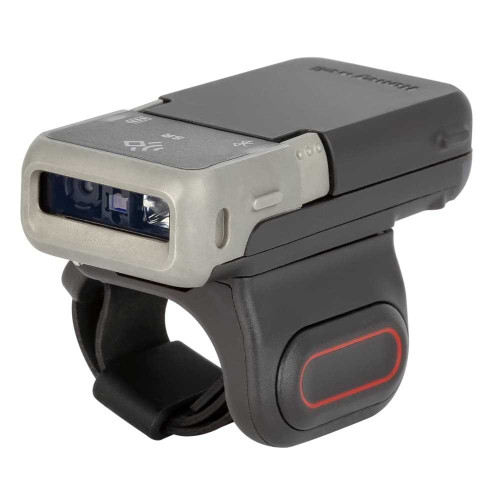
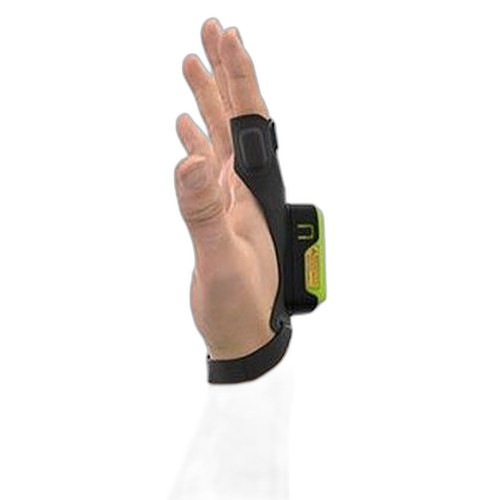
Both the Honeywell 8675I300SR-2-N and the Zebra RS21C0-TS00ZWR are wearable, hands-free barcode scanners targeting warehouse pick-pack, receiving, and logistics workflows. The Honeywell unit is a ring-style scanner with Bluetooth connectivity, while the Zebra is a wrist-mount wearable mobile computer with 802.11 enterprise Wi-Fi. Both capture 1D and 2D symbologies and carry IP-rated dust and moisture protection. This comparison evaluates scan capability, durability and physical footprint, and connectivity architecture across the two devices.
In This Guide
- Which scanner handles a broader range of barcode types and scan speeds?
- Which device is better suited to harsh or mobile physical environments?
- How do the two devices connect to infrastructure, and what does battery life look like?
- Which should you choose: the 8675I300SR-2-N or the RS21C0-TS00ZWR?
- Side-by-Side Specs
- FAQ
Which scanner handles a broader range of barcode types and scan speeds?
The Honeywell 8675I300SR-2-N uses an area imager (844 × 640 pixel array) capable of reading 1D and 2D barcodes, and its specs explicitly note the ability to decode damaged, low-contrast, and high-density codes. No scan rate in scans-per-second is provided in the supplied specifications.
The Zebra RS21C0-TS00ZWR specifies a 2D imager covering UPC, Code 39, Code 128, QR, and Data Matrix symbologies. It provides a documented scan rate of 92 scans/sec minimum, 104 typical, and 116 maximum (bi-directional). No equivalent scan-rate figure is available for the Honeywell unit from the provided specs.
For buyers who need a guaranteed throughput floor, Zebra's published scan-rate data offers a concrete benchmark. Honeywell's callout of damaged and low-contrast code decoding addresses read-reliability in degraded-label environments, a capability not explicitly stated for the Zebra in the provided specs.
Which device is better suited to harsh or mobile physical environments?
The Honeywell 8675I300SR-2-N carries an IP55 rating, meaning it is protected against dust ingress and low-pressure water jets from any direction. It weighs 28 g, making it one of the lightest wearable scanner configurations available. Storage and operating temperature range are not provided in the supplied specifications.
The Zebra RS21C0-TS00ZWR is rated IP54, protecting against dust ingress and water splash but not sustained water jets (the fifth digit, 4 vs. 5, represents a lower water-resistance tier). It weighs 56.7 g (2.0 oz), more than double the Honeywell's 28 g. Its storage temperature range is documented as -40 °C to 70 °C (-25 °F to 160 °F); operating temperature range is not separately specified in the provided data.
The Honeywell's IP55 rating provides a one-tier advantage in water resistance over the Zebra's IP54, and its 28 g weight imposes significantly less fatigue load over a full shift. The Zebra's storage temperature envelope is a useful logistics spec but does not indicate superior in-use durability from the data provided.
How do the two devices connect to infrastructure, and what does battery life look like?
The Honeywell 8675I300SR-2-N connects via Bluetooth wireless. No Wi-Fi or specific Bluetooth version is stated in the provided specifications. Its battery is a 380 mAh rechargeable cell; runtime in hours is not specified in the provided data.
The Zebra RS21C0-TS00ZWR connects via 802.11 enterprise Wi-Fi. No Bluetooth specification is provided. The battery is described as a 'backup rechargeable UPS battery for operation during' — the specification as supplied is incomplete and no mAh capacity or runtime figure is available.
These two devices use fundamentally different RF architectures. The Honeywell's Bluetooth design pairs it with a host mobile computer or gateway, while the Zebra's 802.11 enterprise radio connects directly to a wireless LAN and WMS/backend systems in real time. Buyers operating a Bluetooth-centric infrastructure with paired handhelds will align better with the Honeywell; those running 802.11 enterprise WLANs with direct WMS integration will align better with the Zebra. Battery capacity is only quantified for the Honeywell (380 mAh); the Zebra's battery spec in the provided data is incomplete.
Which should you choose: the 8675I300SR-2-N or the RS21C0-TS00ZWR?
Our take: The 8675I300SR-2-N is the stronger choice when operator fatigue, water-resistance margin, and Bluetooth-paired host architectures are the primary decision drivers. It weighs 28 g versus the Zebra's 56.7 g — a 50% weight reduction that directly reduces repetitive-strain risk over long picking shifts. Its IP55 rating offers one protection tier above the Zebra's IP54, specifically in sustained water-jet exposure. Its area imager explicitly supports damaged and low-contrast code decoding, a reliability advantage in degraded-label environments. However, the Zebra RS21C0-TS00ZWR is the stronger choice when direct 802.11 enterprise WLAN integration and a documented scan-rate guarantee matter: it specifies 92–116 scans/sec bi-directional and connects natively to WMS back-ends over enterprise Wi-Fi, capabilities not addressed in the Honeywell's supplied specs. Platform fit is decisive — pair the Honeywell with Bluetooth-centric mobile host deployments; pair the Zebra with 802.11 enterprise warehouse networks requiring real-time data sync.
Side-by-Side Comparison
Spec-for-spec, from manufacturer data.
| Specification | Honeywell 8675I300SR-2-N | Zebra RS21C0-TS00ZWR |
|---|---|---|
| Product Type | Wearable Ring Scanner | Wearable Mobile Computer |
| SKU / Part Number | 8675I300SR-2-N | RS21C0-TS00ZWR |
| Scan Capability | 1D / 2D | 1D / 2D |
| Scan Engine | Area Imager (844 × 640 px) | 2D Imager |
| Supported Symbologies | 1D and 2D barcodes | UPC, Code 39, Code 128, QR, Data Matrix |
| Damaged / Low-Contrast Code Decoding | Yes (per spec) | — |
| Scan Rate | — | 92 min / 104 typical / 116 max scans/sec |
| IP Rating | IP55 | IP54 |
| Weight | 28 g | 56.7 g (2.0 oz) |
| Connectivity | Bluetooth Wireless | 802.11 Enterprise Wi-Fi |
| Battery Capacity | 380 mAh | — (spec incomplete) |
| Real-Time WMS / Backend Sync | — | Yes (per spec) |
| Storage Temperature | — | -40 °C to 70 °C |
| Dimensions | — | 1.9 in H × 1.4 in W × 1.9 in D |
| Warranty | 3 years | 1 year |
| Outdoor Ready | Yes (per spec) | — |
Frequently Asked Questions
Which should you choose: the 8675I300SR-2-N or the RS21C0-TS00ZWR?
The 8675I300SR-2-N is the stronger choice when operator fatigue, water-resistance margin, and Bluetooth-paired host architectures are the primary decision drivers. It weighs 28 g versus the Zebra's 56.7 g — a 50% weight reduction that directly reduces repetitive-strain risk over long picking shifts. Its IP55 rating offers one protection tier above the Zebra's IP54, specifically in sustained water-jet exposure. Its area imager explicitly supports damaged and low-contrast code decoding, a reliability advantage in degraded-label environments. However, the Zebra RS21C0-TS00ZWR is the stronger choice when direct 802.11 enterprise WLAN integration and a documented scan-rate guarantee matter: it specifies 92–116 scans/sec bi-directional and connects natively to WMS back-ends over enterprise Wi-Fi, capabilities not addressed in the Honeywell's supplied specs. Platform fit is decisive — pair the Honeywell with Bluetooth-centric mobile host deployments; pair the Zebra with 802.11 enterprise warehouse networks requiring real-time data sync.
Is the 8675I300SR-2-N or RS21C0-TS00ZWR better for environments with wet or washdown conditions?
The Honeywell 8675I300SR-2-N holds an IP55 rating, which protects against low-pressure water jets from any direction. The Zebra RS21C0-TS00ZWR is rated IP54, which covers water splash but not directed water jets. For environments with hose-down or sustained water exposure, the Honeywell's IP55 offers a measurable advantage based on the provided specs.
Which device integrates more directly with a warehouse management system (WMS)?
Based on the provided specifications, the Zebra RS21C0-TS00ZWR is explicitly described as supporting real-time data sync to WMS and backend systems over 802.11 enterprise Wi-Fi. The Honeywell 8675I300SR-2-N uses Bluetooth and pairs with a host device; WMS integration would depend on the paired host rather than the ring scanner itself. No WMS integration detail is provided in the Honeywell's supplied specs.
Which scanner is lighter and less fatiguing for full-shift wear?
The Honeywell 8675I300SR-2-N weighs 28 g. The Zebra RS21C0-TS00ZWR weighs 56.7 g (2.0 oz). The Honeywell is approximately half the weight of the Zebra per the provided specifications, which is a meaningful ergonomic factor for operators wearing the device across an eight-hour shift.
More Barcode Scanner Comparisons
- Unitech HT730-LJ6122BG vs Datalogic HS7500SR
- Unitech HT730-LJ6122BG vs Honeywell 8690IB601-2
- Unitech HT730-LJ6122BG vs Honeywell 8690IB201-2-N
- Unitech HT730-LJ6122BG vs Honeywell 8680I400-2
- Unitech HT730-LJ6122BG vs Unitech HT730-LJ6142BG
- Unitech HT730-LJ6142BG vs Datalogic HS7500SR
Barcode Scanner Buying Guides
Get a Second Opinion on Your Camera Choice
Share your site layout, coverage goals, and budget. Our team will validate the camera selection, flag anything we would change, and recommend products that match the use case.