
Honeywell 8675I300SR-2-N vs Honeywell 8690IB601-2: Specification Comparison
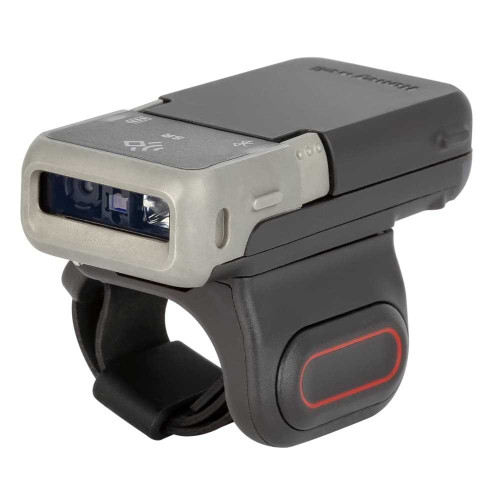
Both the Honeywell 8675I300SR-2-N and the Honeywell 8690IB601-2 are wearable ring barcode scanners designed for hands-free 1D/2D barcode capture in warehouse, logistics, and retail environments. Each carries an IP55 dust-and-water-resistance rating, Bluetooth wireless connectivity, and a three-year warranty, making them direct cross-shop candidates for operations teams evaluating wearable scanning solutions. The comparison below examines battery and weight trade-offs, environmental and durability specs, and scanning capability differences based solely on the provided specifications.
In This Guide
- Which scanner offers better battery capacity and a lighter wear experience?
- How do these scanners compare for operating environment and temperature range?
- Which model delivers stronger scanning capability and connectivity specifications?
- Which should you choose: the 8675I300SR-2-N or the 8690IB601-2?
- Side-by-Side Specs
- FAQ
Which scanner offers better battery capacity and a lighter wear experience?
Battery capacity and unit weight are the two ergonomic constants a wearable ring scanner user feels across an entire shift. The 8690IB601-2 edges ahead on both metrics: its 420 mAh battery is 40 mAh (roughly 11%) larger than the 8675I300SR-2-N's 380 mAh cell, and at 26 g it is 2 g lighter than the 8675I300SR-2-N's 28 g.
The 8675I300SR-2-N specifies a 380 mAh rechargeable battery and a 28 g body weight. No rated shift-life figure is provided for either model in the supplied specifications, so a direct hour-for-hour runtime comparison cannot be made. However, on the raw capacity figure the 8690IB601-2 holds the advantage, which matters in multi-shift or extended-duty deployments where charging opportunities are limited.
How do these scanners compare for operating environment and temperature range?
Both models share an IP55 ingress-protection rating, meaning both resist dust intrusion and low-pressure water jets — suitable for typical indoor warehouse conditions including wash-down zones and outdoor dock areas. Neither model's spec sheet claims a higher IP rating.
The key differentiator here is operating temperature. The 8690IB601-2 provides an explicit operating-temperature range of -20°C to 50°C, confirming suitability for cold-storage facilities, freezer aisles, and outdoor field-service work across a wide thermal window. The 8675I300SR-2-N does not include an operating-temperature figure in the provided specifications, leaving cold-chain or extreme-temperature suitability unconfirmed for that model from the available data.
Which model delivers stronger scanning capability and connectivity specifications?
Both scanners decode 1D and 2D barcodes over Bluetooth wireless. The 8675I300SR-2-N's specifications include an area imager with an 844 × 640 pixel array and explicitly note the ability to decode damaged, low-contrast, and high-density barcodes — attributes that indicate a robust decode engine for challenging label conditions common in high-throughput logistics.
The 8690IB601-2 specifies omni-directional scan pattern and a Bluetooth frequency band of 2.4 GHz to 2.5 GHz (ISM), and an indicated read-range window of 44 mm to 552 mm. The 8675I300SR-2-N does not list an explicit read-range figure in the provided specs. The 8690IB601-2's PoE Class 1 field appears to be a data-entry anomaly — PoE is not a meaningful attribute for a Bluetooth ring scanner — and has been treated as non-applicable in this comparison.
Which should you choose: the 8675I300SR-2-N or the 8690IB601-2?
Our take: The 8690IB601-2 is the stronger choice when operating temperature range and marginally longer battery life are the deciding factors. It specifies a -20°C to 50°C operating range — essential for cold-storage or outdoor field work — while the 8675I300SR-2-N provides no temperature rating in the available specs. The 8690IB601-2 also carries a 420 mAh battery versus 380 mAh and weighs 26 g versus 28 g, small but cumulative ergonomic advantages over a full shift. Conversely, the 8675I300SR-2-N specifies an 844 × 640 pixel area-imager array and explicit capability for damaged, low-contrast, and high-density barcode decoding — making it the better-documented choice for operations where label quality is inconsistent or codes are densely packed. Buyers prioritising proven cold-chain or wide-temperature deployment should select the 8690IB601-2; those prioritising decode performance on difficult labels should favour the 8675I300SR-2-N.
Side-by-Side Comparison
Spec-for-spec, from manufacturer data.
| Specification | Honeywell 8675I300SR-2-N | Honeywell 8690IB601-2 |
|---|---|---|
| Part Number | 8675I300SR-2-N | 8690IB601-2 |
| Series / Family | 8675i | 8680i |
| Form Factor | Wearable Ring Scanner | Wearable Ring Scanner |
| Scan Type | 1D/2D Barcode | 1D and 2D Barcode |
| Scan Pattern | Area Imager (844 × 640 px) | Omni-directional |
| IP Rating | IP55 | IP55 |
| Connectivity | Bluetooth Wireless | Bluetooth Wireless (2.4–2.5 GHz ISM) |
| Battery Capacity | 380 mAh | 420 mAh |
| Weight | 28 g | 26 g |
| Operating Temperature | — | -20°C to 50°C |
| Read Range | — | 44 mm to 552 mm |
| Damaged / Low-Contrast Decode | Yes (specified) | — |
| Warranty | 3-Year | 3-Year |
| Outdoor Ready | Yes | — |
Frequently Asked Questions
Which should you choose: the 8675I300SR-2-N or the 8690IB601-2?
The 8690IB601-2 is the stronger choice when operating temperature range and marginally longer battery life are the deciding factors. It specifies a -20°C to 50°C operating range — essential for cold-storage or outdoor field work — while the 8675I300SR-2-N provides no temperature rating in the available specs. The 8690IB601-2 also carries a 420 mAh battery versus 380 mAh and weighs 26 g versus 28 g, small but cumulative ergonomic advantages over a full shift. Conversely, the 8675I300SR-2-N specifies an 844 × 640 pixel area-imager array and explicit capability for damaged, low-contrast, and high-density barcode decoding — making it the better-documented choice for operations where label quality is inconsistent or codes are densely packed. Buyers prioritising proven cold-chain or wide-temperature deployment should select the 8690IB601-2; those prioritising decode performance on difficult labels should favour the 8675I300SR-2-N.
Is the 8675I300SR-2-N or 8690IB601-2 better for cold-storage or freezer-warehouse use?
Based on the provided specifications, the 8690IB601-2 is the documented choice for cold environments. It carries an explicit operating-temperature range of -20°C to 50°C. The 8675I300SR-2-N does not include an operating-temperature figure in its available specifications, so its suitability for sub-zero or extreme-heat conditions cannot be confirmed from the data provided.
Which model will last longer on a single charge during an extended shift?
The 8690IB601-2 has a 420 mAh battery compared to the 8675I300SR-2-N's 380 mAh — a 40 mAh (roughly 11%) advantage. Neither model's specifications include a rated shift-life in hours, so a direct runtime comparison in hours is not possible from the available data. On raw capacity alone, the 8690IB601-2 has the edge.
Which scanner is better suited for reading damaged or low-quality barcodes on the warehouse floor?
The 8675I300SR-2-N explicitly lists the ability to decode damaged, low-contrast, and high-density barcodes, and specifies an 844 × 640 pixel area-imager array. The 8690IB601-2 specifies an omni-directional scan pattern but does not include equivalent decode-difficulty claims in the provided specifications. For operations where label quality is a known challenge, the 8675I300SR-2-N's spec sheet provides stronger documented evidence of capable decode performance.
More Barcode Scanner Comparisons
- Unitech HT730-LJ6122BG vs Datalogic HS7500SR
- Unitech HT730-LJ6122BG vs Honeywell 8690IB601-2
- Unitech HT730-LJ6122BG vs Honeywell 8690IB201-2-N
- Unitech HT730-LJ6122BG vs Honeywell 8680I400-2
- Unitech HT730-LJ6122BG vs Unitech HT730-LJ6142BG
- Unitech HT730-LJ6142BG vs Datalogic HS7500SR
Barcode Scanner Buying Guides
Get a Second Opinion on Your Camera Choice
Share your site layout, coverage goals, and budget. Our team will validate the camera selection, flag anything we would change, and recommend products that match the use case.