
HID HID-920-PTNN vs DMP USB: Specification Comparison
Both the HID MultiCLASS SE RP40 (HID-920-PTNN) and the DMP USB Multi-Technology Reader (USB) are multi-technology access control readers capable of handling both 125 kHz proximity and 13.56 MHz high-frequency credentials from a single reader head. Buyers evaluating either product are typically upgrading mixed-credential environments or future-proofing door hardware against credential migration. The comparison centers on communication interface, protocol support, power handling, mobile access capability, and physical installation characteristics — the factors that most directly determine panel compatibility and long-term deployment fit.
In This Guide
- Which reader interface and communication protocol fits your access control panel?
- Which reader supports a broader or more future-ready credential set?
- How do power consumption, physical form, and installation requirements differ?
- Which should you choose: the HID-920-PTNN or the USB?
- Side-by-Side Specs
- FAQ
Which reader interface and communication protocol fits your access control panel?
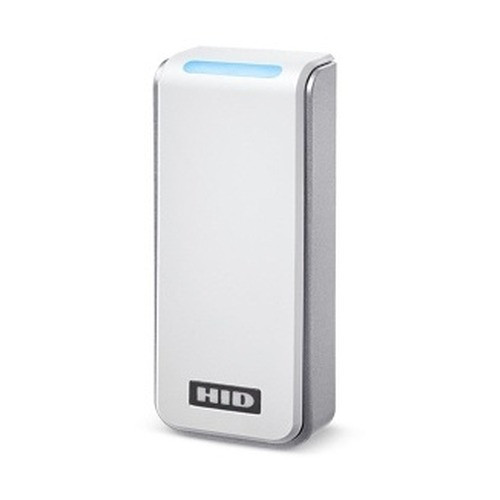
The HID-920-PTNN communicates via Open Supervised Device Protocol (OSDP) over a wired interface. OSDP is an open, IEC-standardized bidirectional protocol that provides encrypted communication, reader supervision, and broad third-party panel compatibility. This makes the RP40 usable across a wide range of access control platforms that support OSDP.
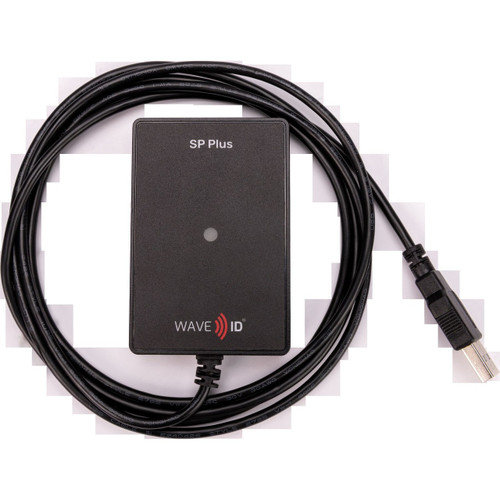
The DMP USB reader communicates via USB. Its 15-foot integrated cable is specified, which covers a standard door-mount run. The USB interface offloads credential format decoding to panel software rather than door hardware. However, USB is not an industry-standard door-hardware protocol in the way that OSDP or Wiegand are; compatibility is therefore tightly coupled to the specific panel or software that natively supports this DMP USB interface. No supervised-line or encryption capability is specified for the DMP model.
Which reader supports a broader or more future-ready credential set?
Both readers handle 125 kHz proximity and 13.56 MHz NFC/high-frequency cards and fobs from a single head, so baseline multi-technology credential coverage is equivalent between the two products.
The HID-920-PTNN adds configurable HID Mobile Access® support, enabling smartphone-based credential presentation via the HID ecosystem. No mobile credential capability is specified for the DMP USB reader. For organizations planning a migration from physical cards to mobile credentials, the HID unit provides a specified path; the DMP unit does not, based on available specs.
How do power consumption, physical form, and installation requirements differ?
The HID-920-PTNN is specified as a wall-switch-style, indoor wired reader powered by DC (AC/DC installation noted). It incorporates intelligent power management delivering up to 59% energy reduction compared to a baseline — a concrete, specified figure relevant to large deployments with many reader endpoints. It also carries Environmental Product Declaration and Green Circle environmental certifications.
The DMP USB reader integrates a 15-foot cable and is described in the specs with a 'cable' form factor. Its power source is not explicitly specified beyond the USB interface, which typically supplies bus power. No power-reduction or environmental certification data is provided in the available specs. The 15-foot fixed cable length is a relevant installation constraint: it defines the maximum panel-to-reader run without extension hardware.
Which should you choose: the HID-920-PTNN or the USB?
Our take: The HID-920-PTNN is the stronger choice when panel-agnostic integration, encrypted supervised communication, and mobile credential readiness are priorities. Three concrete spec deltas drive this conclusion: first, the RP40 uses OSDP — a standardized, supervised, encrypted protocol — while the DMP USB reader uses a USB interface with no supervision or encryption specified; second, the HID unit supports HID Mobile Access® for smartphone credentials, a capability absent from the DMP spec sheet; third, the HID reader specifies up to 59% intelligent power reduction, whereas no power efficiency figure is provided for the DMP unit. The DMP USB reader's defined advantage is its 15-foot integrated cable, which simplifies short-run installations, and its USB interface may suit deployments locked to DMP panel ecosystems where that interface is natively supported. Buyers on a DMP-native platform should verify panel compatibility for both units before specifying either.
Side-by-Side Comparison
Spec-for-spec, from manufacturer data.
| Specification | HID HID-920-PTNN | DMP USB |
|---|---|---|
| Product Type | Wall Switch Proximity Card Reader | Access Control Reader |
| Reader Technology | Multi-technology (dual-frequency) | Multi-technology (dual-frequency) |
| 125 kHz Proximity | Yes | Yes |
| 13.56 MHz / NFC | Yes | Yes |
| Mobile Credential Support | HID Mobile Access® (configurable) | — |
| Communication Protocol | OSDP (Open Supervised Device Protocol) | USB |
| Line Supervision | Yes (OSDP supervised) | — |
| Encrypted Communication | Yes (OSDP) | — |
| Connectivity | Wired | Wired (USB, 15-ft integrated cable) |
| Cable Length | — | 15 feet (integrated) |
| Power Type | DC (AC/DC installation) | — |
| Power Efficiency | Up to 59% energy reduction | — |
| Form Factor | Wall-mount switch style | Cable (reader head + integrated cable) |
| Environmental Certifications | EPD, Green Circle | — |
| Warranty | 2-year | Manufacturer Warranty (duration not specified) |
| Datasheet | /content/product-datasheets/HID-920-PTNN.pdf | /content/product-datasheets/USB.pdf |
Frequently Asked Questions
Which should you choose: the HID-920-PTNN or the USB?
The HID-920-PTNN is the stronger choice when panel-agnostic integration, encrypted supervised communication, and mobile credential readiness are priorities. Three concrete spec deltas drive this conclusion: first, the RP40 uses OSDP — a standardized, supervised, encrypted protocol — while the DMP USB reader uses a USB interface with no supervision or encryption specified; second, the HID unit supports HID Mobile Access® for smartphone credentials, a capability absent from the DMP spec sheet; third, the HID reader specifies up to 59% intelligent power reduction, whereas no power efficiency figure is provided for the DMP unit. The DMP USB reader's defined advantage is its 15-foot integrated cable, which simplifies short-run installations, and its USB interface may suit deployments locked to DMP panel ecosystems where that interface is natively supported. Buyers on a DMP-native platform should verify panel compatibility for both units before specifying either.
Can either reader work with a non-DMP or non-HID access control panel?
The HID-920-PTNN uses OSDP, an open IEC standard supported by many third-party panels, so panel-agnostic deployment is specified. The DMP USB reader uses a USB interface; no third-party panel compatibility is listed in the available specs, so buyers should confirm native support with their panel vendor before specifying it outside a DMP ecosystem.
Is the HID-920-PTNN or the DMP USB reader better for a site migrating from proximity cards to mobile credentials?
The HID-920-PTNN is the specified choice for that migration path. It lists configurable HID Mobile Access® support alongside 125 kHz and 13.56 MHz card reading. The DMP USB spec sheet does not mention mobile credential support, so no migration path to smartphone-based credentials can be confirmed from available data.
What is the cable or wiring situation for each reader — can I use existing door runs?
The DMP USB reader includes an integrated 15-foot cable, which sets a fixed maximum run length from reader to panel connection point without additional hardware. The HID-920-PTNN is specified as a wired OSDP reader but does not list a fixed cable length in the provided specs, so wire runs would follow standard OSDP cabling practices and panel requirements. Installers should consult the respective datasheets for exact wiring specs.
More Access Control Reader Comparisons
- HID 920PHRNEK00203 vs Kantech KT-SG-MT-KP2
- HID 920PHRNEK00203 vs Kantech KT-SG-MT2
- HID 920PHRNEK00203 vs DMP USB
- HID 920PHRNEK00203 vs HID HID-920-PTNN
- HID 920PHRNEK00203 vs HID 920NWNNEKE00BM
- HID HID-920-PTNN vs Kantech KT-SG-MT-KP2
Access Control Reader Buying Guides
Get a Second Opinion on Your Camera Choice
Share your site layout, coverage goals, and budget. Our team will validate the camera selection, flag anything we would change, and recommend products that match the use case.