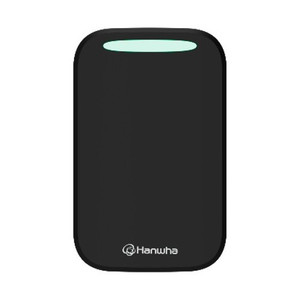
DMP USB Multi-Technology Access Control Reader
The DMP USB is a wired multi-technology access control reader designed for facilities operating mixed credential environments—legacy 125kHz proximity cards alongside modern 13.56MHz NFC credentials. This reader consolidates both formats through a single USB connection to your DMP control panel, eliminating the need for separate reader endpoints or forced card replacement across your user base. The USB interface integrates directly with DMP Virtual Keypad, Dealer Admin, and Remote Link Software, allowing credential logic and format decisions to remain at the panel level rather than being locked at the door hardware. Deploy this reader when you have heterogeneous card stock in circulation and need a cost-effective transition path without wholesale infrastructure replacement.
Key Features
- Multi-Technology Support: Single reader handles both 125kHz proximity cards and 13.56MHz NFC credentials (DMP 50L8, 60L8, Digital Key). Eliminates the need for dual readers at mixed-credential installations.
- USB Connectivity: Direct USB interface to DMP control panels, simplifying wiring topology and moving credential format selection to the access control software rather than hardware.
- 15-Foot Cable: Integrated 15-foot cable provides standard run distance for most door-mounted installations without active amplification or powered USB hubs.
- Legacy + Modern Card Support: Accommodates both installed base proximity cards and emerging NFC credentials within the same reader, reducing capex on card replacement programs.
- DMP Panel Integration: Works with DMP Virtual Keypad, Dealer Admin, and Remote Link Software for centralized credential management and format compatibility across multiple doors.
- Consolidated Endpoint: Reduces door-level hardware count and associated installation labor when retrofitting mixed-credential deployments.
Credential Format and Panel Compatibility
The DMP USB reader explicitly supports DMP-branded 125kHz proximity cards, DMP 50L8, DMP 60L8, and 13.56MHz NFC Digital Key credentials. Before specifying, confirm that your DMP control panel firmware explicitly supports USB reader input and can parse the credential data stream the USB reader outputs—not all DMP panels treat USB the same as Wiegand or hardwired RS-485 topologies. Consult your panel's technical documentation or your system integrator to verify USB reader support; mismatched firmware or unsupported input types will result in read failures at commissioning.
The USB connection handles both credential format streams over a single cable run, but USB protocol itself carries distance and signal-integrity limitations that hardwired protocols do not. The supplied 15-foot cable is engineered as the practical maximum for stable credential recognition without active amplification. Cable runs beyond 15 feet require powered USB hubs or a topology change to Wiegand-capable readers. Route cable away from high-interference sources—industrial motor circuits, high-power switching supplies, heavy inductive loads—to prevent intermittent read failures. Proximity and NFC chips have different read windows and antenna sensitivity; during commissioning, validate both credential types at the intended mounting height, angle, and distance from the reader face.
Total cost of ownership on a mixed-credential retrofit favors this reader when your installed base includes 40%+ legacy prox cards that remain in use for 12–24 months during a transition. If your user base is migrating to NFC within 6 months, the additional capex of a single-technology NFC reader may be lower. However, if you have heterogeneous departments with different card policies (some with legacy cards, others with NFC), this reader eliminates the operational overhead of managing multiple reader types at different doors.
Installation and Environmental Considerations
Mount the DMP USB reader at standard 48 inches from the floor, aligned perpendicular to the credential surface for optimal read range. Test both proximity and NFC credentials during a full commissioning walk—read distance and orientation sensitivity differ between technologies. If cable runs exceed 15 feet or the panel location is distant from the door, plan for a powered USB hub rated for access control loads or consider a Wiegand-based reader topology. USB cable should be shielded and routed separately from power cables to minimize crosstalk. In outdoor or high-humidity enclosures, ensure the reader and cable entry are sealed with appropriate cable glands to prevent water ingress and corrosion at the connector.
Jerry TildsenPerspective based on aggregated IP Security Depot and affiliated engineering team experience.
We've installed the DMP USB reader across a range of mid-market facilities transitioning from legacy proximity to NFC, and it's a pragmatic fit when you have mixed card stock in the field and don't want to force a hard cutover. The real operational win is consolidating two separate reader endpoints into one—fewer wires, simpler panel configuration, and lower labor at installation. That said, USB distance is the limiting constraint. We've seen integration teams try to run USB beyond 20 feet, and the read failures are predictable; the 15-foot cable is not a nominal spec, it's a practical ceiling. If your door is farther from the control panel, either relocate the panel, use a powered USB hub rated for access control (not consumer-grade), or switch to Wiegand topology. The credential format detection is transparent once you've verified firmware compatibility—make that verification call before ordering, because incompatible panel firmware will surface as intermittent read failures at the worst possible time. The reader itself is robust; the gotchas are environmental (cable routing near power lines, outdoor humidity ingress) and integration (panel USB support, firmware version matching).
Technical Highlights:
- Dual-Technology Read Window: 125kHz proximity and 13.56MHz NFC have different antenna geometries and read distances. The USB reader consolidates both, but commissioning must validate each format independently at actual mounting height and orientation—don't assume one test pass covers both.
- 15-Foot Cable Limit: USB signal degrades over distance without active amplification. Beyond 15 feet, you face read timeouts and credential rejects. This is not a spec to negotiate; it's the physics of USB over standard twisted pair.
- DMP Panel Firmware Dependency: USB reader input is a firmware feature, not a universal hardware capability. Older panel revisions may not support USB readers at all, or may require a firmware update. Verify compatibility with your specific panel model and firmware version before purchase.
- Mixed Credential Transition Economics: The reader pays for itself when you have 40%+ legacy prox cards in circulation that need to coexist with new NFC for 12–24 months. If your transition timeline is faster, single-technology NFC readers may be cheaper.
- Cable Shielding and Routing: USB is more sensitive to electromagnetic interference than Wiegand. Keep cable away from motor circuits, switched power supplies, and high-current loads. Shielded cable and proper grounding at the panel are non-negotiable in industrial environments.
Deployment Considerations:
- Verify DMP panel USB reader support and firmware version before specification. Incompatible or unsupported panel firmware will cause intermittent read failures and require a costly retrofit or firmware update in the field.
- The 15-foot cable is the practical maximum without powered USB hub amplification. Door locations beyond 15 feet from the control panel require either a hub, panel relocation, or a Wiegand-topology reader swap.
- During commissioning, test both proximity and NFC credentials independently. Read windows and antenna sensitivity differ; a proximity-only test pass does not guarantee NFC performance, and vice versa.
- Route USB cable separately from power and high-current circuits. EMI from industrial equipment or unshielded power cables can cause intermittent credential rejects; this is especially acute in manufacturing or data-center environments.
- In outdoor or humid enclosures, use sealed cable glands and verify the reader itself has an appropriate IP rating (consult spec sheet). Water ingress at the USB connector or reader enclosure causes corrosion and field failures.
- Plan your credential migration timeline. If 80%+ of your user base is moving to NFC within 6 months, a single-technology NFC reader may reduce total cost. The USB reader is optimal for longer, staggered transitions (12–24 months).
The DMP USB reader is the right choice for mid-to-large facilities with heterogeneous card stock, adequate panel firmware support, and door locations within 15 feet of the control panel. It eliminates the capex and labor of dual-reader installations and allows credential format logic to remain software-driven. For more options and guidance on DMP access control solutions, explore the DMP catalog.