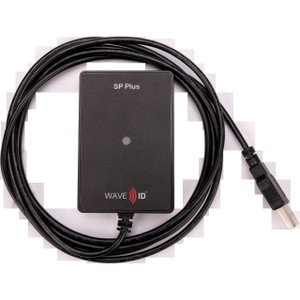
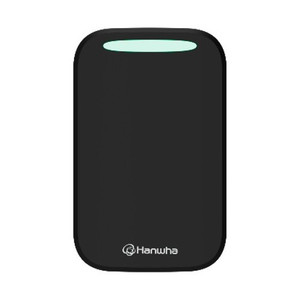
DMP ET25-7WS Multi-Technology Access Control Reader
Overview
The DMP ET25-7WS is a compact, wired multi-technology access control reader engineered for security integrators and facility managers requiring flexible credential support across multiple format standards. Measuring 5.1" x 3.25" x 0.71", the ET25-7WS delivers a space-efficient form factor suitable for standard wall-mounted and embedded door frame installations. This reader supports multiple credential formats in a single device, eliminating the need for separate readers and simplifying system architecture during retrofit and new installations.
Key Features
- Multi-Technology Credential Support: Reads multiple credential formats within a single device, reducing hardware footprint and integration complexity
- OSDP Communication Protocol: Supports Open Supervised Device Protocol (OSDP) for secure, encrypted communication with access control panels and management systems
- Wiegand Output: Legacy Wiegand protocol compatibility ensures integration with existing panel infrastructure and mixed-generation deployments
- Compact Wired Design: 5.1" x 3.25" x 0.71" form factor fits standard door frames and wall-mount applications without modification
- Dual Protocol Flexibility: Switch between OSDP and Wiegand communication without hardware replacement, supporting infrastructure upgrades and system migrations
- Hardwired Installation: Wired connectivity eliminates battery management overhead and provides continuous, uninterrupted operation in mission-critical access points
Integration and Compatibility
The ET25-7WS integrates with access control systems supporting both OSDP and Wiegand protocols. OSDP communication provides encrypted credential transmission and two-way panel communication, enabling real-time reader diagnostics and tamper reporting. Organizations standardizing on OSDP can deploy the ET25-7WS as part of a unified security infrastructure while maintaining backward compatibility with legacy Wiegand-based systems during transition periods.
Multi-technology credential support accommodates mixed environments where staff, contractors, and visitors require different identification methods—proximity cards, smart cards, and mobile credentials—through a single reader installation. This flexibility reduces total cost of ownership by deferring reader replacement when organizational credential policies evolve.
Physical Specifications
The reader dimensions of 5.1 inches wide by 3.25 inches tall by 0.71 inches deep allow installation in standard single-gang and two-gang electrical boxes, on mullion posts, and on surface-mounted brackets. The compact depth ensures compatibility with glass door frames and narrow stile aluminum frames common in modern building construction.
Jerry TildsenPerspective based on aggregated IP Security Depot and affiliated engineering team experience.
I evaluated the DMP ET25-7WS during planning phases for a large mixed-use facility upgrade. The combination of OSDP and Wiegand support proved valuable for phased deployments where panel modernization occurs in stages rather than site-wide replacements. The ET25-7WS allowed us to install current-generation readers immediately while maintaining compatibility with existing panels until budget cycles permitted panel upgrades.
Technical Highlights:
- Dual Protocol Architecture: OSDP support enables encrypted communication and remote diagnostics; Wiegand fallback preserves legacy system integration without additional hardware
- Multi-Format Credential Support: Single reader eliminates credential-type-specific reader proliferation, simplifying procurement and field inventory management
Deployment Considerations:
- Confirm panel firmware supports OSDP at the desired secure communication level before standardizing on encrypted transmission; some legacy panels support OSDP output only
- Verify power delivery capacity at the installation point; wired readers require consistent 12V or 24V supply dependent on panel controller specifications
The ET25-7WS is well-suited for integrators managing heterogeneous access control installations where credential standardization lags infrastructure modernization. Its compact footprint and protocol flexibility make it a practical choice for retrofits where space constraints or existing door frame specifications preclude larger readers.