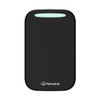
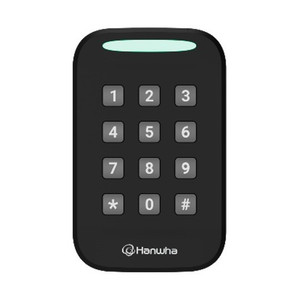
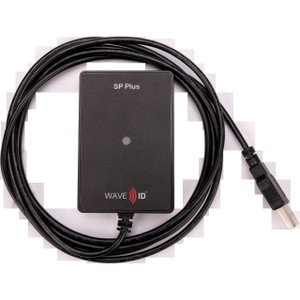
Hanwha NOD-AX20S Multi-Technology Access Control Reader
The NOD-AX20S (often searched as NOD AX20S) is a single-gang multi-technology credential reader engineered to consolidate NFC, proximity, and Bluetooth authentication into one compact form factor. For integrators managing mixed credential environments or planning phased access control upgrades, this reader eliminates the need for multiple devices at each access point while maintaining backward compatibility with legacy and contemporary systems. The NOD-AX20S directly addresses a persistent deployment challenge: organizations that support multiple credential formats without replacing hardware at every door.
Key Features
- Multi-Technology Credential Support (13.56 MHz NFC, 125 kHz Proximity, Bluetooth BLE 5.3): Reads NFC cards, traditional proximity badges, and mobile BLE credentials with support for Ethos and LEAF-compliant formats. This eliminates the cost and complexity of installing separate readers for each credential type—a significant savings in facilities with 50+ access points planning to transition from legacy proximity to mobile credentials.
- Automatic Wiegand/OSDP Protocol Detection: Intelligently detects whether your back-end access control system uses Wiegand or OSDP output protocol and configures the reader automatically. This eliminates manual field configuration, reducing commissioning errors and on-site troubleshooting in facilities with mixed control infrastructure—typical in phased security upgrades across multiple buildings or legacy system integrations.
- Common Criteria EAL6+ Secure Element: Cryptographic credential validation and tamper detection meet EAL6+ certification, exceeding typical commercial access control requirements. This certification level is mandatory for regulated environments (healthcare, financial services, government facilities) where security audits and compliance validation are non-negotiable.
- Remote Over-the-Air Firmware Updates: Deploy firmware changes—including radio enable/disable, control sequencing adjustments, and feature enhancements—without physical reader access. For deployments across dozens or hundreds of readers, OTA updates eliminate travel costs and access point downtime associated with in-person updates.
- IP65 Environmental Rating: Dust and water splash protection permits deployment in covered outdoor areas: loading docks, warehouse ambient environments, or protected entry vestibules. IP65 withstands direct spray and dust ingress, but does not support full submersion; if your deployment requires IP67 (temporary submersion) or higher, specify a hardened variant instead.
- Wide Input Range (5–24 VDC): Accepts power from both integrated access control systems and standalone auxiliary supplies. This flexibility reduces engineering overhead in facilities with non-standard or distributed power infrastructure and simplifies retrofit installations where centralized 12V or 24V supplies already exist.
Integration & Compatibility
The NOD-AX20S integrates with access control systems via Wiegand or OSDP protocol with automatic detection—no jumper configuration required. Credential format support includes Ethos and LEAF standards, enabling interoperability with modern mobile credential platforms. Remote firmware management allows centralized configuration across multi-site deployments from a single administrative interface, critical for large enterprise access control rollouts.
When to Choose a Different Model
If your deployment requires IP67 full submersion rating or higher shock/vibration resistance (IK ratings for harsh industrial environments), evaluate purpose-built hardened variants within the Hanwha access control line. If you operate in high-EMI industrial facilities or require extended wireless credential read distance, consider single-technology readers optimized for those specific constraints. The NOD-AX20S is engineered for commercial and institutional environments where credential format flexibility and rapid deployment outweigh single-technology specialization.
Frequently Asked Questions
Q: Does the NOD-AX20S support both Wiegand and OSDP, or do I need to configure it manually?
A: The reader automatically detects and configures for either Wiegand or OSDP output—no manual jumpers or field configuration required. This automatic protocol detection reduces commissioning time and eliminates configuration errors during installation.
Q: Can I update the NOD-AX20S firmware remotely, or do I need to visit each reader?
A: Firmware updates deploy over-the-air without physical reader access. For large deployments, this eliminates travel costs and access point downtime across dozens or hundreds of readers.
Q: What credential formats does the NOD-AX20S support?
A: The reader supports NFC (13.56 MHz), proximity (125 kHz), and Bluetooth BLE 5.3 credentials compliant with Ethos and LEAF standards. This multi-technology support enables deployment of mobile credentials, traditional proximity badges, and NFC cards from a single reader.
Q: Is the NOD-AX20S suitable for outdoor use?
A: The IP65 rating permits deployment in covered outdoor areas such as loading docks and warehouse entries where splashing and dust are concerns. IP65 does not support full submersion—if you need IP67 capability, consider a hardened outdoor variant.
Q: Does the NOD-AX20S meet compliance requirements for regulated environments?
A: Yes. The Common Criteria EAL6+ secure element certification exceeds typical commercial access control requirements and satisfies security validation mandates for healthcare, government, and financial sector deployments.
Q: What power options does the NOD-AX20S accept?
A: The reader accepts 5–24 VDC input, accommodating both integrated access control power systems and standalone auxiliary supplies. This wide voltage range reduces the need for custom power conditioning in facilities with non-standard infrastructure.
Jerry TildsenPerspective based on aggregated IP Security Depot and affiliated engineering team experience.
The NOD-AX20S solves a real problem: mixing old and new credential types at the same door without hardware replacement. The automatic Wiegand/OSDP detection is genuinely useful—it means you don't need to burn hours in the field testing protocol output. Multi-technology support across NFC, proximity, and BLE 5.3 gives you a genuine path to mobile credentials without ripping out and reinstalling readers.
Technical Highlights:
- EAL6+ Secure Element: This certification level is overkill for most commercial deployments, but it's the real differentiator if your facility operates under healthcare HIPAA, financial services, or government audit frameworks. You don't need to justify the reader's security posture—the certification does that for you.
- Over-the-Air Firmware Updates: Across 100 readers, OTA updates save roughly 40–60 hours of on-site commissioning time. At $150/hour labor (technician + vehicle + fuel), that's $6,000–$9,000 in eliminated travel costs on a mid-size deployment.
- 5–24 VDC Input Range: Wide voltage tolerance means you can deploy this reader on existing 12V or 24V power infrastructure without custom voltage regulators. Many access control system retrofits die because of power supply mismatch; this reader doesn't.
Deployment Considerations:
- IP65 is good for covered outdoor areas, but don't assume it handles direct rain without a canopy. Covered loading docks and warehouse vestibules: yes. Uncovered exterior doors facing weather: no—that's IP67 territory.
- Automatic protocol detection works well in practice, but if you have a legacy access control system using older Wiegand variants (26-bit format), verify compatibility before ordering. Mixed-format environments sometimes trip up auto-detection logic.
Deploy the NOD-AX20S in commercial campuses or warehouse facilities rolling out mobile credentials while maintaining backward compatibility with legacy proximity badges. This reader is built for IT architects planning a multi-year transition from card-based to mobile access—it lets you do that transition one door at a time without hardware swaps.