
HID 921PHRNEK0002D vs HID 920PHRNEK00203: Specification Comparison
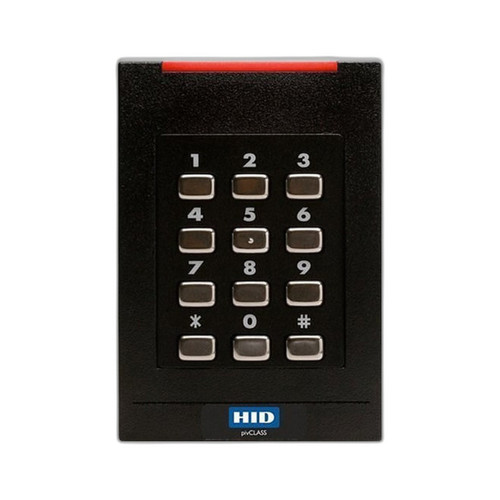
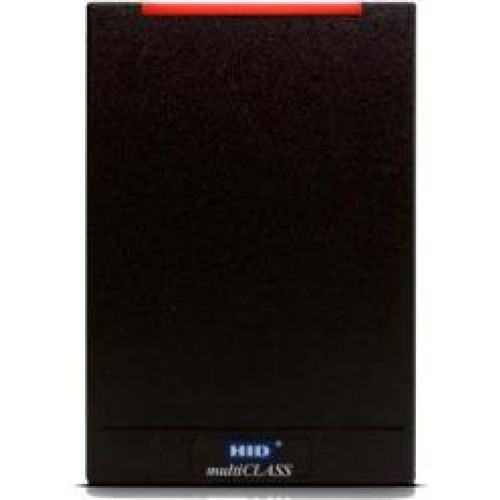
Both products are HID MultiCLASS SE wall-mount access control readers designed for multi-technology credential environments, making them direct cross-shop candidates for installers evaluating door-level reader upgrades or new deployments. The RPK40 (921PHRNEK0002D) is a keypad-equipped variant adding PIN authentication to card reads, while the RP40 (920PHRNEK00203) is a card-only reader with a broader credential stack including MIFARE, DESFire, SEOS, and NFC, plus OSDP communications and on-reader encryption. The comparison centers on credential breadth, security architecture, and integration protocol.
In This Guide
- Which reader supports the credential technologies already deployed on your site?
- How do these readers handle communication security and integration with access control platforms?
- What are the physical, environmental, and installation differences between these two readers?
- Which should you choose: the 921PHRNEK0002D or the 920PHRNEK00203?
- Side-by-Side Specs
- FAQ
Which reader supports the credential technologies already deployed on your site?
The RPK40 (921PHRNEK0002D) reads iCLASS and 125kHz proximity cards, plus accepts PIN codes via its alphanumeric keypad. Its credential stack is limited to those two card technologies, meaning sites running MIFARE, DESFire, SEOS, or NFC-based mobile credentials cannot use this reader without replacing cards site-wide.
The RP40 (920PHRNEK00203) supports a significantly wider stack: 125kHz Prox, iCLASS, MIFARE, DESFire, SEOS, and NFC/13.56MHz. This breadth makes it suitable for mixed-credential environments, phased card migrations, and sites planning to introduce mobile credentials. No keypad or PIN capability is listed for this model in the provided specifications.
For sites that need PIN-based authentication — whether for two-factor (card + PIN) or PIN-only fallback — the 921PHRNEK0002D is the only option of the two. For sites prioritizing card-technology flexibility or modern contactless formats, the 920PHRNEK00203 covers substantially more ground.
How do these readers handle communication security and integration with access control platforms?
The RP40 (920PHRNEK00203) specifies OSDP over 485FDX as its communication protocol, enabling encrypted two-way communications between reader and panel, including support for remote firmware updates. It also lists Secure Identity Object (SIO) encryption and a FIPS 75-bit Secure Element on-reader, providing a documented encryption architecture at the reader level.
The RPK40 (921PHRNEK0002D) lists integration with HID Access Control Systems and standard PACS platforms but does not specify a communication protocol (e.g., Wiegand vs. OSDP) or an on-reader encryption standard in the provided specifications. Its security posture at the communication layer is therefore unconfirmed from available data.
For deployments where encrypted reader-to-panel communications and documented on-reader encryption are procurement requirements — common in federal, healthcare, and enterprise security programs — the 920PHRNEK00203 has explicit spec support. The 921PHRNEK0002D's protocol and encryption details would need to be confirmed from its datasheet before making that assessment.
What are the physical, environmental, and installation differences between these two readers?
The RP40 (920PHRNEK00203) carries an IP65 ingress protection rating, confirming resistance to dust ingress and low-pressure water jets — a verifiable environmental benchmark for light industrial and outdoor vestibule applications. Its weight is listed at 1 lb and country of origin as US. Housing color is black with a silver trim baseplate, with a note referencing black or white options.
The RPK40 (921PHRNEK0002D) specifies a polycarbonate housing described as rated for outdoor deployment, but no IP rating number is provided in the available specifications. Dimensions are listed as 85 mm × 122 mm × 28 mm. The specification notes single-conduit, single-power-connection wiring, which can reduce retrofit labor on mixed-credential doors.
Both units share a 2-year warranty and are described as compact wall-mount form factors with out-of-the-box support. The 920PHRNEK00203 provides a quantified environmental rating (IP65); the 921PHRNEK0002D's outdoor suitability is asserted in product copy but not confirmed with a rated IP number from the provided data.
Which should you choose: the 921PHRNEK0002D or the 920PHRNEK00203?
Our take: The 920PHRNEK00203 is the stronger choice when the deployment requires a broad credential stack, documented encrypted communications, and a verified environmental rating. Its credential support spans six technologies — 125kHz Prox, iCLASS, MIFARE, DESFire, SEOS, and NFC/13.56MHz — versus two on the 921PHRNEK0002D (iCLASS and Prox only). Its OSDP over 485FDX protocol with FIPS 75-bit on-reader encryption provides a verifiable security architecture the 921PHRNEK0002D does not specify. Its IP65 rating is a quantified environmental benchmark; the 921PHRNEK0002D lists no IP number. The 921PHRNEK0002D is the correct choice specifically when PIN-based authentication is required at the door — card + PIN or PIN-only fallback — as the 920PHRNEK00203 lists no keypad capability. Sites running legacy iCLASS and proximity cards that also require two-factor (card + PIN) authentication should select the 921PHRNEK0002D; all other modern multi-credential or encryption-sensitive deployments favor the 920PHRNEK00203.
Side-by-Side Comparison
Spec-for-spec, from manufacturer data.
| Specification | HID 921PHRNEK0002D | HID 920PHRNEK00203 |
|---|---|---|
| SKU | 921PHRNEK0002D | 920PHRNEK00203 |
| Model | RPK40 MultiCLASS SE Keypad Reader | RP40 MultiCLASS SE Reader |
| Product Type | Access Control Reader | Access Control Reader |
| Reader Sub-Type | MultiCLASS Keypad + Proximity | MultiCLASS SE (card only) |
| Keypad | Alphanumeric with tactile feedback | Not listed |
| Authentication Modes | Card, PIN, or Card + PIN | Card only (per available specs) |
| Credential Technologies | iCLASS, 125kHz Proximity | 125kHz Prox, iCLASS, MIFARE, DESFire, SEOS, NFC/13.56MHz |
| Communication Protocol | Not specified | OSDP over 485FDX |
| On-Reader Encryption | Not specified | Secure Element, FIPS 75-bit |
| Security Feature | Not specified | Secure Identity Object (SIO) encryption |
| IP Rating | Not specified (outdoor housing noted) | IP65 |
| Housing Material | Polycarbonate | Not specified |
| Housing Color | Not specified | Black (black or white with silver trim baseplate noted) |
| Dimensions | 85 mm x 122 mm x 28 mm | Not specified |
| Weight | Not specified | 1 lb |
| Country of Origin | Not specified | US |
| Warranty | 2 years | 2 years |
Frequently Asked Questions
Which should you choose: the 921PHRNEK0002D or the 920PHRNEK00203?
The 920PHRNEK00203 is the stronger choice when the deployment requires a broad credential stack, documented encrypted communications, and a verified environmental rating. Its credential support spans six technologies — 125kHz Prox, iCLASS, MIFARE, DESFire, SEOS, and NFC/13.56MHz — versus two on the 921PHRNEK0002D (iCLASS and Prox only). Its OSDP over 485FDX protocol with FIPS 75-bit on-reader encryption provides a verifiable security architecture the 921PHRNEK0002D does not specify. Its IP65 rating is a quantified environmental benchmark; the 921PHRNEK0002D lists no IP number. The 921PHRNEK0002D is the correct choice specifically when PIN-based authentication is required at the door — card + PIN or PIN-only fallback — as the 920PHRNEK00203 lists no keypad capability. Sites running legacy iCLASS and proximity cards that also require two-factor (card + PIN) authentication should select the 921PHRNEK0002D; all other modern multi-credential or encryption-sensitive deployments favor the 920PHRNEK00203.
Is the 921PHRNEK0002D or 920PHRNEK00203 the right reader if we need PIN codes at the door?
The 921PHRNEK0002D (RPK40) is the correct choice. It includes an alphanumeric keypad with tactile feedback and supports card-only, PIN-only, or card + PIN authentication sequences. The 920PHRNEK00203 (RP40) does not list a keypad or PIN capability in the provided specifications.
Which reader supports mobile credentials and newer card formats like DESFire or SEOS?
The 920PHRNEK00203 (RP40) supports MIFARE, DESFire, SEOS, and NFC/13.56MHz in addition to iCLASS and 125kHz Prox. The 921PHRNEK0002D (RPK40) lists only iCLASS and 125kHz proximity cards. If your site uses or plans to deploy DESFire, SEOS, or mobile credentials, the 920PHRNEK00203 is the only option of the two with confirmed support.
Does either reader support OSDP for encrypted panel communications?
Yes — the 920PHRNEK00203 (RP40) specifies OSDP over 485FDX, enabling encrypted two-way reader-to-panel communications and remote firmware updates, backed by a FIPS 75-bit Secure Element. The 921PHRNEK0002D (RPK40) does not specify a communication protocol in the available specifications; its panel interface would need to be confirmed from the product datasheet before assuming OSDP compatibility.
More Access Control Reader Comparisons
- HID 920PHRNEK00203 vs Kantech KT-SG-MT-KP2
- HID 920PHRNEK00203 vs Kantech KT-SG-MT2
- HID 920PHRNEK00203 vs DMP USB
- HID 920PHRNEK00203 vs HID HID-920-PTNN
- HID 920PHRNEK00203 vs HID 920NWNNEKE00BM
- HID HID-920-PTNN vs Kantech KT-SG-MT-KP2
Access Control Reader Buying Guides
Get a Second Opinion on Your Camera Choice
Share your site layout, coverage goals, and budget. Our team will validate the camera selection, flag anything we would change, and recommend products that match the use case.