
HID 40NKKS-03-0005JM vs Axis A4612: Specification Comparison
The HID SIGNO 40 (40NKKS-03-0005JM) and the Axis A4612 (03072-001) are both multi-credential access control readers that accept mobile credentials alongside a secondary RF technology, making them a legitimate cross-shop for installations transitioning from physical cards to smartphone-based access. The comparison turns on credential radio technology (NFC vs. Bluetooth), panel integration model (Wiegand legacy vs. IP/PoE network), physical form factor, and environmental suitability — the three axes most likely to drive a buying decision between these two units.

In This Guide
- Which credential technologies and radio protocols does each reader support — and how does that affect migration flexibility?
- How does each reader connect to the access control panel — and what does that mean for cabling, panel compatibility, and installation cost?
- Where can each reader be physically installed, and what are the mounting, form-factor, and warranty differences?
- Which should you choose: the 40NKKS-03-0005JM or the A4612?
- Side-by-Side Specs
- FAQ
Which credential technologies and radio protocols does each reader support — and how does that affect migration flexibility?
The HID 40NKKS-03-0005JM supports NFC, physical card (via Wiegand), and mobile credentials using the MOBA080 smartphone credential standard, with communication protocols listed as Wiegand (WIEG) and NFC (NFCMG). Encryption is handled by three named modules: ICE1180, BLEMA, and BLEMG. CSN suppression is also listed, indicating the ability to block card serial number reads and enforce more secure credential modes. This reader is specifically positioned for phased migrations where NFC mobile and legacy card populations must coexist on a single reader head.
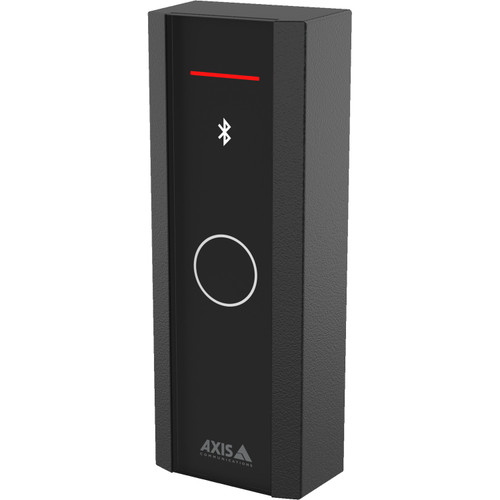
The Axis A4612 uses Bluetooth and RFID as its dual credential radios — distinct from HID's NFC approach. Bluetooth mobile credentials and RFID cards are both supported. The spec does not name a specific mobile credential standard (no equivalent to MOBA080 is listed), and no encryption module identifiers are provided in the available specification data. Buyers relying on HID Mobile Access or a specific BLE credential ecosystem should verify A4612 compatibility before specifying.
The radio technology choice is consequential: NFC (HID) requires close tap proximity, while Bluetooth (Axis) supports longer read range and hands-free approaches depending on firmware configuration. Neither range figure is stated in the provided specs for either unit.
How does each reader connect to the access control panel — and what does that mean for cabling, panel compatibility, and installation cost?
The HID 40NKKS-03-0005JM outputs over Wiegand, the decades-old industry-standard panel interface. This means it is backward-compatible with virtually any legacy access control head-end without panel replacement or firmware updates. Power and data run over conventional reader wiring. The spec lists connectivity as 'Wired' and explicitly notes 'legacy panel compatibility,' making this the lower-risk path when the panel is not being replaced.
The Axis A4612 is an IP-based network reader powered by PoE (802.3af implied by the PoE listing). It connects over Ethernet rather than Wiegand, which eliminates a separate low-voltage power run to the door frame but requires an IP-capable access control platform — Axis ACAP-based systems or compatible third-party software. Installing the A4612 against a legacy Wiegand panel is not supported by the provided specs. The shift to IP also means the reader participates directly in the network, which has both security and infrastructure implications.
From an installation-cost standpoint: the HID unit reuses existing panel wiring; the Axis unit requires a PoE Ethernet drop to the door position but eliminates a separate power supply. Neither unit's PoE class draw nor Wiegand pin-out detail is specified in the provided data.
Where can each reader be physically installed, and what are the mounting, form-factor, and warranty differences?
The HID 40NKKS-03-0005JM is listed as surface-mounted with a black or white housing with silver trim baseplate. The spec notes optional keypad configurations (2×6 and 3×4 layouts are listed, though the tabular data presents these ambiguously across variants). No environmental or IP ingress rating is listed in the provided specifications — indoor-only suitability cannot be confirmed or denied from the available data. Warranty is 2 years.
The Axis A4612 is a mullion-mount form factor — designed for narrow door frame stiles — with a white housing. It is explicitly rated for both indoor and outdoor use and described as weather-resistant, though no specific IP rating (e.g., IP65, IP66) is stated in the provided specs. The 5-year warranty is notably longer than the HID unit's 2-year coverage.
The mullion form factor of the A4612 is a meaningful differentiator for door frames where surface-mount depth is problematic. The HID SIGNO 40's surface-mount profile suits standard hollow-metal and wood doors. Outdoor deployments without a confirmed IP rating for the HID unit represent a spec gap that installers should resolve against HID's full datasheet before specifying.
Which should you choose: the 40NKKS-03-0005JM or the A4612?
Our take: The 40NKKS-03-0005JM is the stronger choice when the existing access control panel is Wiegand-based and cannot be replaced, or when the credential population includes legacy NFC cards alongside HID mobile credentials. Its Wiegand output, three named encryption modules (ICE1180, BLEMA, BLEMG), and MOBA080 mobile credential support make it the lower-risk migration tool for mixed-credential environments — at the cost of a shorter 2-year warranty versus the A4612's 5 years. The Axis A4612 is the stronger choice for greenfield or IP-native deployments: PoE eliminates a separate power run, Bluetooth enables longer-range mobile credential reads, and the weather-resistant mullion-mount form factor suits outdoor narrow-stile applications the HID spec does not explicitly cover. Platform lock is the decisive qualifier — HID mobile ecosystems favor the SIGNO 40; Axis ACAP or compatible IP access platforms require the A4612.
Side-by-Side Comparison
Spec-for-spec, from manufacturer data.
| Specification | HID 40NKKS-03-0005JM | Axis A4612 |
|---|---|---|
| Product Type | Access Control Reader (SIGNO 40) | Network Bluetooth Reader |
| Credential Technologies | NFC, Card, Mobile (MOBA080) | Bluetooth Mobile, RFID Card |
| Mobile Credential Standard | MOBA080 | Not specified in provided specs |
| Radio Protocol | NFC (NFCMG), Wiegand (WIEG) | Bluetooth, RFID |
| Panel Interface / Connectivity | Wiegand (wired, legacy panel compatible) | IP-based (Ethernet) |
| Power Method | Wired (conventional reader wiring) | PoE |
| Encryption | ICE1180, BLEMA, BLEMG | Not specified in provided specs |
| CSN Suppression | Yes | Not specified in provided specs |
| Form Factor / Mount Style | Surface-mount | Mullion-mount |
| Housing Color | Black or white with silver trim baseplate | White |
| Keypad Option | Yes (2×6 and 3×4 variants listed) | Not specified in provided specs |
| Environment Rating | Not specified in provided specs | Indoor and outdoor, weather-resistant |
| Specific IP Ingress Rating | Not specified in provided specs | Not specified in provided specs |
| Door Control | Not specified in provided specs | Single door |
| Warranty | 2 years | 5 years |
| Datasheet Reference | 40NKKS-03-0005JM.pdf | datasheet-axis-a4612-...en-US-519424.pdf |
Frequently Asked Questions
Which should you choose: the 40NKKS-03-0005JM or the A4612?
The 40NKKS-03-0005JM is the stronger choice when the existing access control panel is Wiegand-based and cannot be replaced, or when the credential population includes legacy NFC cards alongside HID mobile credentials. Its Wiegand output, three named encryption modules (ICE1180, BLEMA, BLEMG), and MOBA080 mobile credential support make it the lower-risk migration tool for mixed-credential environments — at the cost of a shorter 2-year warranty versus the A4612's 5 years. The Axis A4612 is the stronger choice for greenfield or IP-native deployments: PoE eliminates a separate power run, Bluetooth enables longer-range mobile credential reads, and the weather-resistant mullion-mount form factor suits outdoor narrow-stile applications the HID spec does not explicitly cover. Platform lock is the decisive qualifier — HID mobile ecosystems favor the SIGNO 40; Axis ACAP or compatible IP access platforms require the A4612.
Can I use the HID 40NKKS-03-0005JM or the Axis A4612 with my existing Wiegand access control panel?
Only the HID 40NKKS-03-0005JM supports Wiegand output and is explicitly listed as backward-compatible with legacy access control panels. The Axis A4612 is an IP/PoE network reader and does not list Wiegand output in its specifications — it requires an IP-capable access control platform.
Which reader has the longer warranty, and by how much?
The Axis A4612 carries a 5-year warranty per its listed specification. The HID 40NKKS-03-0005JM is warranted for 2 years. That is a 3-year difference in stated coverage.
Is either reader rated for outdoor installation?
The Axis A4612 is explicitly listed as suitable for both indoor and outdoor use and described as weather-resistant, though a specific IP ingress rating is not stated in the provided specs. The HID 40NKKS-03-0005JM's provided specifications do not include an environmental or IP rating — outdoor suitability cannot be confirmed from the available data and should be verified against HID's full datasheet.
More Access Control Reader Comparisons
- Ubiquiti UA-G3-PRO-W vs Axis A4612
- Ubiquiti UA-G3-PRO-W vs Axis 02909-001
- Ubiquiti UA-G3-PRO-W vs Speco Technologies APCR35L
- Ubiquiti UA-G3-PRO-W vs Camden CV-7600
- Ubiquiti UA-G3-PRO-W vs Ubiquiti UA-G3-PRO-B
- Ubiquiti UA-G3-PRO-B vs Axis A4612
Access Control Reader Buying Guides
Get a Second Opinion on Your Camera Choice
Share your site layout, coverage goals, and budget. Our team will validate the camera selection, flag anything we would change, and recommend products that match the use case.