
HID 40NKKS-03-0005JM vs Axis 02909-001: Specification Comparison
Both the HID SIGNO 40 (40NKKS-03-0005JM) and the Axis NFC Reader 13.56 MHz (02909-001) are wall-mounted NFC-capable access control readers targeting organizations modernizing credential infrastructure. The HID unit emphasizes multi-credential flexibility and legacy panel backward compatibility via Wiegand output, while the Axis unit is a PoE-powered, IP55-rated reader designed natively for Axis access control ecosystems. Buyers evaluating these will weigh credential breadth, panel integration method, physical durability, and ecosystem lock-in against their existing infrastructure.

In This Guide
- Which reader supports a broader credential set and integrates more cleanly with existing panels?
- How do the two readers compare in physical durability and environmental suitability?
- What security protections and power delivery methods does each reader provide?
- Which should you choose: the 40NKKS-03-0005JM or the 02909-001?
- Side-by-Side Specs
- FAQ
Which reader supports a broader credential set and integrates more cleanly with existing panels?
The HID 40NKKS-03-0005JM supports NFC, physical card, and mobile credentials (MOBA080 smartphone credentials) simultaneously, enabling phased migrations from legacy card systems to mobile without replacing panels. Its Wiegand output (WIEG) with NFC (NFCMG) communication ensures backward compatibility with virtually any legacy access control panel or head-end that accepts Wiegand signaling—an industry-standard interface present in millions of installed systems.
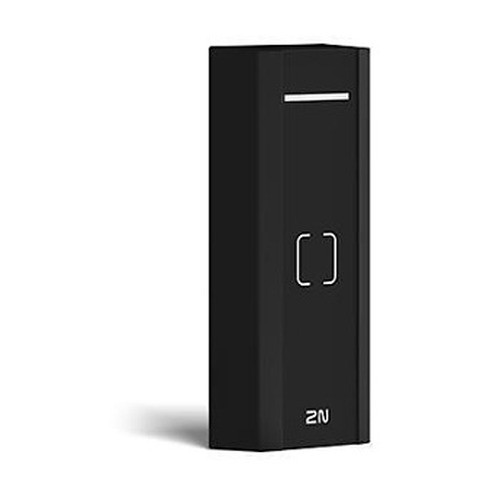
The Axis 02909-001 operates at 13.56 MHz and supports multifrequency RFID and NFC, with ISO/IEC 14443 Type A and Type B card compatibility per the product bullets. Its integration model is native to the Axis access control platform via its PoE Ethernet connection; no Wiegand output is specified. Buyers with non-Axis panels should note that Wiegand output capability is not documented for the Axis unit, making the HID the clear choice for legacy-panel environments.
How do the two readers compare in physical durability and environmental suitability?
The Axis 02909-001 carries a documented IP55 ingress protection rating (dust-protected, protected against water jets) and an IK07 impact rating, meaning it withstands approximately 2 joules of impact energy. Physical dimensions are 6.69 x 2.8 x 7.09 in and weight is 0.9 lb. Country of origin is Czech Republic. Mount options include wall and ceiling. It ships with a 3-meter Ethernet cable.
The HID 40NKKS-03-0005JM does not have an IP or IK rating documented in the provided specifications. Housing is described as surface-mounted, available in black or white with a silver trim baseplate. No weight or dimensional data is provided in the spec set. For outdoor or harsh-environment deployments where ingress protection and impact resistance are mandatory, the Axis unit provides explicit, verifiable ratings; the HID unit's environmental suitability cannot be confirmed from the available data.
What security protections and power delivery methods does each reader provide?
The HID 40NKKS-03-0005JM specifies three encryption modules by designation: ICE1180, BLEMA, and BLEMG. It also supports CSN suppression, which prevents credential number harvesting from card serial numbers—a meaningful anti-skimming control. The reader provides LED status indication and an audible buzzer for user feedback. Power method is wired but the specific voltage or PoE support is not documented in the provided specifications.
The Axis 02909-001 is powered via PoE (IEEE 802.3af), eliminating the need for a separate power run and enabling standard network switch-based power management. No encryption module designations or CSN suppression capability are documented in the provided Axis specifications. Buyers in high-security environments who require explicit hardware-level encryption module compliance (e.g., for PACS or government credential programs) will find the HID's documented encryption designations more directly auditable.
Which should you choose: the 40NKKS-03-0005JM or the 02909-001?
Our take: The 40NKKS-03-0005JM is the stronger choice when the deployment requires multi-credential flexibility, legacy Wiegand panel compatibility, and documented hardware-level encryption. Key spec deltas: the HID specifies three encryption modules (ICE1180, BLEMA, BLEMG) plus CSN suppression while the Axis lists none; the HID outputs Wiegand enabling use with any legacy head-end, while the Axis provides no documented Wiegand output; and the HID supports mobile credentials (MOBA080) alongside NFC and card in one reader, which the Axis spec does not enumerate. Conversely, the Axis 02909-001 wins on physical hardening—IP55 and IK07 are explicitly rated, PoE (802.3af) simplifies wiring, and warranty is 5 years versus the HID's 2 years. Choose the HID for multi-credential, panel-agnostic, or government-standard deployments; choose the Axis for native Axis ecosystem installations, outdoor or washdown-exposed locations, and simplified PoE infrastructure.
Side-by-Side Comparison
Spec-for-spec, from manufacturer data.
| Specification | HID 40NKKS-03-0005JM | Axis 02909-001 |
|---|---|---|
| Product Type | Access Control Reader (SIGNO 40) | NFC Reader 13.56 MHz |
| SKU | 40NKKS-03-0005JM | 02909-001 |
| NFC Support | Yes (NFCMG) | Yes (Multifrequency, RFID, NFC) |
| Card Frequency | 13.56 MHz (NFC implied) | 13.56 MHz |
| Card Standards | NFC, Wiegand card | ISO/IEC 14443 Type A and Type B |
| Mobile Credential | Yes (MOBA080) | — |
| Output Protocol | Wiegand (WIEG) | — |
| Power Method | Wired (voltage not specified) | PoE (IEEE 802.3af) |
| Encryption | ICE1180, BLEMA, BLEMG; CSN suppression | — |
| IP Rating | — | IP55 |
| Impact Rating | — | IK07 |
| Mount Type | Surface-mounted | Wall; Ceiling |
| Housing Color | Black or white with silver trim | White |
| Dimensions | — | 6.69 x 2.8 x 7.09 in |
| Weight | — | 0.9 lb |
| Warranty | 2 years | 5 years |
| Country of Origin | — | CZ (Czech Republic) |
Frequently Asked Questions
Which should you choose: the 40NKKS-03-0005JM or the 02909-001?
The 40NKKS-03-0005JM is the stronger choice when the deployment requires multi-credential flexibility, legacy Wiegand panel compatibility, and documented hardware-level encryption. Key spec deltas: the HID specifies three encryption modules (ICE1180, BLEMA, BLEMG) plus CSN suppression while the Axis lists none; the HID outputs Wiegand enabling use with any legacy head-end, while the Axis provides no documented Wiegand output; and the HID supports mobile credentials (MOBA080) alongside NFC and card in one reader, which the Axis spec does not enumerate. Conversely, the Axis 02909-001 wins on physical hardening—IP55 and IK07 are explicitly rated, PoE (802.3af) simplifies wiring, and warranty is 5 years versus the HID's 2 years. Choose the HID for multi-credential, panel-agnostic, or government-standard deployments; choose the Axis for native Axis ecosystem installations, outdoor or washdown-exposed locations, and simplified PoE infrastructure.
Can I use either reader with my existing non-Axis access control panel?
The HID 40NKKS-03-0005JM outputs Wiegand (WIEG), which is the dominant legacy panel interface, so it can connect to virtually any existing head-end that accepts Wiegand signaling. The Axis 02909-001 connects via PoE Ethernet and no Wiegand output is documented in the provided specifications, making it best suited for native Axis access control system deployments. If you have a legacy panel, the HID is the documented-compatible choice.
Is the HID 40NKKS-03-0005JM or the Axis 02909-001 better for outdoor or exposed-location installs?
The Axis 02909-001 is the documented choice for outdoor or exposed locations: it carries an IP55 ingress protection rating and an IK07 impact rating. The HID 40NKKS-03-0005JM does not have IP or IK ratings listed in the provided specifications, so its suitability for outdoor or wet environments cannot be confirmed from the available data.
Which reader has a longer warranty, and does that affect long-term total cost?
The Axis 02909-001 carries a 5-year warranty per its specifications, while the HID 40NKKS-03-0005JM is warranted for 2 years. For deployments where extended hardware coverage reduces maintenance budget risk—particularly in hard-to-access mount locations—the Axis warranty period is meaningfully longer. Neither product's pricing is available in the provided specifications, so a total-cost-of-ownership comparison beyond warranty duration cannot be made from the data at hand.
More Access Control Reader Comparisons
- Ubiquiti UA-G3-PRO-W vs Axis A4612
- Ubiquiti UA-G3-PRO-W vs Axis 02909-001
- Ubiquiti UA-G3-PRO-W vs Speco Technologies APCR35L
- Ubiquiti UA-G3-PRO-W vs Camden CV-7600
- Ubiquiti UA-G3-PRO-W vs Ubiquiti UA-G3-PRO-B
- Ubiquiti UA-G3-PRO-B vs Axis A4612
Access Control Reader Buying Guides
Get a Second Opinion on Your Camera Choice
Share your site layout, coverage goals, and budget. Our team will validate the camera selection, flag anything we would change, and recommend products that match the use case.