
Hanwha XND-8083RV vs Hanwha XNV-8083R: Specification Comparison
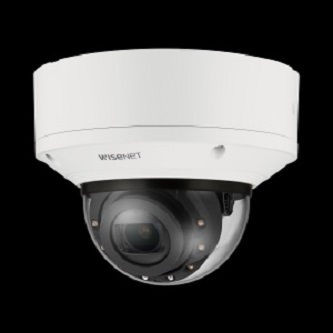
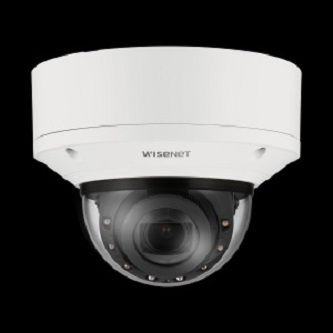
The Hanwha XND-8083RV and XNV-8083R are both 6MP fixed vandal dome cameras sharing the same 1/1.8" CMOS sensor, 4.4–9.3mm motorized varifocal lens, and AI-based analytics engine. They occupy the same resolution class and camera type, making them direct cross-shop candidates. The primary differentiators are deployment environment—indoor-rated IP52 versus outdoor-rated IP66/IP67/NEMA 4X—along with built-in microphone availability and operating temperature range, which together define the appropriate use case for each unit.
In This Guide
How do the imaging specs compare?
Both cameras deliver identical imaging performance on paper: 6MP resolution at 3328×1872, 30fps maximum frame rate, a shared 1/1.8" progressive CMOS sensor, and a 4.4–9.3mm (2.1x) motorized varifocal P-iris lens yielding H: 112.1° at wide and the same aperture range of F1.3 (wide) to F2.15 (tele). Minimum illumination is identical at 0.04 Lux color and 0 Lux with IR active. Both units deploy WiseIR illuminators rated to 50m (164ft) and share the same DORI performance figures: Detect 44.8m wide / 151.3m tele, Identify 4.5m wide / 15.1m tele.
WDR performance is identical at extremeWDR 120dB on both models. Both support WiseNR II (AI-based), SSNR V noise reduction, built-in gyro-based digital image stabilization, defog, and the same BLC/HLC/SSDR backlight compensation suite. The sole audio-input distinction: the XND-8083RV spec lists 'mic in / line in / built-in MIC' while the XNV-8083R lists 'mic in / line in' only—no built-in microphone is specified for the XNV-8083R.
What about installation and environment?
This is the most consequential divergence between the two units. The XNV-8083R carries IP66, IP67, IP6K9K, and NEMA 4X ingress ratings plus an IK10+ impact rating, with an operating temperature range of -50°C to +55°C. It is explicitly rated for outdoor deployment. The XND-8083RV is rated IP52 and IK10 (not IK10+), with a narrower operating range of -25°C to +50°C, and its environment rating is listed as Indoor. Installers must not deploy the XND-8083RV in exposed outdoor locations.
Both cameras share the same power input (PoE+ IEEE 802.3at Class 4, or 12VDC), maximum power draw (22.5W), and RAL9003 white aluminum hard-coated dome bubble construction. Physical size differs: the XND-8083RV measures Ø160×125mm and weighs 1,600g; the XNV-8083R is larger at Ø180×125mm and 1,900g, consistent with its weatherproofed housing. Both provide the same video out options (CVBS and Micro USB Type B) for installation alignment and identical pan/tilt/rotate ranges (0–360° / -45°–85° / 0–355°).
Which fits your VMS and analytics better?
VMS and analytics integration is functionally identical between the two models. Both support ONVIF Profile S/G/T, SUNAPI (HTTP API), and the Wisenet open platform. AI analytics cover the same object classes—Person, Face, Vehicle (car/bus/truck/motorcycle/bicycle), and License Plate—plus the same IVA event types (Virtual line/Area, Enter/Exit, Loitering, Direction, Appear/Disappear, Intrusion) and business intelligence functions (People counting, Queue management, Heatmap). Both include 2 configurable alarm I/O ports with DC 12V output (max 50mA), the same alarm trigger and event action set, and the same protocol stack including SRTP, SNMPv1/v2c/v3, and 802.1X (EAP-TLS/LEAP/PEAP) with TPM 2.0 (FIPS 140-2 Level 2) security.
Edge storage is identical: dual Micro SD/SDHC/SDXC slots supporting up to 1TB (512GB × 2). Both carry 4GB RAM and 512MB Flash. Audio output (line out, max 1Vrms) and audio compression (G.711 µ-law / G.726 ADPCM 8KHz) are the same on both. As noted in the imaging section, the XND-8083RV specifies a built-in microphone as an audio-in source option; the XNV-8083R does not list one, requiring an external mic or line-level source if audio capture is needed on that unit. WiseStream II/III smart codec is present on both.
Which should you choose: the XND-8083RV or the XNV-8083R?
Our take: The XNV-8083R is the stronger choice when the deployment environment is outdoors or subject to weather, wash-down, dust, or extreme cold. Its IP66/IP67/IP6K9K/NEMA 4X ingress rating versus the XND-8083RV's IP52 is a non-negotiable differentiator for exterior installations, as is its IK10+ (versus IK10) impact rating and wider operating temperature range of -50°C to +55°C versus -25°C to +50°C—a 25°C advantage at the cold end that matters in northern climates or unheated enclosures. The XND-8083RV is the correct selection for indoor vandal-prone environments where a built-in microphone is required (it lists 'built-in MIC' as an audio-in source; the XNV-8083R does not), or where ceiling/wall penetration and housing diameter are constrained (Ø160mm vs Ø180mm, 1,600g vs 1,900g). On every imaging, analytics, VMS integration, and storage metric the two models are specification-equivalent.
Side-by-Side Comparison
Spec-for-spec, from manufacturer data.
| Specification | Hanwha XND-8083RV | Hanwha XNV-8083R |
|---|---|---|
| Resolution | 3328×1872 (6MP) | 3328×1872 (6MP) |
| Image Sensor | 1/1.8" progressive CMOS | 1/1.8" progressive CMOS |
| Lens / Focal Length | 4.4–9.3mm (2.1x) motorized varifocal, P-iris | 4.4–9.3mm (2.1x) motorized varifocal, P-iris |
| Max Frame Rate | 30fps | 30fps |
| Min Illumination | 0.04 Lux color / 0 Lux IR | 0.04 Lux color / 0 Lux IR |
| IR Range | WiseIR 50m (164ft) | WiseIR 50m (164ft) |
| Wide Dynamic Range | extremeWDR 120dB | extremeWDR 120dB |
| Video Compression | H.265 / H.264 (Main/High) / MJPEG | H.265 / H.264 (Main/High) / MJPEG |
| IP Rating | IP52 | IP66 / IP67 / IP6K9K / NEMA 4X |
| IK / Impact Rating | IK10 | IK10+ |
| Operating Temperature | -25°C to +50°C | -50°C to +55°C |
| Power Input / PoE Class | PoE+ (802.3at, Class 4) or 12VDC | PoE+ (802.3at, Class 4) or 12VDC |
| Max Power | 22.5W | 22.5W |
| Edge Storage | Dual microSD/SDHC/SDXC, max 1TB (512GB × 2) | Dual microSD/SDHC/SDXC, max 1TB (512GB × 2) |
| Audio In | Mic in / Line in / Built-in MIC | Mic in / Line in (no built-in MIC specified) |
| Dimensions / Weight | Ø160×125mm / 1,600g (3.53 lb) | Ø180×125mm / 1,900g (4.19 lb) |
| Environment Rating | Indoor | Outdoor |
| Warranty | 3-year | 3-year |
Frequently Asked Questions
Which should you choose: the XND-8083RV or the XNV-8083R?
The XNV-8083R is the stronger choice when the deployment environment is outdoors or subject to weather, wash-down, dust, or extreme cold. Its IP66/IP67/IP6K9K/NEMA 4X ingress rating versus the XND-8083RV's IP52 is a non-negotiable differentiator for exterior installations, as is its IK10+ (versus IK10) impact rating and wider operating temperature range of -50°C to +55°C versus -25°C to +50°C—a 25°C advantage at the cold end that matters in northern climates or unheated enclosures. The XND-8083RV is the correct selection for indoor vandal-prone environments where a built-in microphone is required (it lists 'built-in MIC' as an audio-in source; the XNV-8083R does not), or where ceiling/wall penetration and housing diameter are constrained (Ø160mm vs Ø180mm, 1,600g vs 1,900g). On every imaging, analytics, VMS integration, and storage metric the two models are specification-equivalent.
Can I install the XND-8083RV outdoors?
Based on the provided specifications, no. The XND-8083RV carries an IP52 ingress rating and is listed with an Indoor environment rating. The XNV-8083R is the outdoor-rated variant, certified IP66/IP67/IP6K9K and NEMA 4X.
Is the XND-8083RV or XNV-8083R better for low light?
Both cameras are specification-equivalent for low-light performance: identical 1/1.8" CMOS sensor, 0.04 Lux color minimum illumination, 0 Lux with IR active, and WiseIR illuminators rated to 50m. Neither model has a low-light advantage over the other based on the provided specs.
Does either camera include a built-in microphone?
The XND-8083RV specifies 'mic in / line in / built-in MIC' as selectable audio-in sources, indicating a built-in microphone. The XNV-8083R specifies only 'mic in / line in'—no built-in microphone is listed in its specifications. An external microphone or line-level source would be required for audio capture on the XNV-8083R.
Get a Second Opinion on Your Camera Choice
Share your site layout, coverage goals, and budget. Our team will validate the camera selection, flag anything we would change, and recommend products that match the use case.