
Hanwha XND-8083RV vs i-PRO S22600-V2LG: Specification Comparison
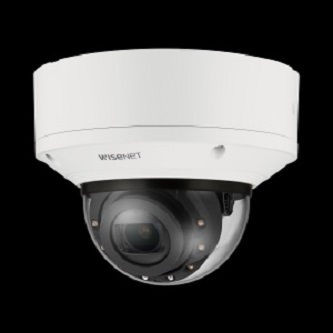
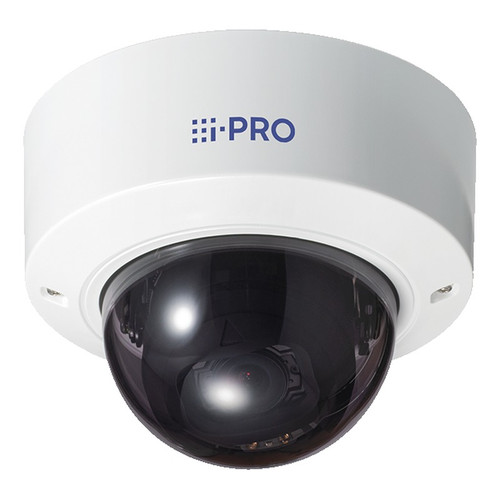
Both the Hanwha XND-8083RV and the i-PRO WV-S22600-V2LG are indoor, fixed vandal-resistant dome cameras operating in the 6MP resolution class, making them genuine cross-shop candidates for enterprise and commercial indoor surveillance deployments. This comparison examines their imaging hardware, installation requirements, and integration capabilities using only published specifications to help installers and IT buyers determine which unit better suits their project requirements.
In This Guide
How do the imaging specs compare?
Both cameras share a 1/1.8-inch progressive CMOS sensor and deliver 6MP at 30fps with H.265/H.264/MJPEG compression. The Hanwha XND-8083RV resolves to 3328×1872 pixels while the i-PRO WV-S22600-V2LG tops out at 3072×1728 (16:9); the i-PRO also supports a 4:3 mode at 3072×2304. Lens coverage differs: the XND-8083RV uses a 4.4–9.3mm motorized varifocal (2.1x, F1.3–F2.15, P-iris) covering 112.1°–~48° horizontal, whereas the S22600-V2LG uses a 4.3–8.6mm motorized zoom (2.0x, F1.5–F2.4) covering 101°–52° horizontal. The Hanwha's wider aperture at F1.3 versus the i-PRO's F1.5 offers a marginal light-gathering advantage.
On low-light performance, the XND-8083RV specifies 0.04 lux color and 0 lux with IR active; the S22600-V2LG specifies 0.12 lux color and 0 lux with IR on (B&W mode), making the Hanwha notably more sensitive in color mode. IR range favors the Hanwha at 50m versus the i-PRO's 25m (30 IRE). Dynamic range is a clear i-PRO advantage: 132dB (Super Dynamic on, level 31) versus 120dB (extremeWDR) for the Hanwha. DORI at Detect level shows the Hanwha reaching 151.3m tele versus the i-PRO's 136.5m tele, though the i-PRO edges ahead at wide Detect (54.9m vs 44.8m). The Hanwha includes a built-in gyro-based digital image stabilization; no equivalent is specified for the i-PRO.
What about installation and environment?
Both cameras carry IK10 vandal resistance. The Hanwha XND-8083RV is rated IP52 (dust-protected, splash-resistant from vertical drip), making it an indoor-only unit. The i-PRO S22600-V2LG specifies IK10 but no IP ingress protection rating is published in the provided specifications. Operating temperature for the Hanwha runs from -25°C to +50°C; the i-PRO is rated -10°C to +50°C (power-on minimum 0°C), giving the Hanwha a broader cold-environment tolerance. Power requirements differ significantly: the XND-8083RV requires PoE+ (802.3at, Class 4) or 12VDC and draws up to 22.5W, while the S22600-V2LG operates on standard PoE (802.3af, Class 0) at 12W max — an important distinction for switch budgeting. The Hanwha body measures Ø160×125mm at 1,600g; the i-PRO is a more compact Ø129.5×102.5mm at 800g, roughly half the weight, which may matter for ceiling tile or low-profile mounting applications.
Which fits your VMS and analytics better?
Both cameras support ONVIF Profile S/T/G and Profile M, and both offer H.265/H.264/MJPEG with VBR/CBR control. The Hanwha supports up to 10 simultaneous streaming profiles and 20 unicast users; the i-PRO limits simultaneous users to 14. The i-PRO is powered by an Ambarella CV22 SoC and lists AI analytics including object detection, face detection, AI sound classification (gunshot, yell, vehicle horn, glass break), and 8 types of AI Video Analytics. The Hanwha's AI engine covers object detection (person, face, vehicle subtypes, license plate), IVA zones, and business intelligence functions (people counting, queue management, heatmap) — capabilities not listed for the i-PRO in the provided specs.
Edge storage is equivalent: both support microSD/SDXC up to 512GB. The Hanwha provides dual microSD slots (2×512GB = 1TB total); the i-PRO offers a single slot to 512GB. Security posture differs: the Hanwha holds TPM 2.0 at FIPS 140-2 Level 2; the i-PRO specifies FIPS 140-2 Level 3 with NXP SE050F secure element, a higher hardware security certification. Alarm I/O: the Hanwha has 2 configurable I/O ports; the i-PRO provides 3 alarm inputs and 1 alarm output plus 1 Aux output. The i-PRO additionally lists SFTP and MQTT protocol support, which the Hanwha specification does not mention. Both list 802.1X and HTTPS. The Hanwha integrates with Wisenet open platform (SUNAPI); the i-PRO does not specify a proprietary SDK in the provided data.
Which should you choose: the XND-8083RV or the S22600-V2LG?
Our take: The XND-8083RV is the stronger choice when tele IR reach, color low-light sensitivity, or AI business-intelligence functions (people counting, queue management, heatmap) drive the requirement. Its IR range of 50m is double the i-PRO's 25m, its color minimum illumination of 0.04 lux versus 0.12 lux offers a 3× advantage in dim scenes, and its dual microSD slots allow up to 1TB of on-board storage against the i-PRO's 512GB. Conversely, the WV-S22600-V2LG is the better fit when switch infrastructure is limited to 802.3af (it draws only 12W versus the XND-8083RV's 22.5W PoE+ requirement), when FIPS 140-2 Level 3 hardware security certification is mandated, or when a lighter, more compact form factor (800g vs 1,600g) is preferred. Buyers on Wisenet VMSes gain native API integration with the Hanwha; i-PRO integrates more naturally into Panasonic/i-PRO Video Insight or ONVIF-primary platforms.
Side-by-Side Comparison
Spec-for-spec, from manufacturer data.
| Specification | Hanwha XND-8083RV | i-PRO S22600-V2LG |
|---|---|---|
| Resolution | 3328×1872 (6MP) | 3072×1728 (6MP, 16:9); 3072×2304 (4:3) |
| Image Sensor | 1/1.8" progressive CMOS | Approx. 1/1.8" CMOS |
| Focal Length / Zoom | 4.4–9.3mm, 2.1x motorized varifocal | 4.3–8.6mm, 2.0x motorized zoom |
| Max Aperture | F1.3 (Wide) – F2.15 (Tele) | F1.5 (Wide) – F2.4 (Tele) |
| Horizontal FoV | 112.1° (Wide) – ~48° (Tele) | 101° (Wide) – 52° (Tele) |
| Min Illumination (Color) | 0.04 lux | 0.12 lux @ 30 IRE |
| Min Illumination (IR On) | 0 lux | 0 lux (B&W) |
| IR Range | 50m (164ft) WiseIR | 25m @ 30 IRE / 20m @ 50 IRE |
| Wide Dynamic Range | 120dB (extremeWDR) | 132dB (Super Dynamic On, Level 31) |
| Video Compression | H.265, H.264 (Main/High), MJPEG | H.265, H.264, MJPEG |
| IP Rating | IP52 | Not specified in provided specs |
| IK / Impact Rating | IK10 | IK10 |
| Operating Temperature | -25°C to +50°C | -10°C to +50°C (Power On: 0°C to +50°C) |
| Power Input / PoE Class | PoE+ 802.3at Class 4 / 12VDC; 22.5W max | PoE 802.3af Class 0 / DC12V 1A; 12W max |
| Edge Storage | Dual microSD/SDXC, up to 1TB (2×512GB) | Single microSD/SDXC, up to 512GB |
| Alarm I/O | 2 configurable I/O ports | 3× Alarm In, 1× Alarm Out, 1× Aux Out |
| Security Certification | FIPS 140-2 Level 2 (TPM 2.0) | FIPS 140-2 Level 3 (NXP SE050F) |
| ONVIF Profile | S / G / T | G / M / S / T |
| Dimensions | Ø160×125mm | Ø129.5×102.5mm |
| Weight | 1,600g (3.53 lb) | 800g (1.77 lb) |
| Warranty | 3-year | 5-year |
Frequently Asked Questions
Which should you choose: the XND-8083RV or the S22600-V2LG?
The XND-8083RV is the stronger choice when tele IR reach, color low-light sensitivity, or AI business-intelligence functions (people counting, queue management, heatmap) drive the requirement. Its IR range of 50m is double the i-PRO's 25m, its color minimum illumination of 0.04 lux versus 0.12 lux offers a 3× advantage in dim scenes, and its dual microSD slots allow up to 1TB of on-board storage against the i-PRO's 512GB. Conversely, the WV-S22600-V2LG is the better fit when switch infrastructure is limited to 802.3af (it draws only 12W versus the XND-8083RV's 22.5W PoE+ requirement), when FIPS 140-2 Level 3 hardware security certification is mandated, or when a lighter, more compact form factor (800g vs 1,600g) is preferred. Buyers on Wisenet VMSes gain native API integration with the Hanwha; i-PRO integrates more naturally into Panasonic/i-PRO Video Insight or ONVIF-primary platforms.
Is the XND-8083RV or S22600-V2LG better for low-light and IR coverage?
The XND-8083RV has a lower color minimum illumination (0.04 lux vs 0.12 lux) and a significantly longer IR range (50m vs 25m at 30 IRE), making it the stronger performer in dim or unlit indoor environments based on published specs.
Can I power either camera from a standard 802.3af PoE switch?
Only the i-PRO S22600-V2LG supports standard 802.3af PoE (Class 0, 12W max). The Hanwha XND-8083RV requires PoE+ (802.3at, Class 4) rated up to 22.5W; connecting it to a standard 802.3af port risks under-powering the camera.
Which camera offers stronger cybersecurity hardening?
The i-PRO S22600-V2LG specifies FIPS 140-2 Level 3 with an NXP SE050F hardware secure element. The Hanwha XND-8083RV is certified at FIPS 140-2 Level 2 via TPM 2.0. Level 3 adds physical tamper-resistance requirements, so the i-PRO holds the higher hardware security certification per the provided specs.
Get a Second Opinion on Your Camera Choice
Share your site layout, coverage goals, and budget. Our team will validate the camera selection, flag anything we would change, and recommend products that match the use case.