
ACTi A818 vs Hanwha XNV-8083R: Specification Comparison
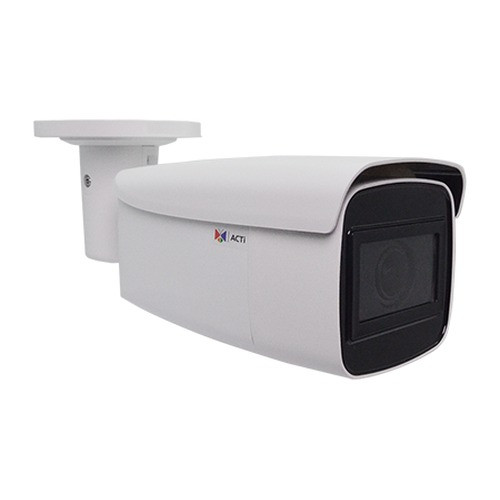
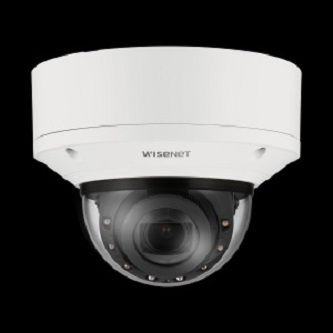
Both the ACTi A818 and Hanwha XNV-8083R are 6MP outdoor vandal dome cameras positioned for perimeter and general surveillance applications. This comparison examines two fixed varifocal domes sharing the same resolution class, both rated for outdoor deployment with IR night vision, WDR, PoE+, and ONVIF compliance. Key differentiators span sensor size, zoom range, IR throw distance, analytics engine depth, cybersecurity hardware, and operating temperature range — factors that directly affect deployment suitability in demanding environments.
In This Guide
How do the imaging specs compare?
The ACTi A818 uses a 1/2.7-inch sensor delivering 6MP output with a 2.7–13.5mm motorized varifocal lens providing 5x optical zoom — the widest zoom ratio in this comparison. Its IR illuminators reach 85m at 1.0 lux with 850nm LEDs, and minimum illumination is rated at 0.01 lux color / 0 lux (IR on). WDR is specified at 150dB. Maximum frame rates are 30fps at 1920×1080, 25fps at 2688×1520, and 20fps at 2592×1944. Manual GPS position setting is listed as a spec feature.
The Hanwha XNV-8083R uses a larger 1/1.8-inch progressive scan CMOS sensor, resolving 3328×1872 at up to 30fps. Its motorized varifocal lens spans 4.4–9.3mm, a 2.1x zoom ratio — significantly narrower than the A818. IR range is specified at 50m via WiseIR LEDs, and minimum illumination is 0.04 lux color / 0 lux IR. WDR is rated at 120dB (extremeWDR). The larger sensor format generally supports better low-light performance per pixel, and the XNV-8083R adds gyro-based digital image stabilization, P-iris lens control, and defog support — none of which are listed in the A818 specs.
What about installation and environment?
The ACTi A818 carries IP68 and IK10 ratings alongside NEMA 4X certification, making it suitable for full submersion scenarios. It operates from -30°C to +60°C. Power input is DC 12V or PoE Class 3 (IEEE 802.3af/at), with a maximum draw of 13W. Mount options listed include wall, pole, corner, and rack via accessories. The connector is an RJ-45 pigtail on a 2m cable. Weight is 1,046g.
The Hanwha XNV-8083R is rated IP66/IP67/IP6K9K and IK10+, plus NEMA 4X — offering high-pressure wash resistance (IP6K9K) that the A818's IP68 rating does not explicitly cover. Its operating temperature range is -50°C to +55°C, extending 20°C lower than the A818 at the cold end. Power input is PoE+ (IEEE 802.3at, Class 4) or 12VDC, with a maximum draw of 22.5W. The unit measures Ø180×125mm and weighs 1,900g — notably heavier than the A818. A CVBS analog output and Micro USB port are provided for installation alignment.
Which fits your VMS and analytics better?
Both cameras support ONVIF Profile S, G, and T. The ACTi A818 additionally lists Profile M compliance. Analytics on the A818 include VMD, people counting, smoke detection, face detection, and tampering detection — all listed as on-board capabilities. Audio support covers 2-way with mic-in, line-in, and line-out. On-board storage is not listed in the A818 specifications. Cybersecurity certification includes Taiwan IoT Cybersecurity Certification Level 1 (TAICS). The A818 supports Hanwha's SUNAPI or third-party VMS via ONVIF; no proprietary SDK is specified.
The Hanwha XNV-8083R's analytics are AI-engine-based, covering object detection (person, face, vehicle types, license plate), IVA (virtual line, area, enter/exit, loitering, direction, appear/disappear, intrusion), defocus detection, people counting, queue management, and heatmap — a substantially broader and more granular analytics suite. Security hardware includes TPM 2.0 (FIPS 140-2 Level 2), 802.1X authentication, device certificates, and HTTPS/Digest authentication. On-board edge storage supports dual Micro SD/SDHC/SDXC slots up to 1TB (512GB × 2). RAM is 4GB with 512MB flash. Audio includes selectable mic-in/line-in and line-out. The camera supports SUNAPI (HTTP API) and the Wisenet open platform in addition to ONVIF.
Which should you choose: the A818 or the XNV-8083R?
Our take: The XNV-8083R is the stronger choice when AI-driven analytics depth, hardware-rooted cybersecurity, dual-slot edge storage, and extreme cold-weather deployment are the primary requirements. Its 1/1.8-inch sensor is larger than the A818's 1/2.7-inch, its operating range extends to -50°C versus -30°C, and its TPM 2.0 (FIPS 140-2 Level 2) security architecture plus dual 512GB SD slots have no equivalent in the A818 spec sheet. The A818 holds a meaningful advantage where 5x optical zoom (2.7–13.5mm vs 2.1x / 4.4–9.3mm) is needed to cover long distances from a single dome, where the higher 150dB WDR rating (vs 120dB) matters in extreme contrast scenes, and where IP68 submersion tolerance is a site requirement. Choose the A818 for high-zoom, submersion-rated deployments on ONVIF-centric VMS; choose the XNV-8083R for AI analytics, Wisenet/SUNAPI ecosystems, and sub-zero installations.
Side-by-Side Comparison
Spec-for-spec, from manufacturer data.
| Specification | ACTi A818 | Hanwha XNV-8083R |
|---|---|---|
| Resolution | 6MP (2688×1520 max) | 6MP (3328×1872) |
| Image Sensor | 1/2.7 inch | 1/1.8 inch progressive CMOS |
| Lens / Focal Length | 2.7–13.5mm motorized (5x optical zoom) | 4.4–9.3mm motorized varifocal (2.1x zoom) |
| Min. Illumination (Color / IR) | 0.01 lux / 0 lux (IR on) | 0.04 lux / 0 lux (IR on) |
| IR Range | 85m @ 1.0 lux (850nm) | 50m (WiseIR) |
| WDR | 150dB (Extreme WDR) | 120dB (extremeWDR) |
| Max Frame Rate | 30fps @ 1080p; 25fps @ 2688×1520 | 30fps @ 3328×1872 |
| Video Compression | H.265; H.264; MJPEG | H.265; H.264; MJPEG |
| IP Rating | IP68; NEMA 4X | IP66 / IP67 / IP6K9K; NEMA 4X |
| IK / Impact Rating | IK10 | IK10+ |
| Operating Temperature | -30°C to +60°C | -50°C to +55°C |
| Power Input / PoE Class | PoE Class 3 (802.3at) / DC 12V; 13W max | PoE+ Class 4 (802.3at) / DC 12V; 22.5W max |
| Edge Storage | — | Dual Micro SD/SDHC/SDXC; up to 1TB (512GB × 2) |
| Audio | 2-way; mic-in; line-in; line-out | Selectable mic-in/line-in; line-out |
| Analytics | VMD; People Counting; Smoke Detection; Face Detection; Tampering Detection | AI: Object detection (person/face/vehicle/LPR); IVA; People counting; Queue management; Heatmap; Defocus detect |
| Cybersecurity | Taiwan IoT Cybersecurity Cert Level 1 (TAICS) | TPM 2.0 (FIPS 140-2 Level 2); 802.1X; Device Certificate |
| ONVIF Profiles | Profile S; G; T; M | Profile S; G; T |
| Weight | 1,046g (2.31 lb) | 1,900g (4.19 lb) |
| Warranty | 3 years | 3 years |
Frequently Asked Questions
Which should you choose: the A818 or the XNV-8083R?
The XNV-8083R is the stronger choice when AI-driven analytics depth, hardware-rooted cybersecurity, dual-slot edge storage, and extreme cold-weather deployment are the primary requirements. Its 1/1.8-inch sensor is larger than the A818's 1/2.7-inch, its operating range extends to -50°C versus -30°C, and its TPM 2.0 (FIPS 140-2 Level 2) security architecture plus dual 512GB SD slots have no equivalent in the A818 spec sheet. The A818 holds a meaningful advantage where 5x optical zoom (2.7–13.5mm vs 2.1x / 4.4–9.3mm) is needed to cover long distances from a single dome, where the higher 150dB WDR rating (vs 120dB) matters in extreme contrast scenes, and where IP68 submersion tolerance is a site requirement. Choose the A818 for high-zoom, submersion-rated deployments on ONVIF-centric VMS; choose the XNV-8083R for AI analytics, Wisenet/SUNAPI ecosystems, and sub-zero installations.
Is the ACTi A818 or Hanwha XNV-8083R better for low-light performance?
On specified minimum illumination, both reach 0 lux with IR active. The A818's IR illuminators are rated to 85m at 1.0 lux, while the XNV-8083R's WiseIR reaches 50m — giving the A818 a longer IR throw. However, the XNV-8083R uses a larger 1/1.8-inch sensor versus the A818's 1/2.7-inch, which typically yields better per-pixel light gathering, and its minimum color illumination is 0.04 lux vs 0.01 lux for the A818. The A818 has a lower stated color lux floor and longer IR range; the XNV-8083R has the larger sensor. Neither spec sheet provides a side-by-side sensitivity curve.
Which camera is better suited for extremely cold outdoor environments?
The Hanwha XNV-8083R is rated for operation down to -50°C, compared to -30°C for the ACTi A818 — a 20°C advantage at the cold end. For installations in arctic climates, high-altitude sites, or unheated enclosures subject to severe winter temperatures, the XNV-8083R's specified operating range directly addresses conditions the A818 is not rated for.
Does either camera support on-board recording without an NVR?
Yes — the Hanwha XNV-8083R provides dual Micro SD/SDHC/SDXC card slots supporting up to 1TB total (512GB per slot) for local edge recording, triggered by analytics, alarms, schedules, or continuous. The ACTi A818 specifications do not list any on-board SD card storage. Buyers requiring standalone edge recording without an NVR should factor this into their decision.
Get a Second Opinion on Your Camera Choice
Share your site layout, coverage goals, and budget. Our team will validate the camera selection, flag anything we would change, and recommend products that match the use case.