
i-PRO S22600-V2LG vs i-PRO X25700-V2LN: Specification Comparison
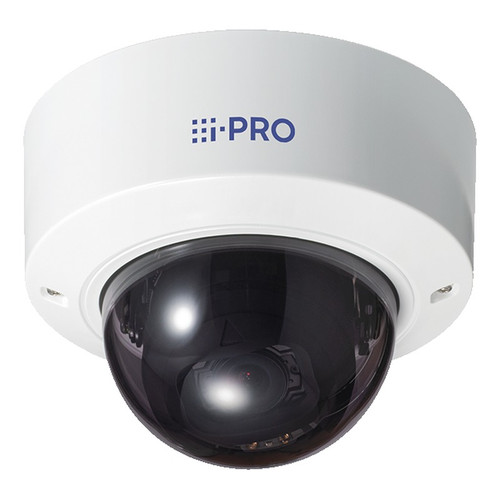
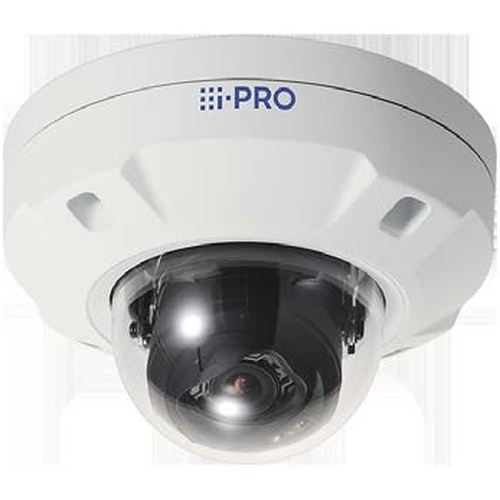
Both the i-PRO WV-S22600-V2LG and WV-X25700-V2LN are 6MP fixed-dome IP cameras from i-PRO's V2L generation, sharing the same 1/1.8-type CMOS sensor, identical 4.3–8.6mm motorized varifocal lens, and 2.0x optical zoom. The key differentiator is deployment environment: the S22600-V2LG is an IK10 vandal-resistant indoor dome, while the X25700-V2LN is a full outdoor dome rated IP67, IK10, and wind-resistant to 40 m/s. Installers choosing between them are trading interior cost efficiency against hardened outdoor performance.
In This Guide
How do the imaging specs compare?
Both cameras use an approximately 1/1.8-type CMOS sensor scanning 7.68 mm × 4.32 mm, shoot at 30 fps, and share the same 4.3–8.6 mm motorized varifocal lens (2.0x optical zoom, F1.5 wide to F2.4 tele), identical angular fields of view (52°–101° H, 29°–55° V), and a 1.0 m minimum focus distance. Both deliver a maximum 132 dB dynamic range with Super Dynamic on at level 31, the same BLC/HLC (0–31), Adaptive Black Stretch (0–255), and DNR (0–255). The S22600-V2LG specifies color minimum illumination at 0.12 lx (30 IRE) and B&W at 0.09 lx; the X25700-V2LN specifies 0.03 lx (B&W, 50 IRE, F1.5, 1/30 s) — a meaningfully lower floor, though the specs use different IRE references, so direct numeric comparison should be made cautiously.
IR reach is the clearest imaging delta. The S22600-V2LG provides 25 m IR range at 30 IRE and 20 m at 50 IRE. The X25700-V2LN nearly triples that at 70 m (230 ft). DORI distances also favor the outdoor model: at tele, the X25700-V2LN Detect reaches 157.5 m vs. 136.5 m for the S22600-V2LG; Identify at tele is 15.7 m vs. 13.6 m. The X25700-V2LN additionally includes a built-in gyro image stabilizer (On/Off) and an extended extra-zoom range of up to 12.0x at 640×360 versus the S22600-V2LG's 6.0x. The S22600-V2LG's shutter range is 1/30–1/10000 s; the X25700-V2LN's is 1/60–1/10000 s with a separate maximum shutter spec of 1/4000 s to 16/30 s. Both cameras are rated at up to 8 AI analytics types with AI sound classification (Gunshot, Yell, Vehicle horn, Glass break), and both support Ambarella SoCs — CV22 for the S22600-V2LG and the newer CV52 for the X25700-V2LN.
What about installation and environment?
The S22600-V2LG is rated for indoor use only, carries IK10 impact resistance per IEC 62262, and operates from −10 °C to +50 °C (power-on: 0 °C to +50 °C) at 10–90% relative humidity (non-condensing). It is powered by DC 12V/1A or PoE 802.3af (Class 0) at a maximum of 12 W. Its housing is aluminum die cast with a polycarbonate dome, measuring ø129.5 mm × 102.5 mm (H) and weighing approximately 800 g.
The X25700-V2LN is engineered for outdoor deployment: IP66/IP67 (IEC 60529), Type 4X (UL50E), NEMA 4X, IK10, and a 50 J shock rating per IEC 60068-2-75 — significantly exceeding the indoor model's environmental protection. It operates from −40 °C to +55 °C (power-on: −30 °C to +55 °C) and tolerates 10–100% humidity (non-condensing), and is wind-rated to 40 m/s (~89 mph). Power is DC 12V/1.2A or PoE+ 802.3at (Class 4) at 14 W — requiring a PoE+ switch port rather than the standard 802.3af supported by the S22600-V2LG. The outdoor unit is slightly larger at ø154 mm × 105 mm (H) and heavier at approximately 1.1 kg. Both units share the same pan/tilt adjustment range (−30° to +85° tilt, ±100° yaw); the S22600-V2LG is rated −240° to +120° H pan while the X25700-V2LN is rated −194° to +166° H.
Which fits your VMS and analytics better?
Both cameras support ONVIF Profiles G, S, T, and M, making them broadly compatible with modern VMS platforms. Each supports up to 14 simultaneous users, microSD/SDHC/SDXC cards up to 512 GB for on-board edge recording, full-duplex audio (3.5 mm stereo mini-jack input and output on both), and the same GUI languages (English, Italian, French, German, Spanish, Portuguese, Russian, Chinese, Japanese). Both support IPv4 protocols including RTSP, SRTP, SMTP, SFTP, MQTT, and LLDP, plus IEEE 802.1X and SNMPv1/v2/v3. The S22600-V2LG additionally documents IPv6 protocol support (DHCPv6, MLD, ICMP over IPv6); the X25700-V2LN's spec sheet does not list IPv6 protocols explicitly.
On analytics and security, both cameras include AI sound classification, VMD (4 areas), SCD (1 area), audio detection, and up to 8 privacy zones and 8 VIQS zones. The S22600-V2LG specifies FIPS 140-2 Level 3 and NXP SE050F secure element for hardware-level key storage; the X25700-V2LN lists Secure Boot explicitly in its feature set, while the provided spec sheet does not itemize FIPS 140-2. The S22600-V2LG has 3× alarm inputs and 1× alarm output plus 1× Aux Out; the X25700-V2LN has 4× alarm I/O terminals. The X25700-V2LN uses the newer Ambarella CV52 SoC versus the S22600-V2LG's CV22, which may affect future firmware feature availability.
Which should you choose: the S22600-V2LG or the X25700-V2LN?
Our take: The X25700-V2LN is the stronger choice when the installation site is outdoors or subject to extreme temperatures, moisture, or wind loads. The outdoor model's IP67/NEMA 4X rating and −40 °C to +55 °C operating range directly address environments the S22600-V2LG's indoor-only, −10 °C to +50 °C rating cannot cover. Its 70 m IR reach is nearly 2.8× the S22600-V2LG's 25 m, critical for parking lots, perimeters, and long-corridor exteriors. The X25700-V2LN's 50 J shock rating (IEC 60068-2-75) and built-in gyro image stabilizer add further resilience unavailable on the indoor model. Conversely, the S22600-V2LG is appropriate for temperature-controlled indoor spaces where PoE 802.3af (not PoE+) infrastructure is already deployed, where FIPS 140-2 Level 3 hardware security is a compliance requirement, and where documented IPv6 support is needed — capabilities either absent or not specified on the X25700-V2LN datasheet.
Side-by-Side Comparison
Spec-for-spec, from manufacturer data.
| Specification | i-PRO S22600-V2LG | i-PRO X25700-V2LN |
|---|---|---|
| Resolution | 6MP (3072 × 1728 @ 16:9; 3072 × 2304 @ 4:3) | 6MP (3840 × 2160) |
| Image Sensor | Approx. 1/1.8-type CMOS, 7.68 × 4.32 mm | Approx. 1/1.8-type CMOS, 7.68 × 4.32 mm |
| Lens / Focal Length | 4.3–8.6 mm motorized varifocal, 2.0x optical zoom | 4.3–8.6 mm motorized varifocal, 2.0x optical zoom |
| Min. Illumination | 0.12 lx color (30 IRE); 0.09 lx B&W; 0 lx with IR | 0.03 lx B&W (50 IRE, F1.5, 1/30 s) |
| IR Range | 25 m (30 IRE) / 20 m (50 IRE) | 70 m (230 ft) |
| Wide Dynamic Range | Max. 132 dB (Super Dynamic On, Level 31) | Max. 132 dB (Super Dynamic On, Level 31) |
| Max Frame Rate | 30 fps | 30 fps |
| SoC | Ambarella CV22 | Ambarella CV52 |
| Video Compression | H.265, H.264, MJPEG | H.265, H.264, MJPEG |
| IP Rating | Indoor only (no IP ingress rating listed) | IP66 / IP67 / NEMA 4X / Type 4X |
| IK / Impact Rating | IK10 (IEC 62262) | IK10 (IEC 62262); 50 J (IEC 60068-2-75) |
| Operating Temperature | −10 °C to +50 °C (power-on: 0 °C to +50 °C) | −40 °C to +55 °C (power-on: −30 °C to +55 °C) |
| Power Input / PoE Class | DC 12V 1A or PoE 802.3af (Class 0), 12 W max | DC 12V 1.2A or PoE+ 802.3at (Class 4), 14 W |
| Edge Storage | microSD / SDHC / SDXC up to 512 GB | microSD / SDHC / SDXC up to 512 GB |
| Audio | Full duplex; 3.5 mm stereo mini-jack in/out; G.726, G.711, AAC-LC | Full duplex; 3.5 mm stereo mini-jack in/out; G.726, G.711, AAC-LC |
| Alarm I/O | 3× Alarm In, 1× Alarm Out, 1× Aux Out | 4× Alarm I/O terminals |
| Image Stabilization | Not specified | Built-in gyro (On/Off) |
| Hardware Security | FIPS 140-2 Level 3, NXP SE050F | Secure Boot (FIPS 140-2 not listed in provided specs) |
| Dimensions | ø129.5 mm × 102.5 mm (H) | ø154 mm × 105 mm (H) |
| Weight | Approx. 800 g (1.77 lbs) | Approx. 1.1 kg (2.43 lbs) |
| Warranty | 5-Year | 5-Year |
Frequently Asked Questions
Which should you choose: the S22600-V2LG or the X25700-V2LN?
The X25700-V2LN is the stronger choice when the installation site is outdoors or subject to extreme temperatures, moisture, or wind loads. The outdoor model's IP67/NEMA 4X rating and −40 °C to +55 °C operating range directly address environments the S22600-V2LG's indoor-only, −10 °C to +50 °C rating cannot cover. Its 70 m IR reach is nearly 2.8× the S22600-V2LG's 25 m, critical for parking lots, perimeters, and long-corridor exteriors. The X25700-V2LN's 50 J shock rating (IEC 60068-2-75) and built-in gyro image stabilizer add further resilience unavailable on the indoor model. Conversely, the S22600-V2LG is appropriate for temperature-controlled indoor spaces where PoE 802.3af (not PoE+) infrastructure is already deployed, where FIPS 140-2 Level 3 hardware security is a compliance requirement, and where documented IPv6 support is needed — capabilities either absent or not specified on the X25700-V2LN datasheet.
Is the S22600-V2LG or X25700-V2LN better for low-light performance?
Based on the provided specs, the X25700-V2LN specifies a lower minimum illumination of 0.03 lx (B&W, 50 IRE, F1.5, 1/30 s) compared to the S22600-V2LG's 0.09 lx (B&W) — note these are measured at different IRE thresholds, so they are not directly interchangeable figures. Additionally, the X25700-V2LN's 70 m IR range far exceeds the S22600-V2LG's 25 m IR range, giving it substantially greater nighttime reach for outdoor scenes.
Can I use a standard PoE switch for the X25700-V2LN?
No. The X25700-V2LN requires PoE+ (802.3at, Class 4) at up to 14 W. The S22600-V2LG operates on standard PoE (802.3af, Class 0) at up to 12 W. If your existing switch infrastructure only delivers 802.3af, you would need to upgrade affected ports or use a mid-span injector to power the X25700-V2LN.
Are both cameras compatible with the same VMS platforms via ONVIF?
Yes. Both cameras support ONVIF Profiles G, S, T, and M, so any VMS with full ONVIF Profile compliance should integrate with either model. Both also support up to 14 simultaneous users, on-board microSD storage up to 512 GB, and the same core network protocols (RTSP, SMTP, SFTP, MQTT, LLDP, IEEE 802.1X). The primary integration difference is that the S22600-V2LG documents IPv6 protocol support and FIPS 140-2 Level 3 hardware security; these are not explicitly listed in the provided X25700-V2LN specifications.
Get a Second Opinion on Your Camera Choice
Share your site layout, coverage goals, and budget. Our team will validate the camera selection, flag anything we would change, and recommend products that match the use case.