
Hanwha XNB-6005 vs i-PRO S71300A-F3: Specification Comparison
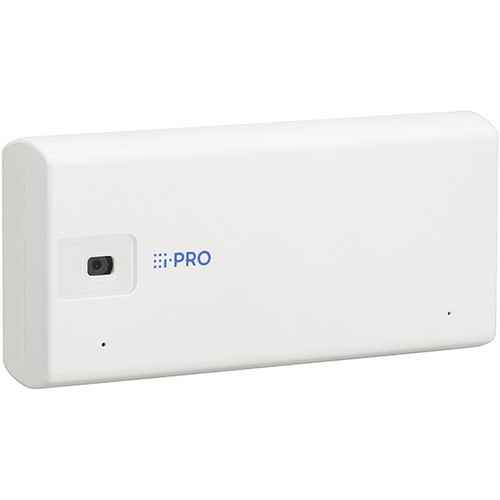
Both the Hanwha XNB-6005 and the i-PRO WV-S71300A-F3 are wired, indoor, 2MP (1920×1080) fixed box cameras targeting enterprise and SMB installations. The XNB-6005 is a lens-agnostic body with C/CS-mount support aimed at integrators who supply their own glass, while the S71300A-F3 ships with an integrated 3.2mm fixed lens and built-in IR. This comparison focuses on imaging performance, installation requirements, and VMS/analytics integration—the three axes most relevant to a B2B installer or IT buyer choosing between them.
In This Guide
How do the imaging specs compare?
The XNB-6005 uses a 1/2" CMOS sensor and achieves a minimum illumination of 0.006 lux (color) and 0.0006 lux (B&W), making it substantially more sensitive in near-darkness. It also delivers up to 60fps in H.265/H.264 and supports 150dB Wide Dynamic Range with SSDR, making it well-suited to high-contrast scenes such as lobbies with exterior windows or warehouse dock doors. The S71300A-F3 uses a smaller 1/2.8" CMOS sensor and specifies a minimum illumination of 0.2 lux (color); the spec sheet does not state a B&W lux figure. Its maximum frame rate is 30fps, and no WDR dB rating is published in the provided specifications.
On lens flexibility the cameras diverge significantly. The XNB-6005 accepts any C-mount or CS-mount lens, allowing integrators to match focal length, aperture, and auto-iris type (DC auto iris or P-iris) to the scene. The S71300A-F3 ships with a fixed 3.2mm F2.0 lens giving an 81.1° horizontal field of view; no interchangeable-lens capability is stated in its specifications. The S71300A-F3 includes integrated IR illumination (range not specified beyond a 0.5m minimum focus distance), while the XNB-6005 specification lists 'Night Vision: IR' as a feature but does not document an onboard IR emitter—IR capability would depend on the lens and scene lighting or an external illuminator.
What about installation and environment?
The XNB-6005 accepts PoE (IEEE 802.3af, Class 3), 24VAC, or 12VDC power at a maximum draw of 8.5W, giving installers flexibility where AC infrastructure is already in place. Its operating temperature range is -10°C to +55°C. The S71300A-F3 is listed as PoE Class 0 (no secondary power input stated in the provided specs) and its operating temperature range is -10°C to +40°C, which is 15°C narrower on the upper end. Both cameras are rated for indoor use only. The S71300A-F3 carries an IP44 ingress protection rating (splash-resistant); the XNB-6005 specification does not publish an IP rating for the camera body itself.
The XNB-6005 body measures 73.1×66.6×147.8mm and weighs 420g (0.93 lb) with a plastic housing available in black or ivory. The S71300A-F3 weighs approximately 157g (excluding base/cover) and is constructed from PC resin and aluminum die-casting. Both use a standard box form factor. The XNB-6005 supports C/CS-mount; the S71300A-F3 mount type is listed as 'Rack' in one field of the provided spec data, though no further mounting detail is published. The XNB-6005 includes an RS-485 serial interface and one alarm input/one alarm output; no RS-485 or alarm I/O specs are present in the S71300A-F3 specification data provided.
Which fits your VMS and analytics better?
Both cameras declare ONVIF compatibility and support H.265, H.264, and MJPEG compression. The XNB-6005 specifically lists ONVIF Profile S, G, and T, plus Wisenet SUNAPI (HTTP API) and the Wisenet open platform, and supports up to 10 simultaneous stream profiles and 20 unicast users. The S71300A-F3 supports up to 14 simultaneous users; its specific ONVIF profile conformance is not listed in the provided specifications. The XNB-6005 includes WiseStream II smart codec for bandwidth reduction; no equivalent adaptive-bitrate feature is documented for the S71300A-F3. Both support HTTPS and user/host authentication; the XNB-6005 additionally specifies 802.1X (EAP-TLS, EAP-LEAP), IP address filtering, and SNMPv1/v2c/v3, which are not listed for the S71300A-F3.
On-camera analytics differ substantially. The XNB-6005 lists 13 analytics functions including defocus detection, directional detection, fog detection, face detection, digital auto tracking, appear/disappear, enter/exit, loitering, tampering, virtual line, audio detection, and sound classification. The S71300A-F3 specifies AI analytics with 8 detection types including AI sound classification (gunshot, yell, vehicle horn, glass break), video motion detection across 4 areas, scene change detection, and audio detection; specific AI detection categories such as people, face, vehicle, and non-mask are referenced in the product tagline data but are not enumerated in the formal specification fields provided. The S71300A-F3 includes two built-in omnidirectional electret condenser microphones; the XNB-6005 has a selectable mic/line/built-in mic audio input and a line output. Both support microSD edge storage; the XNB-6005 specifies dual microSD slots up to 512GB total, while the S71300A-F3's edge storage capacity is not stated in the provided specs.
Which should you choose: the XNB-6005 or the S71300A-F3?
Our take: The XNB-6005 is the stronger choice when low-light sensitivity, high-contrast scene handling, or lens flexibility are the primary requirements. Its 0.006 lux color / 0.0006 lux B&W minimum illumination is dramatically lower than the S71300A-F3's 0.2 lux figure, its 150dB WDR specification addresses backlit scenes that the S71300A-F3's undocumented WDR cannot be evaluated against, and its 60fps capability versus the S71300A-F3's 30fps matters for fast-motion applications. The XNB-6005 also supports 24VAC and 12VDC in addition to PoE, offers RS-485, and covers a wider operating temperature (to +55°C vs +40°C). The S71300A-F3 is the better fit when a self-contained, lens-included, splash-rated (IP44) compact body with a five-year warranty is preferred over the XNB-6005's three-year coverage, particularly in installations where the integrator does not wish to source and configure a separate lens.
Side-by-Side Comparison
Spec-for-spec, from manufacturer data.
| Specification | Hanwha XNB-6005 | i-PRO S71300A-F3 |
|---|---|---|
| Resolution | 1920×1080 (2MP) | 1920×1080 (2MP) |
| Image Sensor | 1/2" CMOS | 1/2.8" CMOS |
| Lens / Focal Length | C/CS-mount (user-supplied) | 3.2mm fixed, F2.0 (integrated) |
| Min. Illumination (Color) | 0.006 lux | 0.2 lux |
| Min. Illumination (B&W) | 0.0006 lux | — |
| Wide Dynamic Range | 150dB | — |
| Max. Frame Rate | 60fps | 30fps |
| Video Compression | H.265, H.264, MJPEG | H.265, H.264, MJPEG |
| IP Rating | — | IP44 |
| Operating Temperature | -10°C to +55°C | -10°C to +40°C |
| Power Input / PoE Class | PoE 802.3af Class 3; 24VAC; 12VDC | PoE Class 0 |
| Max. Power Consumption | 8.5W | — |
| Edge Storage | Dual microSD/SDHC/SDXC up to 512GB | microSD (capacity not specified) |
| Audio | Selectable mic in / line in / built-in mic; line out | 2× built-in omnidirectional mic |
| Alarm I/O | 1 input / 1 output | — |
| RS-485 | Yes | — |
| ONVIF Profiles | S, G, T | — (ONVIF compatible; profiles not specified) |
| Warranty | 3 years | 5 years |
| Weight | 420g (0.93 lb) | 157g (excl. base/cover) |
Frequently Asked Questions
Which should you choose: the XNB-6005 or the S71300A-F3?
The XNB-6005 is the stronger choice when low-light sensitivity, high-contrast scene handling, or lens flexibility are the primary requirements. Its 0.006 lux color / 0.0006 lux B&W minimum illumination is dramatically lower than the S71300A-F3's 0.2 lux figure, its 150dB WDR specification addresses backlit scenes that the S71300A-F3's undocumented WDR cannot be evaluated against, and its 60fps capability versus the S71300A-F3's 30fps matters for fast-motion applications. The XNB-6005 also supports 24VAC and 12VDC in addition to PoE, offers RS-485, and covers a wider operating temperature (to +55°C vs +40°C). The S71300A-F3 is the better fit when a self-contained, lens-included, splash-rated (IP44) compact body with a five-year warranty is preferred over the XNB-6005's three-year coverage, particularly in installations where the integrator does not wish to source and configure a separate lens.
Is the XNB-6005 or WV-S71300A-F3 better for low-light environments?
Based on the published specifications, the XNB-6005 is significantly more sensitive: it specifies 0.006 lux (color) and 0.0006 lux (B&W) minimum illumination. The S71300A-F3 specifies 0.2 lux; no B&W lux figure is published in its provided specs. For near-darkness applications the XNB-6005 has a measurable specification advantage.
Do I need to buy a lens separately for either of these cameras?
Yes, for the XNB-6005: it accepts C-mount and CS-mount lenses but the camera body ships without a lens. The WV-S71300A-F3 includes an integrated fixed 3.2mm F2.0 lens and requires no separate lens purchase.
Which camera carries a longer warranty?
The i-PRO WV-S71300A-F3 carries a 5-year warranty per the provided specifications. The Hanwha XNB-6005 carries a 3-year warranty. No additional warranty terms are documented in the spec data provided for either unit.
Get a Second Opinion on Your Camera Choice
Share your site layout, coverage goals, and budget. Our team will validate the camera selection, flag anything we would change, and recommend products that match the use case.