
Hanwha XNB-6003 vs i-PRO S71300A-F3: Specification Comparison
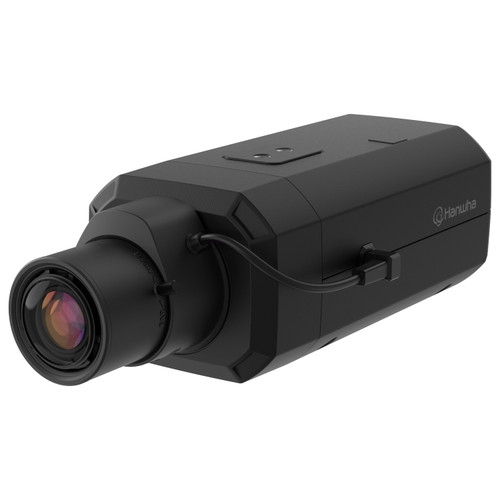
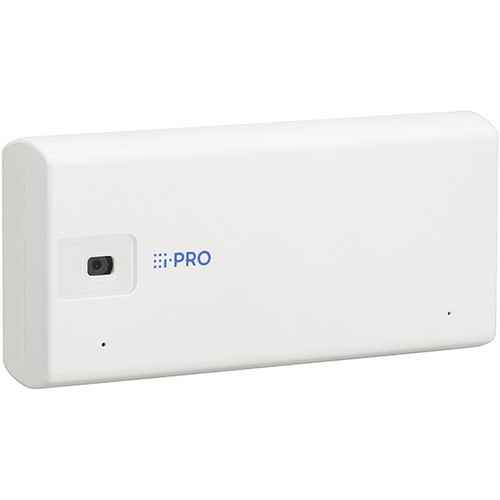
This comparison covers two 2-megapixel indoor box cameras aimed at professional security installations: the Hanwha XNB-6003 and the i-PRO WV-S71300A-F3. Both deliver 1920x1080 resolution in a fixed, non-PTZ box form factor suited for indoor mounting with interchangeable or fixed lenses. The XNB-6003 is a lens-agnostic platform supporting C/CS/I-CS mounts with broad AI analytics and dual SD card edge storage. The WV-S71300A-F3 ships with a fixed 3.2mm lens, an Ambarella CV22 SoC, dual built-in microphones, and an IP44 ingress-protection rating. Key differentiators span frame rate, low-light sensitivity, analytics depth, network throughput, and warranty length.
In This Guide
How do the imaging specs compare?
The XNB-6003 uses a 1/2.8-inch progressive CMOS sensor and achieves a maximum frame rate of 120 fps at 1920x1080, compared with the WV-S71300A-F3, which is rated at 30 fps maximum. Low-light performance differs substantially: the XNB-6003 is specified at 0.007 Lux in color and 0.0007 Lux in black-and-white mode, while the WV-S71300A-F3 lists only 0.2 Lux in color with no B/W figure provided. The XNB-6003 also carries an extremeWDR rating of 150 dB and a built-in gyro-based digital image stabilizer; neither a WDR dB figure nor image stabilization is specified for the WV-S71300A-F3.
Lens flexibility is a significant divergence. The XNB-6003 accepts DC auto-iris, P-iris, manual, and I-CS lenses via C or CS mount, giving integrators full control over field of view and iris behavior. The WV-S71300A-F3 ships with a fixed 3.2mm F2.0 lens yielding an 81.1-degree horizontal field of view; extra zoom up to 3x is available only at the reduced resolution of 640x360. The WV-S71300A-F3 includes AI Sound Classification for gunshot, yell, vehicle horn, and glass break via its dual built-in microphones, a feature not listed for the XNB-6003 in the provided specs.
What about installation and environment?
Both cameras accept PoE as their primary power source. The XNB-6003 is rated PoE IEEE 802.3af Class 3 with a 12.95 W maximum draw and also accepts 12 VDC; it provides a metal-shielded RJ-45 port rated for 10/100/1000BASE-T Gigabit Ethernet. The WV-S71300A-F3 draws PoE Class 0 (approximately 12 W typical) and its network interface is limited to 10/100BASE-TX with no Gigabit Ethernet listed. The XNB-6003 includes two configurable alarm I/O ports and an RS-485 serial interface; neither alarm I/O nor RS-485 is specified for the WV-S71300A-F3.
Environmental tolerance differs at the upper end: the XNB-6003 is rated -10 degrees C to +55 degrees C, while the WV-S71300A-F3 is rated -10 degrees C to +40 degrees C. The WV-S71300A-F3 carries an IP44 ingress-protection rating; the XNB-6003 does not list an IP or IK rating in the provided specs, typical of bare-board box cameras intended for use inside a separate housing. The XNB-6003 provides CVBS and Micro USB video outputs for lens-alignment during installation; the WV-S71300A-F3 does not list equivalent installation outputs. Body weight is 880 g for the XNB-6003 versus 157 g for the WV-S71300A-F3 (excluding base and cover); physical dimensions are not specified for the WV-S71300A-F3 in the provided specs.
Which fits your VMS and analytics better?
The XNB-6003 explicitly supports ONVIF Profile S, G, T, and M alongside Hanwha SUNAPI and Wisenet APIs. It streams to up to 20 unicast users across up to 10 configurable profiles with 3 virtual channels, and supports SRTP, MQTT, SNMPv3, and 802.1X with EAP-TLS, EAP-LEAP, and EAP-PEAP for enterprise network authentication. A TPM 2.0 chip certified to FIPS 140-2 Level 2 is included. The WV-S71300A-F3 lists ONVIF support without specifying profiles, supports up to 14 simultaneous users, and its security features in the provided specs are limited to user authentication, host authentication, and HTTPS; no MQTT, SRTP, or hardware security module is mentioned.
The XNB-6003 runs AI-based object detection classifying person, face, vehicle, and license plate with vehicle sub-type attributes, plus virtual line crossing, virtual area loitering and intrusion, people counting, queue management, and heatmap. It supports 8 polygonal motion detection zones and 32 privacy mask zones. The WV-S71300A-F3 lists AI analytics covering people, face, vehicle, non-mask, and occupancy across 8 detection types, with 4 VMD areas and up to 8 privacy zones, and adds AI Sound Classification and Scene Change Detection. Edge storage on the XNB-6003 spans two microSD slots up to 512 GB each (1 TB combined); the WV-S71300A-F3 lists a single microSD slot with capacity not specified in the provided specs.
Which should you choose: the XNB-6003 or the S71300A-F3?
Our take: The XNB-6003 is the stronger choice when high frame rate, superior low-light sensitivity, or deep network integration are priorities. Its 120 fps capability versus 30 fps on the WV-S71300A-F3 makes it suitable for fast-motion forensic capture, and its color minimum illumination of 0.007 Lux is approximately 28 times lower than the 0.2 Lux figure on the i-PRO model, with an additional B/W threshold of 0.0007 Lux not specified at all for the WV-S71300A-F3. Dual SD slots providing up to 1 TB combined on-camera storage also exceed the single-slot, unspecified-capacity edge storage of the i-PRO. The WV-S71300A-F3 is the more appropriate choice where a compact, lightweight body (157 g versus 880 g), a fixed wide-angle built-in lens, IP44-rated enclosure, AI Sound Classification, or a five-year warranty versus three years on the XNB-6003 are the deciding factors. Integrators committed to the Hanwha Wisenet ecosystem, requiring FIPS 140-2 TPM security, or needing ONVIF Profile T/M metadata will find the XNB-6003 the natural fit.
Side-by-Side Comparison
Spec-for-spec, from manufacturer data.
| Specification | Hanwha XNB-6003 | i-PRO S71300A-F3 |
|---|---|---|
| Resolution | 1920x1080 (2MP) | 1920x1080 (2MP) |
| Max Frame Rate | 120 fps | 30 fps |
| Sensor Size | 1/2.8" progressive CMOS | Approx. 1/2.8 type CMOS |
| Min. Illumination (Color) | 0.007 Lux | 0.2 Lux |
| Min. Illumination (B/W) | 0.0007 Lux | — |
| Wide Dynamic Range | extremeWDR 150 dB | — |
| Lens Mount / Type | C / CS / I-CS (interchangeable) | Fixed 3.2 mm F2.0 (built-in) |
| Digital Image Stabilization | Yes (built-in gyro) | — |
| PoE Class | IEEE 802.3af Class 3 (12.95 W max) | Class 0 (~12 W typical) |
| Ethernet Speed | 10/100/1000BASE-T (Gigabit) | 10/100BASE-TX only |
| Alarm I/O | 2 configurable ports | — |
| RS-485 | Yes | — |
| Edge Storage Slots / Max Capacity | 2 slots / 1 TB (512 GB x2) | 1 slot / capacity not specified |
| AI Sound Classification | — | Gunshot, Yell, Vehicle horn, Glass break |
| IP Rating | — | IP44 |
| Operating Temp Range | -10°C to +55°C | -10°C to +40°C |
| ONVIF Profiles | S, G, T, M | Supported (profiles not specified) |
| Hardware Security | TPM 2.0 (FIPS 140-2 Level 2) | — |
| Simultaneous Streams / Users | 10 profiles / 20 unicast users | 14 simultaneous users |
| Warranty | 3 years | 5 years |
Frequently Asked Questions
Which should you choose: the XNB-6003 or the S71300A-F3?
The XNB-6003 is the stronger choice when high frame rate, superior low-light sensitivity, or deep network integration are priorities. Its 120 fps capability versus 30 fps on the WV-S71300A-F3 makes it suitable for fast-motion forensic capture, and its color minimum illumination of 0.007 Lux is approximately 28 times lower than the 0.2 Lux figure on the i-PRO model, with an additional B/W threshold of 0.0007 Lux not specified at all for the WV-S71300A-F3. Dual SD slots providing up to 1 TB combined on-camera storage also exceed the single-slot, unspecified-capacity edge storage of the i-PRO. The WV-S71300A-F3 is the more appropriate choice where a compact, lightweight body (157 g versus 880 g), a fixed wide-angle built-in lens, IP44-rated enclosure, AI Sound Classification, or a five-year warranty versus three years on the XNB-6003 are the deciding factors. Integrators committed to the Hanwha Wisenet ecosystem, requiring FIPS 140-2 TPM security, or needing ONVIF Profile T/M metadata will find the XNB-6003 the natural fit.
Can I use my existing CS-mount lenses with either camera?
Yes for the XNB-6003, which accepts C mount, CS mount, DC auto-iris, P-iris, manual, and I-CS lenses. The WV-S71300A-F3 ships with a fixed 3.2 mm F2.0 lens and the provided specifications do not list support for interchangeable lens mounts.
Which camera records longer on its built-in SD card?
The XNB-6003 supports two microSD/SDHC/SDXC slots, each up to 512 GB, for a combined maximum of 1 TB on-camera storage. The WV-S71300A-F3 includes a single microSD slot but the maximum supported capacity is not specified in the provided specs.
Does either camera detect audio events like breaking glass or gunshots?
The WV-S71300A-F3 includes AI Sound Classification covering gunshot, yell, vehicle horn, and glass break via its two built-in omnidirectional electret condenser microphones. The XNB-6003 has an audio input with built-in microphone option and audio output, but AI-based sound event classification is not listed in its provided specifications.
Get a Second Opinion on Your Camera Choice
Share your site layout, coverage goals, and budget. Our team will validate the camera selection, flag anything we would change, and recommend products that match the use case.