
Hanwha XNB-6001 vs i-PRO U11301-F3: Specification Comparison
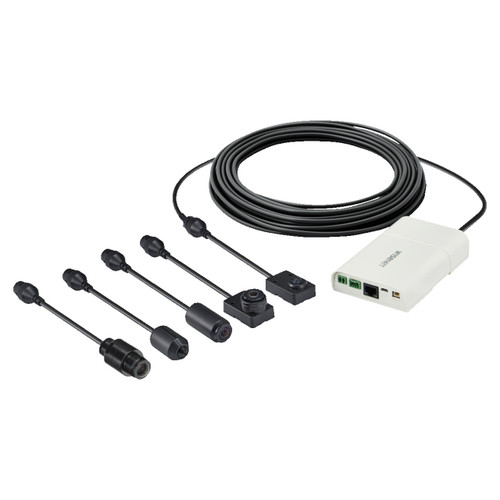
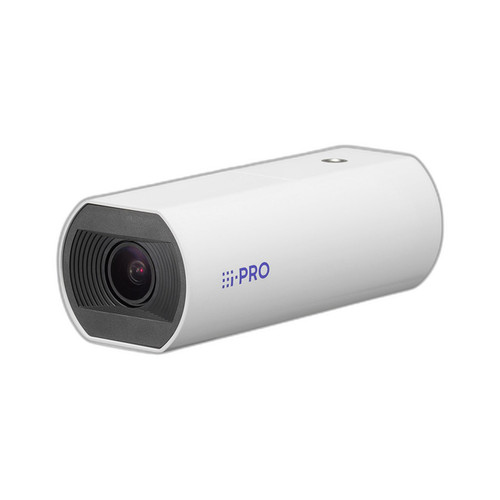
Both the Hanwha XNB-6001 and the i-PRO WV-U11301-F3 are 2MP fixed box cameras targeting professional IP surveillance installations. The XNB-6001 is a covert mini box design with interchangeable lenses and broad outdoor/indoor flexibility, while the WV-U11301-F3 is a standard indoor box camera with a fixed 3.2mm lens and hardware-level cybersecurity certification. Installers and IT buyers evaluating a 2MP box platform will find meaningful differences in lens flexibility, analytics depth, cybersecurity posture, and environmental rating.
In This Guide
How do the imaging specs compare?
The XNB-6001 delivers 1920×1080 at up to 60fps maximum (30fps standard) and supports interchangeable lenses from the SLA series (e.g., SLA-T1080F, SLA-T2480, SLA-T4680), giving installers focal-length flexibility not available on the WV-U11301-F3. Its 120dB WDR is achieved via Hanwha's SSDR/WDR stack alongside BLC and HLC. The sensor size is not specified in the provided specs. Digital noise reduction is handled by SSNRⅤand digital image stabilization is documented as supported.
The WV-U11301-F3 also delivers 2MP at 30fps (25fps mode available) with a fixed 3.2mm F2.0 lens on a 1/2.8-inch CMOS sensor. Its 120dB Super Dynamic WDR is specified at Level 31. Minimum illumination is documented as 0.07 lx color and 0.003 lx B&W (both at F2.0, AGC 11), making low-light performance directly quotable for tender documents. The XNB-6001 provides no minimum illumination figure in the supplied specs, so a direct low-light number comparison cannot be made from the provided data. The i-PRO unit's fixed lens limits field-of-view adjustment on-site.
What about installation and environment?
The XNB-6001 carries an IP66 ingress protection rating and an operating temperature range of -10°C to +55°C, making it suitable for covered outdoor or harsh indoor environments. It is powered by PoE (IEEE 802.3af, Class 3, max 6.5W) or 12VDC (max 6W), offering dual-input flexibility useful where PoE infrastructure is uncertain. Its compact body measures 131.1(W) × 28(H) × 86(D) mm and weighs 245g (0.54 lb as spec'd, 0.7 lb per attribute). Wall, ceiling, and rack mounting are listed.
The WV-U11301-F3 is rated for indoor use only — no IP or IK rating is provided in the supplied specs. Its operating temperature is -10°C to +50°C, a narrower upper range than the XNB-6001's +55°C. Power is PoE (IEEE 802.3af compliant); PoE Class is listed as 0, with a maximum draw estimated at 13W in the provided data — note this exceeds the 15.4W Class 0 ceiling only marginally and should be verified against the manufacturer datasheet. Body dimensions are 59(W) × 49(H) × 142(D) mm. An IK impact rating is not specified for either model.
Which fits your VMS and analytics better?
The XNB-6001 supports ONVIF Profile S, G, and T, plus Hanwha's SUNAPI HTTP API and the Wisenet open platform. Its edge analytics suite is extensive: defocus detection, directional detection, fog detection, face detection, motion detection with 8-zone 8-point polygonal regions, digital auto tracking, appear/disappear, enter/exit, loitering, tampering, and virtual line. Privacy masking covers 32 zones with 4-point polygonal definition and color/mosaic options. On-board storage accepts Micro SD/SDHC/SDXC up to 256GB (1 slot). Audio is bidirectional: mic/line-in selectable with 2.5VDC supply and line-out at 1Vrms max. Alarm I/O is 1-in/1-out. Streaming supports up to 20 unicast users and 10 configurable profiles.
The WV-U11301-F3 supports ONVIF Profile S, G, and T. Its analytics are narrower per provided specs: i-VMD intelligent motion detection, Scene Change Detection, and Audio Detection. A built-in microphone is present; no external audio-in or audio-out specs are provided in the supplied data. On-board microSD storage is listed as supported, though a capacity ceiling is not specified in the provided specs. The unit's standout integration differentiator is its FIPS 140-3 Level 3 certified SecureElement (EdgeLock SE052F by NXP Semiconductors) and documented NDAA compliance — hardware-rooted cybersecurity that the XNB-6001's spec sheet does not address. VMS compatibility notes institutional environments as a use-case target.
Which should you choose: the XNB-6001 or the U11301-F3?
Our take: The XNB-6001 is the stronger choice when installation flexibility, deep edge analytics, and outdoor-rated deployment matter most. Key spec deltas: the XNB-6001's interchangeable lens system (five documented SLA options) versus the WV-U11301-F3's non-removable 3.2mm fixed lens gives installers critical field-of-view control the i-PRO unit cannot match on-site; the XNB-6001 operates to +55°C versus +50°C and carries IP66 versus no environmental rating on the WV-U11301-F3, making it the only documented choice for non-climate-controlled or partially exposed locations; and its 11-function analytics suite (including face detection, loitering, and virtual line) is substantially broader than the i-PRO's three documented functions. Conversely, the WV-U11301-F3 is the justified choice for regulated or government facilities requiring FIPS 140-3 Level 3 hardware security certification and documented NDAA compliance — neither of which appears in the XNB-6001's provided specifications.
Side-by-Side Comparison
Spec-for-spec, from manufacturer data.
| Specification | Hanwha XNB-6001 | i-PRO U11301-F3 |
|---|---|---|
| Resolution | 1920×1080 (2MP) | 2MP (1/2.8-inch CMOS) |
| Image Sensor Size | Not specified in provided specs | 1/2.8-inch CMOS |
| Lens / Focal Length | Interchangeable (SLA-T1080F, SLA-T2480, SLA-T2480V, SLA-T4680, SLA-T4680V) | 3.2mm fixed, F2.0 |
| Min. Illumination | Not specified in provided specs | 0.07 lx color / 0.003 lx B&W (F2.0, AGC 11) |
| Wide Dynamic Range | 120dB (WDR / SSDR / BLC / HLC) | 120dB Super Dynamic (Level 31) |
| Max Frame Rate | 60fps | 30fps (25fps mode available) |
| Video Compression | H.265, H.264 (Main/Baseline/High), MJPEG | H.265, H.264, MJPEG |
| IP / Environmental Rating | IP66 | Indoor only; no IP rating in provided specs |
| Operating Temperature | -10°C to +55°C | -10°C to +50°C |
| Power Input / PoE Class | PoE 802.3af Class 3 (max 6.5W) or 12VDC (max 6W) | PoE 802.3af Class 0 (max ~13W per provided data) |
| Edge Storage | Micro SD/SDHC/SDXC up to 256GB (1 slot) | microSD supported; capacity ceiling not specified in provided specs |
| Audio | Mic/line-in selectable + line-out (1Vrms max) | Built-in microphone; no external audio-in/out specified |
| ONVIF Profiles | Profile S, G, T | Profile S, G, T |
| Edge Analytics | Defocus, directional, fog, face, motion (8-zone), auto tracking, appear/disappear, enter/exit, loitering, tampering, virtual line | i-VMD motion detection, Scene Change Detection, Audio Detection |
| Cybersecurity Certification | Not specified in provided specs | FIPS 140-3 Level 3 (EdgeLock SE052F); NDAA-compliant |
| Dimensions | 131.1(W) × 28(H) × 86(D) mm | 59(W) × 49(H) × 142(D) mm |
| Warranty | 3-year | Not specified in provided specs |
Frequently Asked Questions
Which should you choose: the XNB-6001 or the U11301-F3?
The XNB-6001 is the stronger choice when installation flexibility, deep edge analytics, and outdoor-rated deployment matter most. Key spec deltas: the XNB-6001's interchangeable lens system (five documented SLA options) versus the WV-U11301-F3's non-removable 3.2mm fixed lens gives installers critical field-of-view control the i-PRO unit cannot match on-site; the XNB-6001 operates to +55°C versus +50°C and carries IP66 versus no environmental rating on the WV-U11301-F3, making it the only documented choice for non-climate-controlled or partially exposed locations; and its 11-function analytics suite (including face detection, loitering, and virtual line) is substantially broader than the i-PRO's three documented functions. Conversely, the WV-U11301-F3 is the justified choice for regulated or government facilities requiring FIPS 140-3 Level 3 hardware security certification and documented NDAA compliance — neither of which appears in the XNB-6001's provided specifications.
Is the XNB-6001 or WV-U11301-F3 better for low-light performance?
Only the WV-U11301-F3 provides documented minimum illumination figures: 0.07 lx color and 0.003 lx B&W at F2.0 with AGC 11. The XNB-6001 spec sheet does not include a minimum illumination value, so a direct numerical comparison cannot be made from the provided specifications. Buyers requiring a verified lux rating for tender compliance should confirm the XNB-6001 figure directly with Hanwha or its distributor.
Can I use either camera without a fixed lens, or swap lenses in the field?
The XNB-6001 is designed for optional interchangeable lenses — five Hanwha SLA-series modules are listed (SLA-T1080F, SLA-T2480, SLA-T2480V, SLA-T4680, SLA-T4680V), allowing focal-length selection per deployment. The WV-U11301-F3 ships with a fixed 3.2mm F2.0 lens; no lens-swap capability is documented in the provided specifications.
Which camera is better suited for a government or compliance-driven project requiring cybersecurity certification?
The WV-U11301-F3 carries a FIPS 140-3 Level 3 certified SecureElement (EdgeLock SE052F by NXP Semiconductors) and is documented as NDAA-compliant per the provided specifications. The XNB-6001's provided spec sheet does not reference FIPS certification or NDAA compliance. For projects with a documented FIPS or NDAA mandate, the WV-U11301-F3 is the only model with verified compliance based on available data.
Get a Second Opinion on Your Camera Choice
Share your site layout, coverage goals, and budget. Our team will validate the camera selection, flag anything we would change, and recommend products that match the use case.