
Hanwha QNO-8080R vs i-PRO U15550-V3L: Specification Comparison
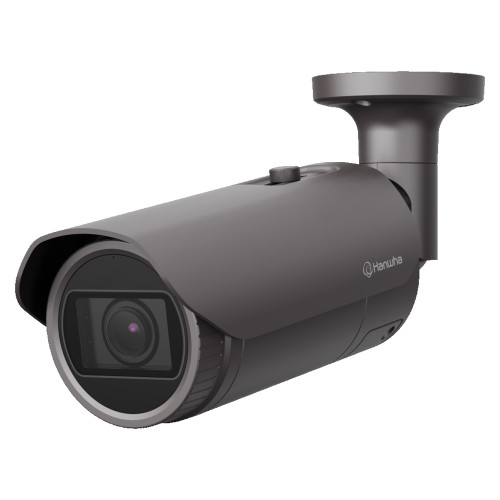
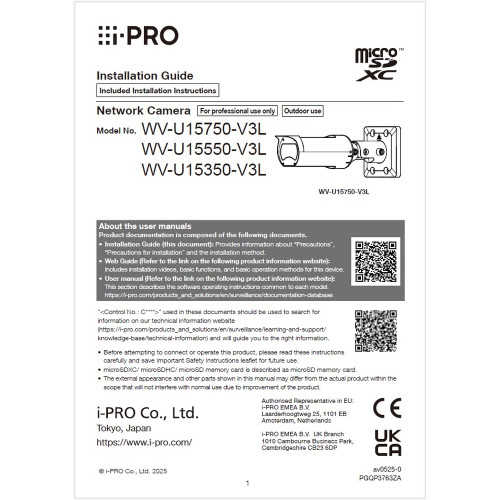
Both the Hanwha QNO-8080R and i-PRO WV-U15550-V3L are 5MP outdoor bullet cameras targeting perimeter and general surveillance applications. Both use a 1/2.8-inch CMOS sensor, deliver 30 fps, carry IP66/IK10 ratings, and are powered via PoE 802.3af. The comparison covers imaging performance, installation requirements, and platform integration — areas where these two products diverge despite sharing the same resolution class and form factor.
In This Guide
How do the imaging specs compare?
Both cameras resolve 5MP at 30 fps and share a 1/2.8-inch CMOS sensor. The QNO-8080R specifies a 3.2–10mm motorized varifocal lens with a 3.1x zoom ratio, yielding a horizontal field of view from 101° (wide) down to approximately 31° (tele), with a maximum aperture of F1.6 at wide. The i-PRO WV-U15550-V3L is listed with a 3.2x optical zoom lens; an exact focal length range in millimeters is not provided in the supplied specifications. Minimum color illumination favors the i-PRO at 0.07 lux versus 0.15 lux for the QNO-8080R, while both reach 0 lux in IR mode.
IR range differs noticeably: the QNO-8080R rates its 850nm LED array at 30m (98ft), whereas the WV-U15550-V3L specifies 28m at 30 IRE and 20m at 50 IRE. Both cameras specify 120dB WDR — Hanwha labels it SSDR/WDR and i-PRO calls it Super Dynamic. The QNO-8080R lists analog CVBS output for installation alignment; no equivalent is noted for the WV-U15550-V3L in the provided specs.
What about installation and environment?
Both cameras are rated IP66 and IK10, confirming resistance to dust ingress, water jets, and 20J impact. The QNO-8080R operates from -30°C to +55°C; the WV-U15550-V3L's upper limit is +50°C — a 5°C difference that may matter in high-heat enclosures or equatorial climates. Both are PoE 802.3af-powered, but power draw differs: the QNO-8080R draws up to 9.5W (7.3W typical), while the WV-U15550-V3L is rated at 13W max, which could push a mid-range 802.3af switch port to its ceiling.
Physical size differs: the QNO-8080R measures ø91×322.9mm and weighs 1,190g (2.62 lb). The WV-U15550-V3L is 112.5mm (W) × 112.5mm (H) × 298.5mm (D); weight is not provided in the supplied specifications. The QNO-8080R lists a compatible back box (SBO-126B); no equivalent accessory is noted for the WV-U15550-V3L in the provided specs.
Which fits your VMS and analytics better?
The QNO-8080R supports ONVIF Profile S, G, and T, plus Hanwha's SUNAPI (HTTP API) and the Wisenet open platform. Its on-board analytics include motion detection, tamper, defocus detection, virtual area (intrusion/enter/exit), and virtual line (crossing/direction). It also provides one alarm input and one alarm output, micro SD/SDHC/SDXC edge storage up to 128GB, and multi-profile streaming for up to 6 unicast users simultaneously. Audio is not listed in the provided specifications for this model.
The WV-U15550-V3L supports ONVIF Profile G, M, S, and T — adding Profile M (metadata/analytics) over the QNO-8080R. Its analytics are described as AI Video Motion Detection (VMD), noted for filtering shadows and headlights. An audio input is listed. Cybersecurity is a notable differentiator: the WV-U15550-V3L carries FIPS 140-3 Level 3 certification via NXP EdgeLock SE052F SecureElement and is listed as NDAA-compliant; neither certification is listed for the QNO-8080R in the provided specifications. On-board edge storage capacity and RAM/flash specs are not provided for the WV-U15550-V3L.
Which should you choose: the QNO-8080R or the U15550-V3L?
Our take: The QNO-8080R is the stronger choice when flexible field of view, edge storage, and a wider operating temperature ceiling are the primary requirements. Its motorized 3.1x varifocal lens covers 101° down to approximately 31° with a documented focal range of 3.2–10mm, its upper operating temperature extends to +55°C versus +50°C for the WV-U15550-V3L, and it includes a confirmed 128GB micro SD slot with documented alarm I/O. The WV-U15550-V3L is the stronger choice for deployments where government compliance or high-security network policy is a hard requirement: its FIPS 140-3 Level 3 SecureElement and NDAA-compliance listing are absent from the QNO-8080R's provided specs. The i-PRO also adds ONVIF Profile M and an audio input. Power-budget planners should note the WV-U15550-V3L's 13W maximum versus the QNO-8080R's 9.5W maximum on 802.3af infrastructure.
Side-by-Side Comparison
Spec-for-spec, from manufacturer data.
| Specification | Hanwha QNO-8080R | i-PRO U15550-V3L |
|---|---|---|
| Resolution | 2592×1944 (5MP) | 5MP |
| Image Sensor | 1/2.8" CMOS | 1/2.8" CMOS |
| Lens / Focal Length | 3.2–10mm motorized varifocal (3.1x) | 3.2x optical zoom (mm range not specified) |
| Min. Illumination (Color) | 0.15 lux | 0.07 lux (30IRE, F1.6, 1/30s, AGC 11) |
| Min. Illumination (B/W IR) | 0 lux | 0 lux |
| IR Range | 30m (98ft) | 28m at 30IRE / 20m at 50IRE |
| WDR | 120dB (SSDR/WDR) | 120dB (Super Dynamic) |
| Max Frame Rate | 30fps @ 5MP | 30fps |
| Video Compression | H.265 / H.264 / MJPEG | H.265 / H.264 / MJPEG |
| IP Rating | IP66 | IP66 |
| IK / Impact Rating | IK10 | IK10 |
| Operating Temperature | -30°C to +55°C | -30°C to +50°C |
| Power Input | PoE (802.3af, Class 3) | PoE (802.3af) |
| Max Power Consumption | 9.5W (7.3W typical) | 13W max |
| ONVIF Profiles | S / G / T | G / M / S / T |
| Edge Storage | Micro SD/SDHC/SDXC up to 128GB | — |
| Audio | — | Audio input |
| NDAA / FIPS Compliance | — | NDAA-compliant; FIPS 140-3 Level 3 |
| Analytics | Motion, tamper, defocus, virtual area/line | AI VMD |
| Alarm I/O | 1 input / 1 output | — |
| Dimensions | ø91 × 322.9mm | 112.5mm (W) × 112.5mm (H) × 298.5mm (D) |
| Weight | 1,190g (2.62 lb) | — |
| Warranty | 3-year | — |
Frequently Asked Questions
Which should you choose: the QNO-8080R or the U15550-V3L?
The QNO-8080R is the stronger choice when flexible field of view, edge storage, and a wider operating temperature ceiling are the primary requirements. Its motorized 3.1x varifocal lens covers 101° down to approximately 31° with a documented focal range of 3.2–10mm, its upper operating temperature extends to +55°C versus +50°C for the WV-U15550-V3L, and it includes a confirmed 128GB micro SD slot with documented alarm I/O. The WV-U15550-V3L is the stronger choice for deployments where government compliance or high-security network policy is a hard requirement: its FIPS 140-3 Level 3 SecureElement and NDAA-compliance listing are absent from the QNO-8080R's provided specs. The i-PRO also adds ONVIF Profile M and an audio input. Power-budget planners should note the WV-U15550-V3L's 13W maximum versus the QNO-8080R's 9.5W maximum on 802.3af infrastructure.
Is the QNO-8080R or WV-U15550-V3L better for low-light color performance?
Based on the provided specs, the WV-U15550-V3L has the lower color minimum illumination at 0.07 lux (Color, 30IRE, F1.6, 1/30s, AGC 11), compared to 0.15 lux for the QNO-8080R. Both cameras reach 0 lux in IR (black-and-white) mode.
Does either camera meet NDAA or FIPS compliance requirements?
The WV-U15550-V3L is listed as NDAA-compliant and carries FIPS 140-3 Level 3 certification via its NXP EdgeLock SE052F SecureElement. Neither NDAA compliance nor FIPS certification is listed in the provided specifications for the QNO-8080R.
Which camera supports on-board recording, and does either have audio?
The QNO-8080R specifies a micro SD/SDHC/SDXC slot supporting up to 128GB for edge recording. On-board storage capacity is not stated in the provided specifications for the WV-U15550-V3L. The WV-U15550-V3L lists an audio input; audio capability is not listed for the QNO-8080R in the provided specifications.
Get a Second Opinion on Your Camera Choice
Share your site layout, coverage goals, and budget. Our team will validate the camera selection, flag anything we would change, and recommend products that match the use case.