
i-PRO S15500-V3LK vs i-PRO X15500-V3L: Specification Comparison
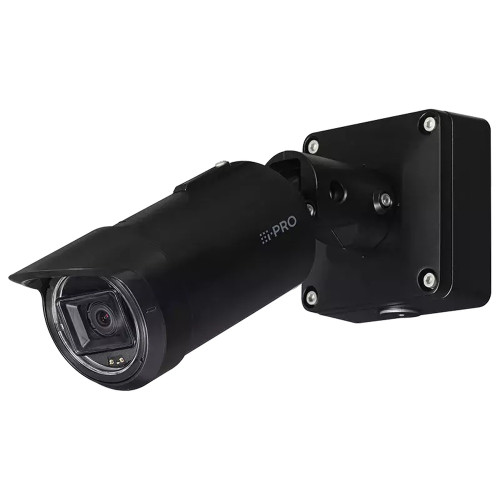
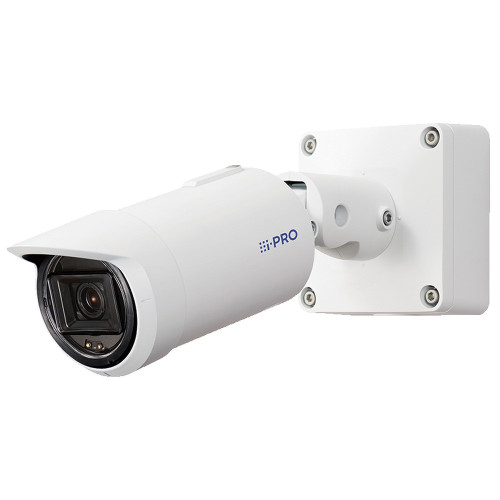
Both the i-PRO WV-S15500-V3LK and WV-X15500-V3L are 5MP outdoor fixed bullet cameras sharing the same 1/2.8-inch CMOS sensor, 3.1x motorized varifocal lens, and 70m IR range. They occupy the same resolution class and form factor, making them direct cross-shop candidates for installers evaluating i-PRO's S-series versus X-series platforms. The comparison below focuses on the spec-level differences that matter most: low-light sensitivity, SoC generation, power requirements, extra zoom ceiling, image stabilization, and ingress protection depth.
In This Guide
How do the imaging specs compare?
Both cameras use an approximately 1/2.8-inch CMOS sensor with a 5.12 mm × 3.84 mm scanning area, a 2.9–9 mm motorized varifocal lens covering 34°–106° horizontal and 19°–77° vertical, and a maximum aperture of F1.3 at wide. Maximum dynamic range is identical at 132 dB (Super Dynamic on). IR illumination reaches 70 m on both units. Where they diverge is in low-light sensitivity: the S15500-V3LK specifies 0.05 lux (color) and 0.04 lux (B&W), while the X15500-V3L specifies only 0.02 lux (B&W at 50IRE, F1.3, 1/30 s); a direct color-mode lux figure for the X15500-V3L is not provided in the supplied specs. The S15500-V3LK shutter range extends to 1/30 s at the slow end versus 1/60 s for the X15500-V3L, which also adds a 1/4000 s maximum shutter note. DORI distances are identical across both models at all four tiers.
The SoC differs between models: the S15500-V3LK runs an Ambarella CV22, while the X15500-V3L uses the newer Ambarella CV52. The CV52 platform enables a higher extra-zoom ceiling—the X15500-V3L reaches 12.4x digital extra zoom at 640×360 resolution versus 9.3x on the S15500-V3LK. The X15500-V3L also specifies an image stabilizer (available in 30 fps mode only), which is absent from the S15500-V3LK spec sheet. Native resolution output differs: the S15500-V3LK lists 1920×1080 as its primary H.265/H.264 resolution, while the X15500-V3L lists 3072×1728 as its primary resolution—both are marketed as 5MP, but the X15500-V3L's stated output resolution is higher. The S15500-V3LK's frame-rate spec of 30 fps applies at 2048×1536 (4:3); both cameras cite 30 fps at their respective primary resolutions.
What about installation and environment?
Form factor and physical dimensions are effectively identical: both measure 133 mm (W) × 133 mm (H) × 383 mm (D) and carry IP66 and NEMA 4X ratings plus IK10 shock resistance and 40 m/s wind resistance. The S15500-V3LK adds IP67 is not listed for it, whereas the X15500-V3L explicitly adds IP67 (IEC 60529) alongside IP66. The S15500-V3LK lists an anti-condensation system (Temish element, heater, moisture-absorption gel) and ISO 14993 salt-damage resistance; neither of these is listed in the X15500-V3L specs. The S15500-V3LK also includes a monitor output (VBS 1.0V composite 75Ω) for lens adjustment in the field, which is not listed for the X15500-V3L.
Power requirements differ meaningfully. The S15500-V3LK accepts DC 12V at 1.0A (12W) or standard PoE at 11.5W (PoE Class 0). The X15500-V3L requires DC 12V at 1.2A or PoE+ at 14W (PoE Class 4, 802.3at). Installers using existing standard PoE (802.3af) switches can power the S15500-V3LK directly; the X15500-V3L demands PoE+ infrastructure or a DC supply. Operating temperature for the S15500-V3LK spans −40°C to +60°C, while the X15500-V3L is rated −40°C to +55°C—a 5°C narrower upper limit. Both carry identical safety certifications (UL62368-1, c-UL, CE, IEC62368-1) and the same EMC marks.
Which fits your VMS and analytics better?
Both cameras support ONVIF Profiles G, S, T, and M, up to 14 simultaneous users, H.265/H.264/MJPEG compression, microSDXC edge storage up to 512 GB, and FIPS 140-2 Level 3 secure element authentication. AI analytics on both include motion, face, vehicle, and occupancy detection, plus AI sound classification covering gunshot, yell, vehicle horn, and glass break. The S15500-V3LK spec sheet additionally lists eight AI Video Analytics detection types; the X15500-V3L lists four named types (motion, face, vehicle, occupancy). The X15500-V3L adds secure boot as a listed feature; this is not explicitly stated in the S15500-V3LK specs. The S15500-V3LK lists NXP SE050F as its hardware security element; the X15500-V3L lists 'Device Certificate' without naming a specific chip.
Audio and I/O are comparable but not identical. Both provide a 3.5 mm stereo audio input and output jack, G.726/G.711/AAC-LC compression, and half/full duplex modes. The S15500-V3LK specifies input impedance of 2 kΩ at −10 dBV and output at 600Ω/−20 dBV; the X15500-V3L lists 600Ω output but does not provide input impedance in the supplied specs. Alarm I/O: the S15500-V3LK provides 3 alarm inputs and 1 alarm output plus 1 AUX output; the X15500-V3L lists 4 alarm I/O terminals (IN1, IN2, IN3, OUT, AUX). IPv6 protocol support is listed for the S15500-V3LK (including RTSP, SRTP, and DDNS on IPv4); the X15500-V3L IPv6 protocol list omits RTSP and SRTP from the supplied specs. Both support MQTT and SFTP.
Which should you choose: the S15500-V3LK or the X15500-V3L?
Our take: The S15500-V3LK is the stronger choice when deploying into infrastructure limited to standard 802.3af PoE switches, high-ambient-temperature environments above 55°C, or coastal/salt-air sites requiring documented ISO 14993 salt-damage resistance and an active anti-condensation system. Key deltas: the S15500-V3LK draws only 11.5W on standard PoE (Class 0) versus the X15500-V3L's 14W PoE+ (Class 4), it is rated to +60°C versus +55°C, and it explicitly adds IP67 ingress depth, salt-resistance certification, and a field-adjustment composite video output not listed on the X15500-V3L. Conversely, the X15500-V3L suits projects requiring image stabilization, a higher extra-zoom ceiling (12.4x vs. 9.3x), a newer CV52 SoC, and IP67-listed ingress depth—provided the site has PoE+ switching capacity. Both carry identical 5-year warranties.
Side-by-Side Comparison
Spec-for-spec, from manufacturer data.
| Specification | i-PRO S15500-V3LK | i-PRO X15500-V3L |
|---|---|---|
| Resolution (Primary Output) | 1920×1080 (16:9); 2048×1536 (4:3) @ 30fps | 3072×1728 |
| Image Sensor | Approx. 1/2.8" CMOS | Approx. 1/2.8" CMOS |
| Lens / Focal Length | 3.1x motorized, 2.9–9 mm, F1.3–F2.5 | 3.1x motorized, 2.9–9 mm, F1.3–F2.5 |
| Min. Illumination (Color) | 0.05 lux | Not specified in provided specs |
| Min. Illumination (B&W) | 0.04 lux | 0.02 lux (50IRE, F1.3, 1/30 s) |
| IR Range | 70 m (30IRE) | 70 m |
| Dynamic Range (WDR) | 132 dB (Super Dynamic On, Level 30+, 15fps) | 132 dB (Super Dynamic On, Level 31) |
| Extra Digital Zoom Ceiling | 9.3x (at 640×360) | 12.4x (at 640×360) |
| Image Stabilizer | Not listed | Yes (30 fps mode only) |
| System on Chip (SoC) | Ambarella CV22 | Ambarella CV52 |
| Max Frame Rate | 30 fps | 30 fps |
| Video Compression | H.265, H.264, MJPEG | H.265, H.264, MJPEG |
| IP / Dust & Water Rating | IP66, NEMA 4X | IP66, IP67, NEMA 4X (UL50E) |
| IK / Impact Rating | IK10 (IEC 62262) | IK10 (IEC 62262) |
| Operating Temperature | −40°C to +60°C | −40°C to +55°C |
| Power Input / PoE Class | DC 12V 1.0A (12W) or PoE 11.5W (Class 0) | DC 12V 1.2A or PoE+ 14W (Class 4, 802.3at) |
| Salt / Condensation Protection | ISO 14993 salt resistance; Temish + heater + gel | Not listed in provided specs |
| Edge Storage | microSD/SDHC/SDXC up to 512 GB | microSDXC 64/128/256/512 GB |
| Audio | 3.5 mm in/out; G.726, G.711, AAC-LC; half/full duplex | 3.5 mm in/out; G.726, G.711, AAC-LC; half/full duplex |
| Alarm I/O | 3× alarm in, 1× alarm out, 1× AUX out | 4× alarm I/O (IN1, IN2, IN3, OUT, AUX) |
| ONVIF Profiles | G / M / S / T | G / S / T / M |
| Secure Boot | Not listed in provided specs | Yes |
| Hardware Security Element | NXP SE050F; FIPS 140-2 Level 3 | FIPS 140-2 Level 3; Device Certificate |
| Dimensions (W × H × D) | 133 × 133 × 383 mm | 133 × 133 × 383 mm |
| Weight | Approx. 2.4 kg (5.3 lbs) | Approx. 2.5 kg (5.6 lbs) |
| Warranty | 5-Year | 5-Year |
Frequently Asked Questions
Which should you choose: the S15500-V3LK or the X15500-V3L?
The S15500-V3LK is the stronger choice when deploying into infrastructure limited to standard 802.3af PoE switches, high-ambient-temperature environments above 55°C, or coastal/salt-air sites requiring documented ISO 14993 salt-damage resistance and an active anti-condensation system. Key deltas: the S15500-V3LK draws only 11.5W on standard PoE (Class 0) versus the X15500-V3L's 14W PoE+ (Class 4), it is rated to +60°C versus +55°C, and it explicitly adds IP67 ingress depth, salt-resistance certification, and a field-adjustment composite video output not listed on the X15500-V3L. Conversely, the X15500-V3L suits projects requiring image stabilization, a higher extra-zoom ceiling (12.4x vs. 9.3x), a newer CV52 SoC, and IP67-listed ingress depth—provided the site has PoE+ switching capacity. Both carry identical 5-year warranties.
Is the S15500-V3LK or X15500-V3L better for low-light performance?
Based on the supplied specs, the X15500-V3L lists a lower minimum illumination figure of 0.02 lux (B&W, 50IRE, F1.3, 1/30 s). The S15500-V3LK specifies 0.05 lux (color) and 0.04 lux (B&W). A color-mode lux value for the X15500-V3L is not provided in the available specs. Both cameras share the same 70m IR range and F1.3 wide-end aperture. If the B&W lux figure is the deciding metric, the X15500-V3L has the edge per spec; if color-mode sensitivity is critical, the S15500-V3LK's 0.05 lux color figure is the only available data point between the two.
Can I power either camera from a standard PoE (802.3af) switch?
Only the S15500-V3LK supports standard PoE at 11.5W (PoE Class 0, 802.3af). The X15500-V3L requires PoE+ at 14W (PoE Class 4, 802.3at). If your existing switch infrastructure is 802.3af only, the X15500-V3L will require either a PoE+ injector or a DC 12V supply at 1.2A, whereas the S15500-V3LK can run directly off the existing switch.
Which camera is better suited for harsh outdoor environments like coastal or extreme-heat sites?
The S15500-V3LK includes documented ISO 14993 salt-damage resistance, an active anti-condensation system (Temish element, heater, and moisture-absorption gel), and an upper operating temperature of +60°C. The X15500-V3L's supplied specs do not list salt-resistance certification or an anti-condensation system, and its upper temperature limit is +55°C. For coastal salt-air or high-ambient-temperature deployments, the S15500-V3LK has the listed specification advantage on all three of those criteria.
Get a Second Opinion on Your Camera Choice
Share your site layout, coverage goals, and budget. Our team will validate the camera selection, flag anything we would change, and recommend products that match the use case.