
Hanwha QNO-8010R vs i-PRO U15550-V3L: Specification Comparison
Both the Hanwha QNO-8010R and the i-PRO WV-U15550-V3L are 5MP outdoor fixed bullet cameras powered by PoE 802.3af, targeting perimeter surveillance installations. They share the same 1/2.8-inch CMOS sensor size, IP66/IK10 environmental ratings, and H.265/H.264/MJPEG compression. This comparison examines where each camera differentiates itself across imaging performance, installation requirements, and ecosystem integration to help integrators and IT buyers make a spec-driven selection for their specific deployment.
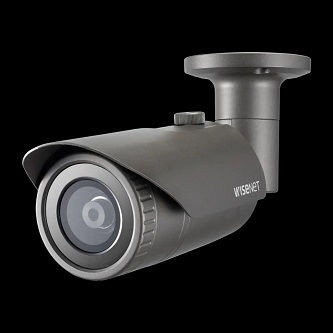
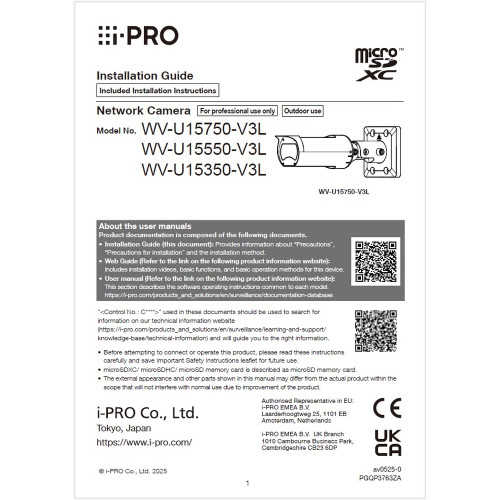
In This Guide
How do the imaging specs compare?
Both cameras resolve 5MP at 30fps using a 1/2.8-inch CMOS sensor. The QNO-8010R uses a fixed 2.8mm lens at F2.0 with a wide 105° horizontal field of view, while the U15550-V3L offers a 3.2× optical zoom lens — giving installers adjustable coverage without lens changes. In low light, the i-PRO U15550-V3L reaches 0.006 lx color (1/30s, AGC 11, F1.6) versus the QNO-8010R's 0.15 lux color minimum illumination, a meaningful advantage in poorly lit environments. Both cameras drop to 0 lux in IR mode.
IR illumination range also differs: the U15550-V3L extends to 28m at 30IRE (20m at 50IRE) using its IR LEDs, while the QNO-8010R is rated at 20m. Both specify 120dB WDR — Hanwha labels it SSDR/WDR and i-PRO calls it Super Dynamic — so high-contrast scene handling is equivalent on paper. The QNO-8010R provides DORI distance figures (Detect 40m, Observe 16m, Recognize 8m, Identify 4m) for planning purposes; equivalent DORI data is not provided in the U15550-V3L spec sheet.
What about installation and environment?
Both cameras carry IP66 ingress protection and IK10 impact resistance, making them equally rated for outdoor perimeter use. Power draw differs: the QNO-8010R draws a maximum of 7.5W (typical 6.1W) under PoE 802.3af Class 3, while the U15550-V3L draws up to 13W on PoE 802.3af — nearly double. Installers should verify mid-span injector or switch port wattage budgets accordingly, particularly in multi-camera closet runs. Both are single-cable PoE deployments with RJ-45 Ethernet.
Operating temperature ranges are similar but not identical: the QNO-8010R is rated -30°C to +55°C, while the U15550-V3L is rated -30°C to +50°C. The QNO-8010R has a 5°C upper-temperature advantage, potentially relevant in enclosed or sun-exposed enclosures. The QNO-8010R dimensions are ø70.0×246.0mm at 680g; the U15550-V3L is 112.5mm(W)×112.5mm(H)×298.5mm(D) with weight not specified in the provided specs. A Hanwha back-box accessory (SBO-100B1) is listed; no equivalent accessory is specified for the i-PRO model.
Which fits your VMS and analytics better?
Both cameras support ONVIF, but profile coverage differs. The QNO-8010R supports ONVIF Profile S, G, and T, plus Hanwha's proprietary SUNAPI and Wisenet Open Platform. The U15550-V3L supports ONVIF Profile G, M, S, and T — adding Profile M, which covers metadata and analytics event streaming not present in the Hanwha's listed profiles. The QNO-8010R supports up to 6 unicast users and 3 simultaneous stream profiles; equivalent streaming concurrency data is not provided for the U15550-V3L.
On analytics, the QNO-8010R includes motion detection, tampering, defocus detection, virtual line crossing/direction, and virtual area intrusion/enter/exit, with 4 polygonal motion zones and 6 privacy mask zones, plus alarm I/O (1 in / 1 out). The U15550-V3L's listed analytics center on AI Video Motion Detection (VMD), described as filtering shadows and headlights before alerts reach the NVR; additional analytic functions beyond VMD are not detailed in the provided specs. The U15550-V3L specifies audio input capability; the QNO-8010R does not list audio. Edge storage is specified for the QNO-8010R (microSD/SDHC/SDXC up to 128GB, with SD card partition encryption); edge storage capability is not specified in the U15550-V3L's provided specs. The U15550-V3L carries NDAA compliance and FIPS 140-3 Level 3 certification via an EdgeLock SE052F secure element — a hard requirement for many government and critical infrastructure projects; no equivalent federal cybersecurity certification is listed for the QNO-8010R.
Which should you choose: the QNO-8010R or the U15550-V3L?
Our take: The QNO-8010R is the stronger choice when installers need broad on-camera analytics, confirmed edge storage up to 128GB, alarm I/O, and a lower PoE power budget (7.5W max vs. 13W). The U15550-V3L is the stronger choice when the deployment demands AI-filtered VMD to reduce false alerts, better low-light color sensitivity (0.006 lx vs. 0.15 lx), longer IR reach (28m vs. 20m), a varifocal 3.2× optical zoom lens instead of a fixed 2.8mm, ONVIF Profile M for metadata streaming, audio input, and — critically — NDAA compliance and FIPS 140-3 Level 3 cybersecurity certification. The QNO-8010R's upper operating temperature (55°C vs. 50°C) and richer listed analytics suite favor it in unconstrained commercial deployments. For any U.S. government, defense, or regulated infrastructure project with federal cybersecurity requirements, the U15550-V3L's certifications are likely the deciding factor regardless of other spec comparisons.
Side-by-Side Comparison
Spec-for-spec, from manufacturer data.
| Specification | Hanwha QNO-8010R | i-PRO U15550-V3L |
|---|---|---|
| Resolution | 2592×1944 (5MP) | 5MP |
| Image Sensor | 1/2.8" CMOS | 1/2.8" CMOS |
| Lens / Focal Length | 2.8mm fixed, F2.0 | 3.2× optical zoom, F1.6 |
| Horizontal FOV | 105° | — |
| Min. Illumination (Color) | 0.15 lux | 0.006 lx (1/30s, AGC 11, F1.6) |
| Min. Illumination (B&W / IR) | 0 lux (IR on) | 0 lux (IR on) |
| IR Range | 20m (65.6 ft) | 28m at 30IRE / 20m at 50IRE |
| WDR | 120dB (SSDR/WDR) | 120dB (Super Dynamic) |
| Max Frame Rate | 30fps @ 5MP | 30fps |
| Video Compression | H.265 / H.264 / MJPEG | H.265 / H.264 / MJPEG |
| IP Rating | IP66 | IP66 |
| IK / Impact Rating | IK10 | IK10 |
| Operating Temperature | -30°C to +55°C | -30°C to +50°C |
| Power Input / PoE | PoE 802.3af, Class 3, max 7.5W | PoE 802.3af, max 13W |
| ONVIF Profiles | Profile S / G / T | Profile G / M / S / T |
| Edge Analytics | Motion, Tampering, Defocus, Virtual Line/Area Intrusion | AI VMD (shadow/headlight filtering) |
| Alarm I/O | 1 input / 1 output | — |
| Audio | — | Audio input |
| Edge Storage | microSD/SDHC/SDXC up to 128GB | — |
| Cybersecurity Certifications | — | NDAA-compliant; FIPS 140-3 Level 3 |
| Dimensions | ø70.0×246.0mm | 112.5mm(W)×112.5mm(H)×298.5mm(D) |
| Weight | 680g (1.50 lb) | — |
| Warranty | 3-year | — |
Frequently Asked Questions
Which should you choose: the QNO-8010R or the U15550-V3L?
The QNO-8010R is the stronger choice when installers need broad on-camera analytics, confirmed edge storage up to 128GB, alarm I/O, and a lower PoE power budget (7.5W max vs. 13W). The U15550-V3L is the stronger choice when the deployment demands AI-filtered VMD to reduce false alerts, better low-light color sensitivity (0.006 lx vs. 0.15 lx), longer IR reach (28m vs. 20m), a varifocal 3.2× optical zoom lens instead of a fixed 2.8mm, ONVIF Profile M for metadata streaming, audio input, and — critically — NDAA compliance and FIPS 140-3 Level 3 cybersecurity certification. The QNO-8010R's upper operating temperature (55°C vs. 50°C) and richer listed analytics suite favor it in unconstrained commercial deployments. For any U.S. government, defense, or regulated infrastructure project with federal cybersecurity requirements, the U15550-V3L's certifications are likely the deciding factor regardless of other spec comparisons.
Is the QNO-8010R or U15550-V3L better for low-light color imaging?
The i-PRO U15550-V3L has a lower specified color minimum illumination of 0.006 lx (at 1/30s, F1.6, AGC 11) compared to the Hanwha QNO-8010R's 0.15 lx color minimum. Both cameras reach 0 lux in IR black-and-white mode. For scenes with marginal ambient light where color detail matters, the U15550-V3L's spec indicates better color sensitivity.
Which camera is easier to install on a constrained PoE switch or injector budget?
The QNO-8010R draws a maximum of 7.5W (typical 6.1W) as a PoE Class 3 device, while the U15550-V3L draws up to 13W on PoE 802.3af. If a switch has limited per-port or total wattage headroom, the QNO-8010R places significantly less load per camera and allows more cameras per switch without an upgrade.
Does either camera meet NDAA or federal cybersecurity requirements?
The i-PRO U15550-V3L is specified as NDAA-compliant and holds FIPS 140-3 Level 3 certification via an integrated EdgeLock SE052F secure element. The Hanwha QNO-8010R's provided specifications do not list NDAA compliance or FIPS 140-3 certification. For projects requiring federal compliance, the U15550-V3L is the only one of the two with these certifications documented in the supplied specs.
Get a Second Opinion on Your Camera Choice
Share your site layout, coverage goals, and budget. Our team will validate the camera selection, flag anything we would change, and recommend products that match the use case.