
Hanwha QNO-6022R1 vs Hanwha XNO-6010R: Specification Comparison
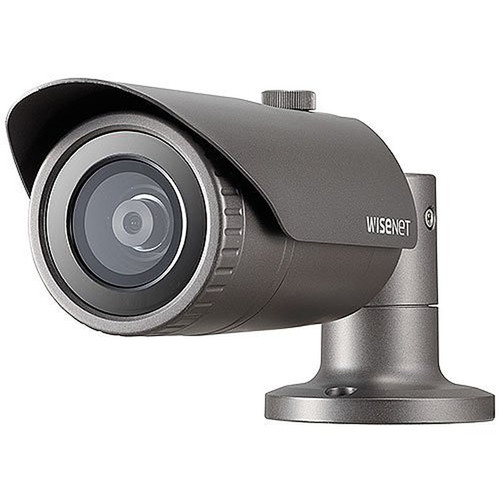
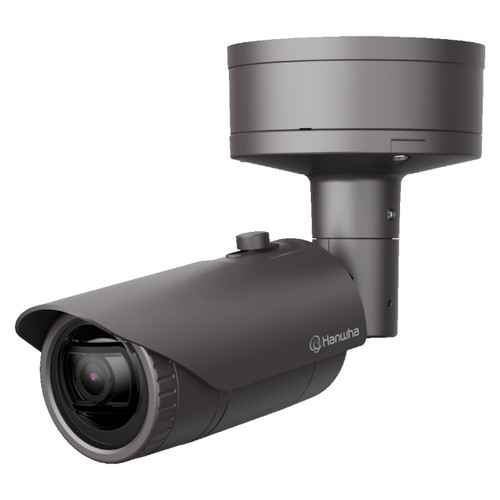
Both the Hanwha QNO-6022R1 and XNO-6010R are 2MP outdoor fixed bullet IP cameras sharing the same 1/2.8" CMOS sensor class and PoE Class 3 power — the kind of cross-shop a systems integrator faces when specifying perimeter or façade coverage. This comparison examines how their imaging capabilities, environmental ratings, and integration features differ so installers and IT buyers can match the right unit to their project requirements.
In This Guide
How do the imaging specs compare?
Both cameras deliver 2MP (1920×1080) resolution from a 1/2.8" CMOS sensor, but they diverge meaningfully on frame rate, WDR, and lens angle. The QNO-6022R1 is capped at 30fps, while the XNO-6010R supports up to 60fps — a relevant delta for scenes with fast-moving subjects where motion blur is a concern. The QNO-6022R1's wide dynamic range is rated at 120dB; the XNO-6010R raises that to 150dB, offering 30dB more headroom for high-contrast environments such as entry lobbies or parking lots with direct sun and deep shadow. The QNO-6022R1 also provides a slightly better minimum color illumination of 0.03 lux versus 0.055 lux on the XNO-6010R, though both reach 0 lux in IR mode.
Lens choice marks the sharpest operational divide. The QNO-6022R1 uses a 4.0mm fixed focal lens (F1.6) yielding an 88° horizontal field of view, while the XNO-6010R employs a 2.4mm fixed focal lens (F2.0) producing a dramatically wider 139° horizontal field of view. The QNO-6022R1 is better suited for focused coverage at moderate depth; the XNO-6010R is designed for wide-area or perimeter sweeps. IR range is comparable — 25m on the QNO-6022R1 versus 20m on the XNO-6010R — giving the QNO-6022R1 a slight edge in illuminated depth. The QNO-6022R1 supports BLC/WDR/SSDR backlight compensation modes; the XNO-6010R adds HLC and DWDR to that list, along with a Defog function and Digital Image Stabilization absent on the QNO-6022R1.
What about installation and environment?
Both cameras carry IP66 and IK10 ratings and share the same operating temperature range of -30°C to +55°C, so neither has a measurable advantage in harsh-weather or vandal-resistance scenarios at the IP66/IK10 level. The XNO-6010R additionally holds an IP67 and NEMA 4X certification, providing a higher ingress protection rating against temporary immersion and conforming to NEMA enclosure requirements — relevant for installations near wash-down areas or in jurisdictions requiring NEMA compliance. Both accept PoE (IEEE 802.3af, Class 3) or 12VDC input. Maximum power draw differs: the QNO-6022R1 is rated at 7.0W, while the XNO-6010R draws up to 9.7W via PoE and 8.8W via 12VDC — an important consideration when budgeting PoE switch port budgets or UPS capacity on large deployments.
Both are aluminum-bodied dark-grey bullet cameras with the same 70mm barrel diameter, but the XNO-6010R is noticeably heavier and longer (296mm / 1,220g vs 246mm / 700g), which affects conduit stub-up planning and bracket load ratings. The QNO-6022R1 lists compatible backboxes (SBO-100B1, SBO-147B) and gang-box compatibility (single, double, 4" octagon) explicitly in its spec sheet; the XNO-6010R spec sheet does not list equivalent conduit or backbox accessories.
Which fits your VMS and analytics better?
Both cameras support ONVIF Profile S/G/T, SUNAPI (HTTP API), and the Wisenet open platform, so either integrates with the same range of Hanwha-compatible VMS platforms without protocol-level compromise. The XNO-6010R offers a substantially richer edge analytics suite: it adds Face detection, Digital auto tracking, Appear/Disappear, Loitering, Fog detection, Audio detection, Sound classification, People counting, Queue management, and Heatmap on top of the analytics available on the QNO-6022R1 (Defocus, Directional, Motion, Enter/Exit, Tampering, Virtual line). The XNO-6010R also supports audio — with a selectable mic/line input (2.5VDC, 2K Ohm) and a line-level output (max 1Vrms) — plus audio compression (G.711 u-law / G.726). The QNO-6022R1 has no audio capability per its published specs.
On-board storage capacity differs significantly: the XNO-6010R provides dual microSD slots supporting up to 512GB, while the QNO-6022R1 has a single slot limited to 128GB. The XNO-6010R also supports up to 20 simultaneous unicast streams across 10 profiles, versus 6 unicast users and 3 profiles on the QNO-6022R1 — a material difference in multi-client or high-channel NVR deployments. The XNO-6010R's spec sheet references secure boot and signed firmware; the QNO-6022R1 documents firmware encryption, Device Certificate (Hanwha Private Root CA), SD card partition encryption, and a broader explicit security section including brute-force prevention and audit logs. Both include a Micro USB output for on-site installation viewing; the XNO-6010R adds this explicitly alongside CVBS.
Which should you choose: the QNO-6022R1 or the XNO-6010R?
Our take: The XNO-6010R is the stronger choice when wide-area coverage, richer analytics, or audio capture are project requirements. Its 139° horizontal FOV versus the QNO-6022R1's 88° covers dramatically more ground per camera; its 150dB WDR versus 120dB provides 30dB more dynamic range in high-contrast scenes; and its 60fps maximum frame rate (versus 30fps) reduces motion blur on fast-moving subjects. Dual SD slots supporting 512GB versus a single 128GB slot extend on-board retention significantly. The QNO-6022R1 is the more appropriate selection when the goal is focused, longer-reach coverage: its 25m IR range exceeds the XNO-6010R's 20m, its narrower 4mm lens concentrates detail, and its lower 7.0W max draw eases PoE budget constraints on dense multi-camera switches. Neither camera has a VMS integration advantage — both are ONVIF Profile S/G/T and Wisenet-native.
Side-by-Side Comparison
Spec-for-spec, from manufacturer data.
| Specification | Hanwha QNO-6022R1 | Hanwha XNO-6010R |
|---|---|---|
| Resolution | 2MP (1920×1080) | 2MP |
| Image Sensor | 1/2.8" CMOS | 1/2.8" CMOS |
| Lens / Focal Length | 4.0mm fixed (F1.6) | 2.4mm fixed (F2.0) |
| Horizontal Field of View | 88° | 139° |
| Min. Illumination (Color / IR) | 0.03 lux / 0 lux | 0.055 lux / 0 lux |
| IR Range | 25m (82ft) | 20m (65.6ft) |
| Wide Dynamic Range | 120dB | 150dB |
| Max Frame Rate | 30fps @ 2MP | 60fps |
| Video Compression | H.265 / H.264 (Main/High) / MJPEG | H.265 / H.264 (Main/Baseline/High) / MJPEG |
| IP Rating | IP66 | IP67 / IP66 / NEMA 4X |
| IK / Impact Rating | IK10 | IK10 |
| Operating Temperature | -30°C to +55°C | -30°C to +55°C |
| Power Input / PoE Class | PoE 802.3af Class 3 / 12VDC | PoE 802.3af Class 3 / 12VDC |
| Max Power Draw | 7.0W | 9.7W (PoE) / 8.8W (12VDC) |
| Edge Storage | 1× microSD up to 128GB | 2× microSD up to 512GB |
| RAM | 512MB | 1024MB |
| Audio | — | In: mic/line selectable; Out: line out |
| Analytics | Defocus, Directional, Motion, Enter/Exit, Tampering, Virtual line | Defocus, Directional, Fog, Face, Motion, Auto tracking, Appear/Disappear, Enter/Exit, Loitering, Tampering, Virtual line, Audio detection, Sound classification, People counting, Queue management, Heatmap |
| Unicast Streams / Profiles | 6 users / 3 profiles | 20 users / 10 profiles |
| ONVIF | Profile S/G/T | Profile S/G/T |
| Dimensions (D×L) | Ø70.0×246.0mm | Ø70×296mm |
| Weight | 700g (1.54 lb) | 1,220g (2.69 lb) |
| Warranty | 3-year | 3-year |
Frequently Asked Questions
Which should you choose: the QNO-6022R1 or the XNO-6010R?
The XNO-6010R is the stronger choice when wide-area coverage, richer analytics, or audio capture are project requirements. Its 139° horizontal FOV versus the QNO-6022R1's 88° covers dramatically more ground per camera; its 150dB WDR versus 120dB provides 30dB more dynamic range in high-contrast scenes; and its 60fps maximum frame rate (versus 30fps) reduces motion blur on fast-moving subjects. Dual SD slots supporting 512GB versus a single 128GB slot extend on-board retention significantly. The QNO-6022R1 is the more appropriate selection when the goal is focused, longer-reach coverage: its 25m IR range exceeds the XNO-6010R's 20m, its narrower 4mm lens concentrates detail, and its lower 7.0W max draw eases PoE budget constraints on dense multi-camera switches. Neither camera has a VMS integration advantage — both are ONVIF Profile S/G/T and Wisenet-native.
Is the QNO-6022R1 or XNO-6010R better for low-light performance?
In color mode the QNO-6022R1 has a lower minimum illumination — 0.03 lux versus 0.055 lux for the XNO-6010R — making it marginally more sensitive in dim ambient light. Both cameras reach 0 lux in IR (black-and-white) mode, and the QNO-6022R1 has a longer IR illumination range of 25m compared to 20m on the XNO-6010R, so it can illuminate subjects at greater distance in complete darkness.
Which camera covers a wider area with fewer units?
The XNO-6010R covers far more ground per camera. Its 2.4mm lens delivers a 139° horizontal field of view, compared to 88° horizontal on the QNO-6022R1's 4mm lens. For perimeter fencing, wide lobbies, or parking lot overviews where a single camera needs to sweep a broad sweep, the XNO-6010R requires fewer units to achieve equivalent coverage.
Does either camera support on-site audio recording?
Only the XNO-6010R supports audio. It includes a selectable microphone/line input (2.5VDC supply, 2K Ohm impedance) and a line-level output (max 1Vrms), with audio compression via G.711 u-law or G.726. The QNO-6022R1 has no audio input or output specified in its published specifications.
Get a Second Opinion on Your Camera Choice
Share your site layout, coverage goals, and budget. Our team will validate the camera selection, flag anything we would change, and recommend products that match the use case.