
Hanwha NOD-AX25S vs Hanwha NOD-AX20S: Specification Comparison
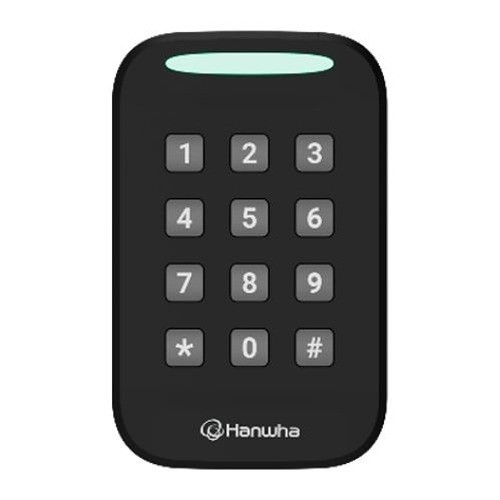
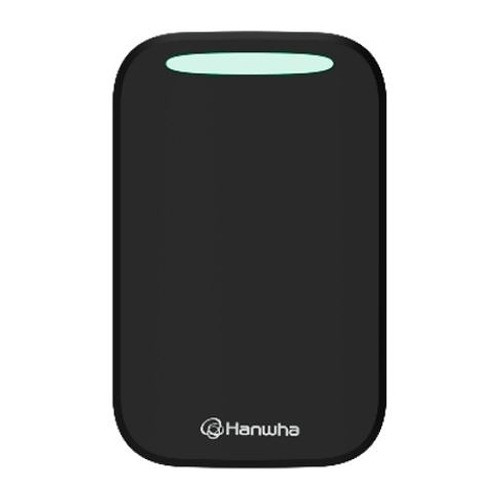
Both the NOD-AX25S and NOD-AX20S are Hanwha multi-technology access control readers in the same single-gang wall-mount form factor, targeting the same credential stack—NFC, 125 kHz proximity, and Bluetooth BLE 5.3—with automatic Wiegand/OSDP protocol detection and IP65 weatherproofing. The core differentiator is hardware: the NOD-AX25S adds an integrated 10-key mechanical keypad, while the NOD-AX20S is a card/credential-only reader. Buyers cross-shopping these models are choosing between PIN-plus-credential authentication and credential-only authentication at the same price tier.
In This Guide
- Which reader supports the authentication modes your deployment requires?
- How do power requirements and environmental ratings compare between the two readers?
- What protocol flexibility and remote management capabilities do these readers offer?
- Which should you choose: the NOD-AX25S or the NOD-AX20S?
- Side-by-Side Specs
- FAQ
Which reader supports the authentication modes your deployment requires?
Both models read NFC (13.56 MHz), 125 kHz proximity cards, and Bluetooth BLE 5.3 credentials. The NOD-AX25S adds an integrated 10-key mechanical keypad with tactile feedback, enabling PIN-only, card-only, or card-plus-PIN (multi-factor) authentication modes at the reader itself. The NOD-AX20S has no keypad and therefore supports only card or mobile credential presentation; PIN entry would require a separate auxiliary keypad wired to the controller.
The NOD-AX20S carries a Common Criteria EAL6+ security certification—a formal third-party validation of its cryptographic and tamper-resistance posture—which is not listed for the NOD-AX25S. For federal, defense, or high-security commercial deployments with explicit certification requirements, this distinction is material. The NOD-AX25S spec sheet does not reference any equivalent certification.
How do power requirements and environmental ratings compare between the two readers?
Both units are rated IP65, providing equivalent protection against dust ingress and low-pressure water jets—suitable for outdoor mounting in covered or semi-exposed locations. Both are verified to DP V2.2 IP65 or better and share a white housing in a single-gang wall-mount footprint. Physical dimensions are nearly identical: the NOD-AX20S is specified at 0.73 x 3.29 x 5.25 in; the NOD-AX25S is listed at 5.25"L x 3.29"W x 0.93"T—the NOD-AX25S is approximately 0.20 in deeper, attributable to the keypad mechanism.
The NOD-AX20S specifies a power input of 5–24 VDC with a current draw of 500 mA at 12 VDC, providing clear guidance for power-supply sizing and PoE injector selection. The NOD-AX25S does not list power input voltage or current draw in the provided specifications, which complicates panel and power-supply planning without consulting the datasheet directly. The NOD-AX20S also lists a weight of 7.72 lb; weight is not specified for the NOD-AX25S.
What protocol flexibility and remote management capabilities do these readers offer?
Both readers auto-detect Wiegand or OSDP without manual jumper configuration, simplifying field installation and panel compatibility across legacy and modern access control systems. Remote firmware upgrades are supported on both units—the NOD-AX25S explicitly notes the ability to enable or disable individual radio technologies (NFC, proximity, BLE) remotely, giving integrators the ability to restrict credential types after deployment without physical access to the reader.
The NOD-AX20S describes its update mechanism as remote over-the-air (OTA) but does not specifically call out per-radio-technology enable/disable as a remote management feature. Both products share the same warranty (lifetime) and country-of-origin listing (USA), though the NOD-AX20S also carries a 'VN' country-of-origin field in its attribute data—a discrepancy in the provided specs that buyers should verify with Hanwha directly before specifying for projects with domestic-content or NDAA compliance requirements.
Which should you choose: the NOD-AX25S or the NOD-AX20S?
Our take: The NOD-AX25S is the stronger choice when the deployment requires PIN-based or multi-factor (card + PIN) authentication at the reader without a separate keypad module. Its integrated 10-key mechanical keypad with tactile feedback enables MFA natively, while the NOD-AX20S requires an auxiliary keypad for any PIN workflow. Conversely, the NOD-AX20S holds a meaningful edge for high-security or federally regulated sites: it carries a Common Criteria EAL6+ certification absent from the NOD-AX25S spec sheet, and it provides explicit power specs (5–24 VDC, 500 mA @ 12 VDC) that simplify panel and power-supply engineering. The NOD-AX25S is 0.20 in deeper (0.93 in vs. 0.73 in), which may matter in flush-mount or gang-box-depth-constrained installations. Choose the NOD-AX25S for mixed-authentication or PIN-required deployments on any OSDP- or Wiegand-based panel; choose the NOD-AX20S for credential-only readers on certified-security or government projects where EAL6+ documentation is required.
Side-by-Side Comparison
Spec-for-spec, from manufacturer data.
| Specification | Hanwha NOD-AX25S | Hanwha NOD-AX20S |
|---|---|---|
| Product Type | Multi-Tech Keypad Reader | Multi-Tech Access Control Reader |
| Integrated Keypad | 10-key mechanical with tactile feedback | — |
| NFC Frequency | 13.56 MHz (NFC) | 13.56 MHz (NFC) |
| Proximity Frequency | 125 kHz | 125 kHz |
| Bluetooth Version | BLE 5.3 | BLE 5.3 |
| Protocol Support | Wiegand and OSDP, auto-detect | Automatic Wiegand/OSDP, auto-detect |
| IP Rating | IP65 | IP65 |
| Form Factor | Single gang wall mount | Single gang wall mount |
| Dimensions (L x W x D) | 5.25" x 3.29" x 0.93" | 5.25" x 3.29" x 0.73" |
| Power Input | — | 5–24 VDC |
| Current Draw | — | 500 mA @ 12 VDC |
| Weight | — | 7.72 lb |
| Security Certification | — | Common Criteria EAL6+ |
| Remote Firmware Updates | Yes (with per-radio enable/disable) | Yes (OTA) |
| Housing Color | White | White |
| Warranty | Lifetime | Lifetime |
Frequently Asked Questions
Which should you choose: the NOD-AX25S or the NOD-AX20S?
The NOD-AX25S is the stronger choice when the deployment requires PIN-based or multi-factor (card + PIN) authentication at the reader without a separate keypad module. Its integrated 10-key mechanical keypad with tactile feedback enables MFA natively, while the NOD-AX20S requires an auxiliary keypad for any PIN workflow. Conversely, the NOD-AX20S holds a meaningful edge for high-security or federally regulated sites: it carries a Common Criteria EAL6+ certification absent from the NOD-AX25S spec sheet, and it provides explicit power specs (5–24 VDC, 500 mA @ 12 VDC) that simplify panel and power-supply engineering. The NOD-AX25S is 0.20 in deeper (0.93 in vs. 0.73 in), which may matter in flush-mount or gang-box-depth-constrained installations. Choose the NOD-AX25S for mixed-authentication or PIN-required deployments on any OSDP- or Wiegand-based panel; choose the NOD-AX20S for credential-only readers on certified-security or government projects where EAL6+ documentation is required.
Do I need a separate keypad if I install the NOD-AX20S and want PIN access?
Yes. The NOD-AX20S has no onboard keypad per its provided specifications. If your access policy requires PIN entry or card-plus-PIN multi-factor authentication, you would need to wire a separate keypad module to the access control panel. The NOD-AX25S eliminates this by integrating a 10-key mechanical keypad with tactile feedback directly into the reader.
Are both readers compatible with my existing Wiegand-based access control panel?
Yes. Both the NOD-AX25S and NOD-AX20S auto-detect Wiegand or OSDP protocol without manual configuration or jumpers, so either reader will work with legacy Wiegand panels as well as modern OSDP-capable controllers. No field reconfiguration is required when swapping between panel types.
Which model is better suited for a federal or high-security government project?
Based on provided specifications, the NOD-AX20S lists a Common Criteria EAL6+ security certification—a formal third-party cryptographic and tamper-resistance validation—that is not listed for the NOD-AX25S. For projects with explicit security certification requirements (federal, DoD, or high-assurance commercial), the NOD-AX20S has documented credentials the NOD-AX25S does not. Note also that both units list 'USA' as country of origin, but the NOD-AX20S attribute data also shows 'VN'—verify NDAA/TAA compliance with Hanwha before specifying for government projects.
More Access Control Reader Comparisons
- HID 920PHRNEK00203 vs Kantech KT-SG-MT-KP2
- HID 920PHRNEK00203 vs Kantech KT-SG-MT2
- HID 920PHRNEK00203 vs DMP USB
- HID 920PHRNEK00203 vs HID HID-920-PTNN
- HID 920PHRNEK00203 vs HID 920NWNNEKE00BM
- HID HID-920-PTNN vs Kantech KT-SG-MT-KP2
Access Control Reader Buying Guides
Get a Second Opinion on Your Camera Choice
Share your site layout, coverage goals, and budget. Our team will validate the camera selection, flag anything we would change, and recommend products that match the use case.