
Hanwha HRX-434 vs Hanwha XRN-420S: Specification Comparison
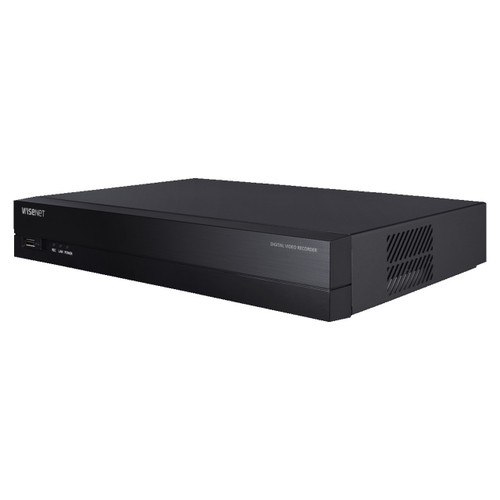
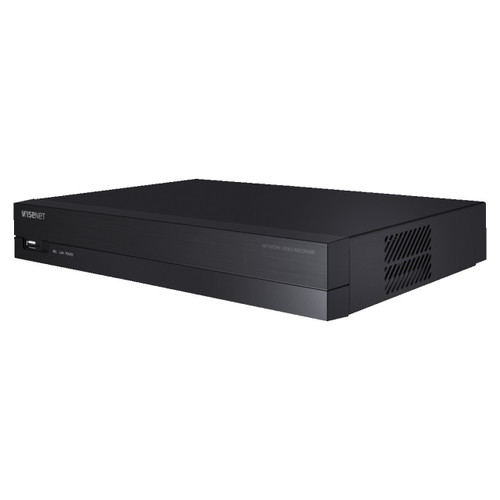
The Hanwha HRX-434 and XRN-420S are both 4-channel, 1U compact recorders from Hanwha's Wisenet line, each supporting 8MP resolution and a single 6TB SATA drive. The core distinction is architecture: the HRX-434 is a pentabrid DVR accepting both analog coax (AHD/HDTVI/HDCVI/CVBS) and up to 6 IP cameras for a maximum of 10 sources, while the XRN-420S is a pure IP NVR capped at 4 network cameras but equipped with four built-in PoE+ ports and a higher 50 Mbps recording bandwidth. Buyers upgrading legacy analog infrastructure versus deploying a greenfield IP system will land on opposite sides of this comparison.
In This Guide
- How do channel capacity, camera type support, and recording bandwidth compare?
- What are the differences in physical connectivity, PoE power delivery, and power supply requirements?
- How do the two units differ in software ecosystem, redundancy, and remote management capabilities?
- Which should you choose: the HRX-434 or the XRN-420S?
- Side-by-Side Specs
- FAQ
How do channel capacity, camera type support, and recording bandwidth compare?
The HRX-434 supports 4 analog BNC inputs (AHD, HDTVI, HDCVI, CVBS auto-detected) plus up to 6 additional IP channels via the network port, giving a theoretical maximum of 10 recording sources. Its recording bandwidth is capped at 30 Mbps and playback at 32 Mbps across up to 6 simultaneous channels locally.
The XRN-420S is a pure IP NVR limited to 4 network camera channels, but its recording bandwidth ceiling is 50 Mbps — 67% higher than the HRX-434's 30 Mbps — and its transmission bandwidth reaches 64 Mbps versus the HRX-434's 32 Mbps. Simultaneous playback on the XRN-420S reaches 16 channels (4 local + 4 per remote user), compared to 6 channels on the HRX-434. The HRX-434's hybrid analog+IP architecture is its distinguishing capacity advantage; the XRN-420S's higher per-channel bandwidth suits high-bitrate IP cameras.
What are the differences in physical connectivity, PoE power delivery, and power supply requirements?
The XRN-420S includes four PoE+ (802.3at) RJ-45 LAN ports with a 50 W PoE budget plus a separate 1 Gbps WAN uplink port, enabling camera powering directly from the recorder with no external switch. Its alarm interface provides 4 inputs and 2 relay outputs. Power draw reaches 67 W maximum (1 HDD, PoE on) from a 100–240 VAC ±10% universal AC adapter, making it compatible with standard building power worldwide.
The HRX-434 has a single RJ-45 Ethernet port (10/100 BASE-T) with no PoE capability, meaning IP cameras require a separate PoE switch or injectors. It provides 4 BNC inputs, 1 BNC spot output, 4 alarm inputs, and 1 relay output (NO/NC/COM). Power is DC 12 V supplied externally, drawing a maximum of 22 W — roughly one-third of the XRN-420S's maximum draw. The HRX-434 also exposes an RS-485 serial port for PTZ control, a connector absent from the XRN-420S specification.
How do the two units differ in software ecosystem, redundancy, and remote management capabilities?
Both recorders support SUNAPI (Wisenet), ONVIF Profile-S, P2P QR-code setup, iOS/Android mobile apps, 802.1x authentication, and Hanwha Techwin Root CA device certificates. Both allow a maximum of 4 users (1 local, 3 remote), Search(3) and Live Unicast(10) remote user limits.
The XRN-420S adds several capabilities absent from the HRX-434's specification: IPv6 support, AAC audio compression (G.711/G.726/AAC vs. G.711/G.726 only on the HRX-434), N+1 failover redundancy (the HRX-434 lists ARB support only), Signed firmware, compatibility with Wisenet WAVE VMS, and AI object-attribute search for Wisenet AI cameras. It also logs up to 100,000 system and event entries. The HRX-434 adds coaxial control (Pelco-C/AHD/CVI/TVI) for analog PTZ cameras and RS-485 (Samsung-T/Pelco-D/Pelco-P) — features irrelevant on a pure IP NVR but essential for mixed or legacy coax deployments.
Which should you choose: the HRX-434 or the XRN-420S?
Our take: The HRX-434 is the stronger choice when an installation must retain existing coax analog cameras (AHD, HDTVI, HDCVI, or CVBS) while adding up to 6 IP channels, all on a single low-power (22 W max, DC 12 V) appliance. The XRN-420S is the stronger choice for a pure IP greenfield deployment of up to 4 cameras: its four built-in PoE+ ports eliminate an external switch, its 50 Mbps recording bandwidth (vs. 30 Mbps) supports higher-bitrate cameras, and it adds N+1 failover, Signed firmware, IPv6, AAC audio, WAVE VMS compatibility, and AI search — none of which appear in the HRX-434 specification. Installers running a Wisenet AI camera or WAVE-managed site should specify the XRN-420S; integrators migrating a coax system to IP over time should specify the HRX-434.
Side-by-Side Comparison
Spec-for-spec, from manufacturer data.
| Specification | Hanwha HRX-434 | Hanwha XRN-420S |
|---|---|---|
| Device Architecture | Pentabrid DVR (analog + IP) | Pure IP NVR |
| Max Analog Channels | 4 (BNC: AHD/HDTVI/HDCVI/CVBS) | — |
| Max IP Channels | 6 (in addition to 4 analog) | 4 |
| Max Total Sources | 10 (4 analog + 6 IP) | 4 IP |
| Recording Bandwidth | Max. 30 Mbps | Max. 50 Mbps |
| Playback Bandwidth | Max. 32 Mbps (6CH simultaneous) | Max. 32 Mbps (16CH simultaneous) |
| Transmission Bandwidth | Max. 32 Mbps | Max. 64 Mbps |
| Built-in PoE Ports | None | 4x PoE+ (802.3at), 50 W budget |
| Ethernet (uplink) | 1x RJ-45 10/100 BASE-T | 4x RJ-45 10/100 (PoE LAN) + 1x RJ-45 1 Gbps (WAN) |
| Storage | 1x SATA, max 6TB | 1x SATA, max 6TB |
| Video Compression | H.265, H.264, MJPEG | H.265, H.264, MJPEG |
| Max Resolution | 8MP | 8MP |
| Power Supply | DC 12 V external | 100–240 VAC ±10%, 50/60 Hz adapter |
| Max Power Draw | 22 W (with 6TB HDD) | 67 W (with 1 HDD, PoE on) |
| Redundancy | ARB support | N+1 Failover + ARB support |
| Alarm I/O | 4 In / 1 Out (NO/NC/COM relay) | 4 In / 2 Out |
| IPv6 Support | — | Yes |
| Coaxial PTZ Control | Yes (Pelco-C/AHD/CVI/TVI) | — |
| RS-485 Serial | Yes (Samsung-T/Pelco-D/Pelco-P) | — |
| AI Object Search | — | Yes (Wisenet AI Camera compatible) |
| Dimensions (WxHxD) | 300 x 47 x 208.7 mm | 300.0 x 47.1 x 208.4 mm |
| Weight | Approx. 1.5 kg (with 4TB HDD) | 1.06 kg (no HDD) |
| Certifications | UL, CE, FCC, KC | — |
Frequently Asked Questions
Which should you choose: the HRX-434 or the XRN-420S?
The HRX-434 is the stronger choice when an installation must retain existing coax analog cameras (AHD, HDTVI, HDCVI, or CVBS) while adding up to 6 IP channels, all on a single low-power (22 W max, DC 12 V) appliance. The XRN-420S is the stronger choice for a pure IP greenfield deployment of up to 4 cameras: its four built-in PoE+ ports eliminate an external switch, its 50 Mbps recording bandwidth (vs. 30 Mbps) supports higher-bitrate cameras, and it adds N+1 failover, Signed firmware, IPv6, AAC audio, WAVE VMS compatibility, and AI search — none of which appear in the HRX-434 specification. Installers running a Wisenet AI camera or WAVE-managed site should specify the XRN-420S; integrators migrating a coax system to IP over time should specify the HRX-434.
Can I connect my existing analog CCTV cameras to either of these recorders?
Only the HRX-434 accepts analog cameras. It supports up to 4 coax inputs auto-detecting AHD, HDTVI, HDCVI, and CVBS signals via BNC connectors, with coaxial PTZ control (Pelco-C). The XRN-420S is a pure IP NVR and has no BNC inputs; it cannot accept any analog coax camera signal.
Do I need a separate PoE switch if I buy the XRN-420S?
No. The XRN-420S includes four built-in PoE+ (802.3at) RJ-45 ports with a combined 50 W budget, allowing it to power compatible IP cameras directly. The HRX-434 has a single standard 10/100 Ethernet port with no PoE output; a separate PoE switch or injectors are required for any IP cameras connected to it.
Which recorder is better suited for a site already using Wisenet WAVE VMS?
The XRN-420S explicitly lists WAVE in its supported viewer software alongside SSM, Webviewer, Smart Viewer, and Wisenet Mobile. The HRX-434 specification does not list WAVE; its software support includes Smart Viewer, Webviewer, Wisenet Mobile, and SDK/CGI. Sites standardized on WAVE should verify HRX-434 compatibility with Hanwha before specifying it.
Get a Second Opinion on Your Camera Choice
Share your site layout, coverage goals, and budget. Our team will validate the camera selection, flag anything we would change, and recommend products that match the use case.