
Hanwha HRX-434 vs Hanwha ARN-410S: Specification Comparison
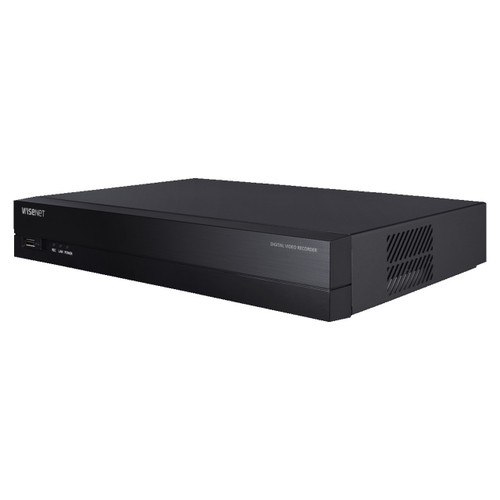
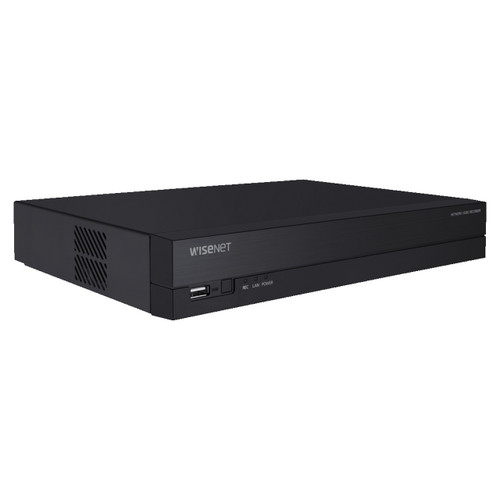
Both the Hanwha HRX-434 and ARN-410S are 4-channel, 8MP-capable recorders in 1U metal chassis sharing identical physical dimensions (300 × 47 × 208.7 mm). The core difference is recorder architecture: the HRX-434 is a Pentabrid DVR accepting four analog coax inputs (AHD/HDTVI/HDCVI/CVBS) plus up to six additional IP channels, while the ARN-410S is a pure NVR accepting up to four IP cameras only, with four integrated PoE ports. Buyers choosing between them are deciding primarily between a hybrid analog-to-IP migration path and a clean all-IP deployment.
In This Guide
- How do channel capacity, input flexibility, and recording throughput compare?
- What connectivity, power delivery, and physical infrastructure requirements differ between the two units?
- How do the two units compare on platform integration, software ecosystem, and remote management?
- Which should you choose: the HRX-434 or the ARN-410S?
- Side-by-Side Specs
- FAQ
How do channel capacity, input flexibility, and recording throughput compare?
The HRX-434 supports 4 analog coax channels (BNC, accepting AHD/HDTVI/HDCVI/CVBS signals) plus up to 6 additional IP camera channels, for a maximum of 10 camera sources. Its recording bandwidth is 30 Mbps and playback bandwidth is 32 Mbps across up to 6 simultaneous channels. Analog record rates are resolution-dependent: 8MP at 8 fps, 5MP at 12 fps, 4MP at 15 fps, and 2MP at 30 fps.
The ARN-410S is a pure IP NVR with a hard ceiling of 4 IP camera channels and no analog input capability. However, its recording bandwidth is 40 Mbps — 33% higher than the HRX-434's 30 Mbps ceiling — and playback bandwidth matches at 32 Mbps. The ARN-410S supports simultaneous playback of up to 16 channels (4 local, 4 remote per user), compared to the HRX-434's 6-channel simultaneous playback. Both units record at up to 30 fps and top out at 8MP resolution.
For sites with existing coax infrastructure or mixed analog/IP cameras, the HRX-434's 10-source hybrid architecture offers a clear capacity advantage. For clean IP-only deployments, the ARN-410S delivers higher sustained network throughput and broader simultaneous playback within its 4-channel limit.
What connectivity, power delivery, and physical infrastructure requirements differ between the two units?
The HRX-434 connects to the network via a single RJ-45 port (10/100 BASE-T) and powers cameras via external means — it has no PoE output capability. It accepts DC 12V input and draws up to 22W with one 6TB HDD installed. Camera-side coaxial control is provided over the same BNC cables using CVBS (Pelco-C), AHD, CVI, or TVI coaxial control protocols. It also includes RS-485 for PTZ control (Samsung-T/Pelco-D/Pelco-P). Outputs include 1× HDMI, 1× VGA, 1× BNC spot output, and 2× USB 2.0 (front/rear). Audio is supported via 1 RCA line in / 1 RCA line out.
The ARN-410S provides four PoE RJ-45 LAN ports (10/100) plus one dedicated WAN RJ-45 port (10/100), enabling it to power IP cameras directly over Ethernet with a total PoE budget of 35W. It operates on 54VDC / 1.20A and draws up to 52W with one HDD and PoE active. Display output is limited to 1× HDMI (3840×2160 at 30 Hz); there is no VGA output. The ARN-410S also references microSD as a local storage medium in addition to the SATA HDD slot, though the spec does not detail microSD capacity limits. Both units share identical operating temperature (0°C to +40°C) and humidity (20–85% RH) ranges.
The ARN-410S's integrated PoE eliminates the need for a separate PoE switch for up to 4 cameras, reducing rack space and cabling cost in small deployments. The HRX-434's dual HDMI+VGA output is more flexible for control rooms requiring simultaneous primary monitor and spot-monitor feeds.
How do the two units compare on platform integration, software ecosystem, and remote management?
Both recorders support ONVIF Profile-S and Hanwha's SUNAPI for third-party VMS interoperability. Both provide 2-way audio, iOS/Android mobile apps (Wisenet Mobile / Wisenet Viewer), and identical remote user limits: 3 concurrent search users, 10 live unicast, and 20 multicast streams. Both support P2P QR code setup, 802.1x authentication, IP address filtering, user access logging, and Hanwha Techwin Root CA device certificates.
The ARN-410S adds signed firmware verification (not specified for the HRX-434), IPv6 support (the HRX-434 spec lists only IPv4 protocols), N+1 failover capability, and explicit compatibility with the WAVE VMS and SSM platform. It supports 300 PTZ presets per camera and per-camera polygon motion detection (4- or 8-point). The ARN-410S's log capacity is documented at 100,000 entries each for system and event logs; this figure is not specified for the HRX-434.
The HRX-434 adds coaxial PTZ control (Pelco-C/D/P via RS-485 and coaxial), fisheye dewarping in web and CMS clients, ARB (Automatic Recovery Backup) support, and compatibility with the SPC-7000/6000/2000 system controllers — features relevant to hybrid or legacy analog environments. Its security encryption scope explicitly covers recording, transmission, backup, and ID/PW; the ARN-410S spec lists encryption without that level of detail.
Both units carry UL, CE, and FCC certifications. The ARN-410S additionally lists a 3-year warranty in its spec; warranty terms are not stated in the HRX-434 spec.
Which should you choose: the HRX-434 or the ARN-410S?
Our take: The HRX-434 is the stronger choice when a site has existing coax infrastructure or requires a mixed analog-plus-IP recording path, while the ARN-410S is the better fit for new all-IP deployments in space- and cabling-constrained environments. Key spec deltas: the HRX-434 supports up to 10 camera sources (4 analog + 6 IP) versus the ARN-410S's hard limit of 4 IP channels; the ARN-410S's recording bandwidth is 40 Mbps versus the HRX-434's 30 Mbps, and the ARN-410S includes four integrated PoE ports with a 35W budget, eliminating an external switch for small deployments. The ARN-410S also adds IPv6, N+1 failover, signed firmware, and WAVE VMS compatibility. Choose the HRX-434 for hybrid coax-to-IP migration or multi-format legacy sites running SPC controllers; choose the ARN-410S for clean IP-camera installs where PoE simplicity, higher throughput, and WAVE/SSM platform alignment matter more than analog backward compatibility.
Side-by-Side Comparison
Spec-for-spec, from manufacturer data.
| Specification | Hanwha HRX-434 | Hanwha ARN-410S |
|---|---|---|
| Recorder Type | Pentabrid DVR (analog + IP) | Pure IP NVR |
| Max Camera Channels | 10 (4 analog + 6 IP) | 4 (IP only) |
| Analog Inputs | 4× BNC (AHD/HDTVI/HDCVI/CVBS) | — |
| Integrated PoE Ports | — | 4× PoE RJ-45 (35W budget) |
| Recording Bandwidth | 30 Mbps | 40 Mbps |
| Playback Bandwidth | 32 Mbps (6CH simultaneous) | 32 Mbps (16CH simultaneous) |
| Max Resolution | 8MP | 8MP |
| Frame Rate (max) | 30 fps (2MP); 8 fps (8MP analog) | 30 fps |
| Video Compression | H.265, H.264, MJPEG | H.265 (WiseStream II), H.264, MJPEG |
| HDD Slot / Max Capacity | 1× SATA, 6TB | 1× SATA, 6TB |
| Local Storage (secondary) | — | microSD |
| Display Outputs | 1× HDMI, 1× VGA, 1× BNC spot | 1× HDMI (4K/30Hz) |
| Ethernet (network) | 1× RJ-45 10/100 | 4× PoE RJ-45 + 1× WAN RJ-45 10/100 |
| Input Voltage / Max Power | DC 12V / 22W | 54VDC 1.20A / 52W |
| Failover / ARB | ARB support | N+1 failover + ARB support |
| Operating Temperature | 0°C to +40°C | 0°C to +40°C |
Frequently Asked Questions
Which should you choose: the HRX-434 or the ARN-410S?
The HRX-434 is the stronger choice when a site has existing coax infrastructure or requires a mixed analog-plus-IP recording path, while the ARN-410S is the better fit for new all-IP deployments in space- and cabling-constrained environments. Key spec deltas: the HRX-434 supports up to 10 camera sources (4 analog + 6 IP) versus the ARN-410S's hard limit of 4 IP channels; the ARN-410S's recording bandwidth is 40 Mbps versus the HRX-434's 30 Mbps, and the ARN-410S includes four integrated PoE ports with a 35W budget, eliminating an external switch for small deployments. The ARN-410S also adds IPv6, N+1 failover, signed firmware, and WAVE VMS compatibility. Choose the HRX-434 for hybrid coax-to-IP migration or multi-format legacy sites running SPC controllers; choose the ARN-410S for clean IP-camera installs where PoE simplicity, higher throughput, and WAVE/SSM platform alignment matter more than analog backward compatibility.
Can the HRX-434 or ARN-410S support more than 4 cameras?
Only the HRX-434 can exceed 4 cameras: it accepts 4 analog coax inputs plus up to 6 additional IP camera channels, for a maximum of 10 sources. The ARN-410S is strictly limited to 4 IP camera channels and cannot be expanded beyond that ceiling.
Which unit do I need if I want to power my IP cameras directly from the recorder without a separate PoE switch?
The ARN-410S is the correct choice: it includes four integrated PoE RJ-45 ports with a combined 35W PoE budget, so it can power up to 4 IP cameras directly. The HRX-434 has no PoE output capability and requires an external PoE switch or injectors to power IP cameras.
Is the HRX-434 or ARN-410S a better fit for a Hanwha WAVE VMS environment?
The ARN-410S spec explicitly lists WAVE as supported viewer software, alongside SSM, Webviewer, and Wisenet Viewer. The HRX-434 spec lists Webviewer, Smart Viewer, Wisenet Mobile, and SDK/CGI, but does not mention WAVE. Both units support SUNAPI and ONVIF Profile-S for general VMS integration, but for a WAVE-managed environment the ARN-410S has documented compatibility while the HRX-434 does not.
Get a Second Opinion on Your Camera Choice
Share your site layout, coverage goals, and budget. Our team will validate the camera selection, flag anything we would change, and recommend products that match the use case.