
Hanwha C6083R vs i-PRO U15301-V3L: Specification Comparison
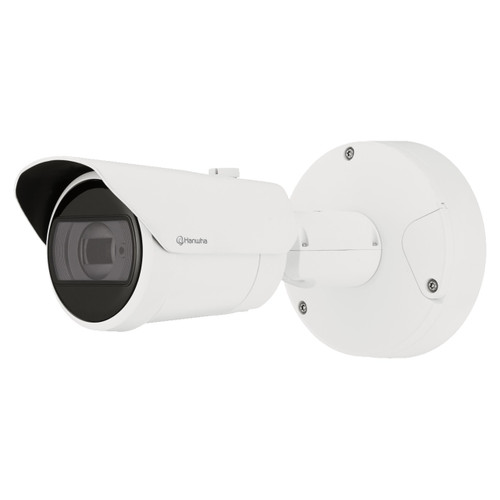
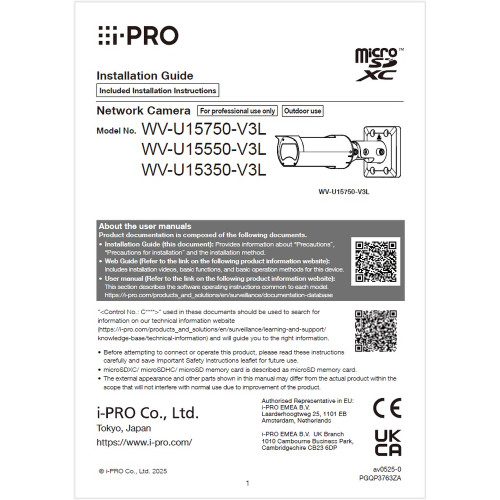
Both the Hanwha XNO-C6083R and the i-PRO WV-U15301-V3L are 2MP outdoor IR bullet cameras designed for perimeter and general-purpose surveillance, powered over a single PoE cable. This comparison addresses the key decision points for installers and IT buyers evaluating them side by side: imaging capability including WDR performance and low-light sensitivity, installation and environmental ratings, and integration with VMS platforms and on-site analytics. Specifications are drawn directly from manufacturer data sheets for each model.
In This Guide
How do the imaging specs compare?
Both cameras share a 1/2.8-inch progressive CMOS sensor at 1920×1080 resolution. The XNO-C6083R runs at up to 60 fps, while the WV-U15301-V3L is rated at 30 fps (25 fps selectable). On low light, the C6083R reaches 0.01 lux in color mode and 0 lux with IR active; the U15301-V3L specifies 0.05 lux color (F1.6, 1/30 s) and 0.004 lux monochrome with extended 16/30 s AGC, with 0 lux achievable when IR is on. IR range is comparable: the C6083R provides WiseIR up to 40 m (131 ft), the U15301-V3L up to 42 m (138 ft) at 30IRE / 30 m (98 ft) at 50IRE.
WDR is a meaningful differentiator. The C6083R is rated at extremeWDR 150 dB; the U15301-V3L lists Super Dynamic WDR with a maximum dynamic range of 120 dB. On optics, the C6083R offers a 2.8–12 mm (4.3x) motorized varifocal lens with a horizontal field of view spanning 120° (wide) to approximately 27° (tele) and a DC auto-iris with hall sensor. The U15301-V3L is specified with 3.2x optical zoom; exact focal length range and field-of-view figures are not provided in the available specification data.
What about installation and environment?
Both cameras carry IP66 and IK10 ratings. The C6083R adds IP67 and NEMA 4X certification, providing an extra level of submersion and wash-down resistance not listed for the U15301-V3L. The C6083R operates from −40 °C to +55 °C; the U15301-V3L is rated −30 °C to +50 °C, a narrower window that may matter in cold-climate or rooftop deployments.
Both are powered by PoE 802.3af (Class 3 for the C6083R, class not specified for the U15301-V3L). The C6083R also accepts 12 VDC as an alternative power input; no 12 VDC alternative is listed for the U15301-V3L. The C6083R dimensions are ø93.4 × 276.6 mm (1,640 g); the U15301-V3L measures 112.5 mm (W) × 112.5 mm (H) × 298.5 mm (D) with weight not stated in available specs. The C6083R ships with a back box included and supports conduit entries for single, double, 4-inch octagon, and 4-inch square gang boxes; conduit compatibility for the U15301-V3L is not specified.
Which fits your VMS and analytics better?
Both cameras support ONVIF Profile S, G, and T, making them compatible with the broad ecosystem of conformant VMS platforms. The C6083R additionally supports ONVIF Profile M and exposes Hanwha's SUNAPI and Wisenet APIs. The U15301-V3L does not list Profile M or a proprietary API in the available specs. On edge analytics, the C6083R carries AI-engine-based object detection classifying persons, faces, vehicles, and license plates, plus virtual line crossing, virtual area intrusion, people counting, queue management, and heatmap. The U15301-V3L lists VMD (4 areas) and Scene Change Detection only.
For audio, the C6083R provides a selectable mic/line input (2.5 VDC, 2 KΩ) and a line output (1 Vrms), plus G.711 and G.726 compression; the U15301-V3L lists audio input in its spec summary but compression formats and output capability are not detailed in available data. Edge storage is supported on the C6083R via a single microSD/SDHC/SDXC slot up to 512 GB; no edge storage specification is listed for the U15301-V3L. The C6083R also carries a notable cybersecurity differentiator on the i-PRO side: the U15301-V3L lists FIPS 140-3 Level 3 certification via a SecureElement (EdgeLock SE052F) and NDAA compliance, neither of which is claimed in the C6083R's available specification data.
Which should you choose: the C6083R or the U15301-V3L?
Our take: The XNO-C6083R is the stronger choice when frame rate, advanced analytics, or extreme environmental conditions are the primary drivers. Its 60 fps capture doubles the U15301-V3L's 30 fps, its extremeWDR is rated 30 dB higher (150 dB vs. 120 dB), its operating range extends 10 °C lower (−40 °C vs. −30 °C), and it pairs on-board AI analytics — object classification, virtual line, people counting — against the U15301-V3L's VMD-only engine. It also ships with microSD edge storage up to 512 GB, not listed for the U15301-V3L. Conversely, the WV-U15301-V3L is the better fit when federal procurement compliance is required: its FIPS 140-3 Level 3 SecureElement and stated NDAA compliance are not matched by available C6083R documentation, making it the defensible choice for U.S. government or highly regulated deployments where those certifications are mandatory.
Side-by-Side Comparison
Spec-for-spec, from manufacturer data.
| Specification | Hanwha C6083R | i-PRO U15301-V3L |
|---|---|---|
| Resolution | 1920×1080 (2MP) | 2MP (exact pixel count not specified) |
| Image Sensor | 1/2.8" progressive CMOS | 1/2.8-inch CMOS |
| Lens / Focal Length | 2.8–12 mm motorized varifocal (4.3x) | 3.2x optical zoom (focal length range not specified) |
| Horizontal FOV | 120° (wide) to ~27° (tele) | — |
| Max Frame Rate | 60 fps | 30 fps (25 fps selectable) |
| Min Illumination (Color) | 0.01 lux | 0.05 lux (F1.6, 1/30 s) |
| Min Illumination (IR On) | 0 lux | 0 lux |
| IR Range | 40 m (131 ft) | 42 m (138 ft) at 30IRE / 30 m (98 ft) at 50IRE |
| WDR | extremeWDR 150 dB | Super Dynamic, max 120 dB |
| Video Compression | H.265 / H.264 / MJPEG | H.265 / H.264 / MJPEG |
| IP Rating | IP66 / IP67 / NEMA 4X | IP66 |
| IK / Impact Rating | IK10 | IK10 |
| Operating Temperature | −40 °C to +55 °C | −30 °C to +50 °C |
| Power Input / PoE Class | PoE 802.3af Class 3; 12 VDC | PoE 802.3af (PoE class not specified) |
| Edge Storage | microSD/SDHC/SDXC up to 512 GB | — |
| Audio | Mic/line in; line out; G.711, G.726 | Audio input (compression and output not specified) |
| ONVIF Profiles | S / G / T / M | S / G / T |
| Edge Analytics | AI: person, face, vehicle, LPR, line crossing, area intrusion, people counting, heatmap | VMD (4 areas), Scene Change Detection |
| Cybersecurity / Compliance | HTTPS, 802.1X, device certificate (Hanwha CA) | FIPS 140-3 Level 3 (SecureElement); NDAA-compliant |
| Dimensions | ø93.4 × 276.6 mm | 112.5 mm (W) × 112.5 mm (H) × 298.5 mm (D) |
| Weight | 1,640 g (3.62 lb) | — |
| Warranty | 3-year | — |
Frequently Asked Questions
Which should you choose: the C6083R or the U15301-V3L?
The XNO-C6083R is the stronger choice when frame rate, advanced analytics, or extreme environmental conditions are the primary drivers. Its 60 fps capture doubles the U15301-V3L's 30 fps, its extremeWDR is rated 30 dB higher (150 dB vs. 120 dB), its operating range extends 10 °C lower (−40 °C vs. −30 °C), and it pairs on-board AI analytics — object classification, virtual line, people counting — against the U15301-V3L's VMD-only engine. It also ships with microSD edge storage up to 512 GB, not listed for the U15301-V3L. Conversely, the WV-U15301-V3L is the better fit when federal procurement compliance is required: its FIPS 140-3 Level 3 SecureElement and stated NDAA compliance are not matched by available C6083R documentation, making it the defensible choice for U.S. government or highly regulated deployments where those certifications are mandatory.
Is the C6083R or WV-U15301-V3L better for low-light performance?
Both reach 0 lux when IR is active. In color mode, the C6083R specifies 0.01 lux versus the U15301-V3L's 0.05 lux (at F1.6, 1/30 s), giving the C6083R an edge in color low-light sensitivity. IR range is nearly equal — 40 m (C6083R) versus 42 m at 30IRE (U15301-V3L).
Which camera is better suited for federal or NDAA-sensitive projects?
The WV-U15301-V3L lists both NDAA compliance and FIPS 140-3 Level 3 certification via its SecureElement chip. Neither of those certifications appears in the available XNO-C6083R specification data, making the U15301-V3L the documented choice for federally regulated or high-security-compliance environments.
Can either camera handle on-board video analytics without a separate server?
Yes, but with very different depth. The XNO-C6083R uses an AI engine to classify persons, faces, vehicles, and license plates, and supports virtual line crossing, virtual area intrusion, people counting, queue management, and heatmap — all at the edge. The WV-U15301-V3L lists VMD across 4 areas and Scene Change Detection only; more advanced analytics would require a connected VMS or server-side processing.
Get a Second Opinion on Your Camera Choice
Share your site layout, coverage goals, and budget. Our team will validate the camera selection, flag anything we would change, and recommend products that match the use case.