
Hanwha ARN-810S vs Vivotek ND9326P: Specification Comparison
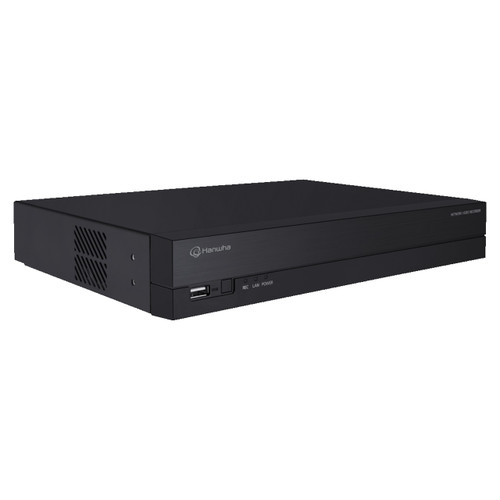
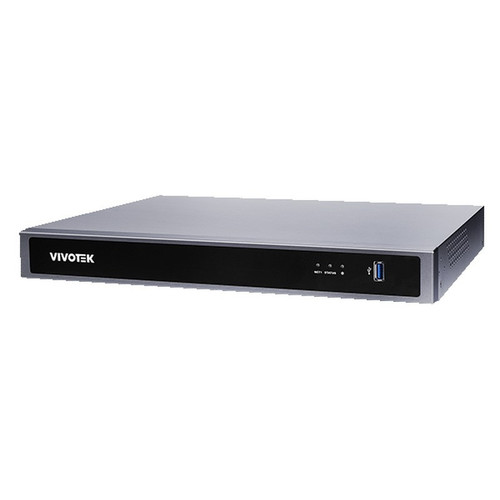
The Hanwha ARN-810S and Vivotek ND9326P are both 8-channel, PoE-equipped network video recorders targeting small-to-mid commercial surveillance deployments. Both support H.265 compression and ONVIF integration, and both top out at 8MP per-channel resolution. This comparison examines their recording throughput and channel density, storage architecture and physical build, and software ecosystem and analytics depth — the three dimensions most likely to determine which unit fits a given installation.
In This Guide
- Which NVR delivers higher recording throughput and more capable decoding?
- How do the two units differ in storage architecture, physical build, and operating environment?
- Which unit offers broader integration, analytics, and management software support?
- Which should you choose: the ARN-810S or the ND9326P?
- Side-by-Side Specs
- FAQ
Which NVR delivers higher recording throughput and more capable decoding?
The ND9326P is substantially ahead on throughput: its specified recording throughput is 192 Mbps with a network input/output total of 224 Mbps across dual 10/100/1000 Mbps Ethernet ports. Decoding capability is specified at H.265/H.264 3840×2160 @ 120 fps (per aggregate) and up to 7680×2560 decoding resolution, backed by a dedicated hardware decoder. The ARN-810S specifies a 60 Mbps throughput figure — no decoding resolution ceiling or hardware decoder is listed in the provided specs.
Frame rate also diverges: the ND9326P is specified at 60 fps (with decoding capability reaching 480 fps at 1080p), while the ARN-810S is specified at 30 fps. Both units cover 8 channels, but the ND9326P's Vivotek tagline references 16-channel 4K at 120 fps — this conflicts with the channel count listed in the structured specs (8 channels, LiveView 8 channels). Buyers should confirm channel licensing with the vendor before purchase. The ARN-810S channel count of 8 is consistent across all spec fields.
How do the two units differ in storage architecture, physical build, and operating environment?
Storage architecture is a meaningful differentiator. The ND9326P provides two internal 3.5-inch HDD bays (HDD purchased separately) with RAID 0 and RAID 1 support, HDD S.M.A.R.T. monitoring, USB 3.0 external storage, FTP scheduled backup, and a USB dongle export path. The ARN-810S specifies microSD as its local storage medium; no internal HDD bay count, RAID support, or maximum microSD capacity is listed in the provided specs. For continuous multi-camera recording at 8MP/30fps, the absence of HDD bays and RAID on the ARN-810S is a significant architectural constraint — microSD capacity and endurance limits apply.
Physical and environmental data is available only for the ND9326P: 365 × 315 × 44 mm, 2.65 kg, rack-mount form factor, operating temperature –10 °C to 55 °C, humidity 0–95%, with certifications including CE, FCC, UL, CB, VCCI, C-Tick, BSMI, and BIS. The ARN-810S provides no dimensions, weight, rack/desktop classification, operating temperature range, or safety certifications in the provided specs. Video outputs also differ: the ND9326P lists HDMI × 1 and VGA × 1 with display resolutions up to 3840×2160; the ARN-810S lists HDMI and USB outputs but no VGA and no display resolution ceiling.
Which unit offers broader integration, analytics, and management software support?
The ND9326P carries a deeper specified feature set in this dimension. Analytics include Deep Learning (DLPU), Object Analytics, Smart Search II, and VCA Counting. Search capabilities extend to object (people, vehicle), scene (line crossing, intrusion, loitering), and attribute (gender, age, clothing color, accessories; vehicle type and color). Event triggers cover motion detection, Smart VCA, cyber attack, PIR, tampering, camera DI/DO, disk failure, PoE error, and video loss, with actions including record, email, FTP, buzzer, ePTZ, NVR DO, and app notification. Alarm I/O is 4 in / 1 out. Security features include Trend Micro IoT Security and cybersecurity management. VMS options are Shepherd, VAST Security Station (VSS), iViewer, VIVOCloud, and VORTEX (Android and iOS). Camera integration is ONVIF Profile S.
The ARN-810S specifies ONVIF compatibility, two-way audio, edge-configurable intelligent video analytics (no specifics on object/scene search or alarm I/O count), and VMS compatibility with Wisenet Viewer, a mobile app, and ONVIF-compatible VMS platforms. WiseStream II adaptive streaming is listed under compression. No alarm input/output count, event action list, or cybersecurity certification is provided in the ARN-810S specs. For installations requiring granular VCA search, attribute-level forensics, or verified cybersecurity compliance, the ND9326P's spec sheet is more substantive — though installers should validate ARN-810S analytics depth against Hanwha's full datasheet before ruling it out.
Which should you choose: the ARN-810S or the ND9326P?
Our take: The ND9326P is the stronger choice when recording throughput, on-board HDD storage with RAID redundancy, and deep VCA analytics are priorities. Key spec deltas: the ND9326P specifies 192 Mbps recording throughput versus 60 Mbps on the ARN-810S; it provides dual 3.5-inch HDD bays with RAID 0/1 where the ARN-810S is limited to microSD local storage with no listed capacity ceiling or RAID; and its analytics tier covers object, scene, and attribute-level search with DLPU, while the ARN-810S lists edge-configurable analytics without equivalent specificity. The ARN-810S may suit compact or cost-sensitive deployments where the Wisenet VMS ecosystem, WiseStream II bandwidth efficiency, built-in two-way audio, and a 3-year warranty (versus the ND9326P's 2-year) matter more than raw throughput or redundant storage. Installers committed to the Hanwha/Wisenet platform should cross-reference the ARN-810S full datasheet for analytics detail before deciding.
Side-by-Side Comparison
Spec-for-spec, from manufacturer data.
| Specification | Hanwha ARN-810S | Vivotek ND9326P |
|---|---|---|
| Product Type | NVR | NVR |
| Channels | 8 | 8 (LiveView); see note on tagline |
| Max Per-Channel Resolution | 8MP | 8MP (3840×2160) |
| Frame Rate (specified) | 30 fps | 60 fps |
| Recording Throughput | 60 Mbps | 192 Mbps |
| Network Throughput | — | 224 Mbps (dual GbE) |
| Video Compression | H.265, H.264, WiseStream II | H.265, H.264, MJPEG |
| PoE Budget | 65W total | Max 190W system power (PoE+) |
| Internal HDD Bays | — | 2 × 3.5-inch (HDD sold separately) |
| RAID Support | — | RAID 0, 1 |
| Local Storage Type | microSD | Internal HDD; USB 3.0 external; microSD listed |
| Video Outputs | HDMI, USB | HDMI × 1, VGA × 1 |
| Display Resolution (max) | — | 3840×2160 |
| Hardware Decoder | — | Yes |
| Alarm Inputs / Outputs | — | 4 in / 1 out |
| ONVIF | Yes | ONVIF Profile S |
| Analytics | Edge-configurable IVA | DLPU; Object/Scene/Attribute search; VCA Counting |
| Cybersecurity | — | Trend Micro IoT Security; Cybersecurity Management |
| Warranty | 3 years | 2 years |
| Safety Certifications | — | CE, FCC, UL, CB, VCCI, C-Tick, BSMI, BIS |
| Operating Temperature | — | -10°C to 55°C (14°F to 131°F) |
| Dimensions (W×D×H mm) | — | 365 × 315 × 44 |
| Weight | — | 2.65 kg |
| Form Factor | — | Rack-mount |
Frequently Asked Questions
Which should you choose: the ARN-810S or the ND9326P?
The ND9326P is the stronger choice when recording throughput, on-board HDD storage with RAID redundancy, and deep VCA analytics are priorities. Key spec deltas: the ND9326P specifies 192 Mbps recording throughput versus 60 Mbps on the ARN-810S; it provides dual 3.5-inch HDD bays with RAID 0/1 where the ARN-810S is limited to microSD local storage with no listed capacity ceiling or RAID; and its analytics tier covers object, scene, and attribute-level search with DLPU, while the ARN-810S lists edge-configurable analytics without equivalent specificity. The ARN-810S may suit compact or cost-sensitive deployments where the Wisenet VMS ecosystem, WiseStream II bandwidth efficiency, built-in two-way audio, and a 3-year warranty (versus the ND9326P's 2-year) matter more than raw throughput or redundant storage. Installers committed to the Hanwha/Wisenet platform should cross-reference the ARN-810S full datasheet for analytics detail before deciding.
Is the ARN-810S or ND9326P better for deployments where storage redundancy matters?
The ND9326P is the better fit. It provides two internal 3.5-inch HDD bays with RAID 0 and RAID 1 support plus HDD S.M.A.R.T. monitoring. The ARN-810S specifies only microSD local storage — no HDD bay count, maximum capacity, or RAID support is listed in the provided specs.
Which NVR has the longer warranty?
The ARN-810S carries a 3-year warranty per the provided specs. The ND9326P specifies a 2-year warranty. Confirm current warranty terms with the respective manufacturers before purchase.
Can both NVRs integrate with third-party cameras via ONVIF?
Yes. Both units list ONVIF compatibility. The ND9326P specifies ONVIF Profile S. The ARN-810S lists ONVIF-compatible VMS support but does not specify a Profile level in the provided specs. Buyers integrating non-native cameras should verify Profile conformance against each unit's full datasheet.
Get a Second Opinion on Your Camera Choice
Share your site layout, coverage goals, and budget. Our team will validate the camera selection, flag anything we would change, and recommend products that match the use case.