
Vivotek ND9323P vs Hanwha XRN-820S: Specification Comparison
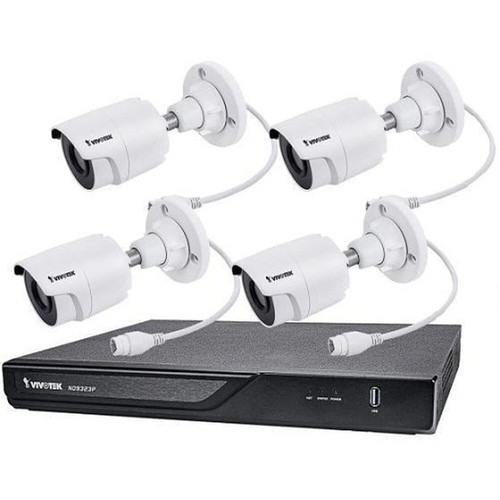
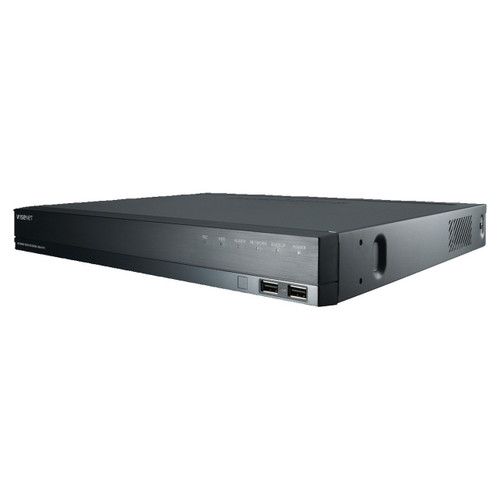
The Vivotek ND9323P and Hanwha XRN-820S are both 8-channel embedded-Linux NVRs targeting small-to-mid commercial IP video installations. The ND9323P ships as a bundled kit with four 2MP IR turret cameras and a pre-installed 2TB drive, while the XRN-820S is a standalone recorder sold without cameras or storage. Both support H.265, ONVIF, dual video outputs, and PoE camera powering, making them genuine cross-shop candidates for integrators evaluating an 8-channel NVR platform.
In This Guide
- Which recorder delivers more recording bandwidth, camera resolution headroom, and storage capacity?
- How do the two units differ in PoE budget, physical I/O, and operating environment?
- Which unit offers broader platform integration, security features, and remote management capabilities?
- Which should you choose: the ND9323P or the XRN-820S?
- Side-by-Side Specs
- FAQ
Which recorder delivers more recording bandwidth, camera resolution headroom, and storage capacity?
Recording bandwidth is a clear differentiator. The XRN-820S specifies a maximum recording bandwidth of 120 Mbps versus the ND9323P's 64 Mbps — an 88% advantage that matters when mixing high-resolution or high-frame-rate cameras. The Hanwha also accepts camera inputs up to 32MP per channel (resolution range: CIF to 32MP), whereas the Vivotek spec caps decode at 4K (3840×2160) with no stated per-channel input resolution ceiling beyond that decode limit.
On storage, the XRN-820S supports up to two internal 3.5" SATA HDDs with a maximum stated capacity of 6TB per drive (12TB total), though no specific supported HDD list is cited in the provided specs. The ND9323P also has two internal 3.5" bays; its specs reference a recommended HDD list on the Vivotek website rather than a stated per-drive maximum. The ND9323P ships pre-configured with 2TB. Both units support RAID 0 and RAID 1 — the ND9323P states this explicitly; the XRN-820S spec does not list RAID modes. External backup for the ND9323P is USB 3.0 and FTP scheduled backup; the XRN-820S supports BU/Exe/AVI via GUI and JPG/AVI via network with multi-channel playback up to 8 channels in backup mode.
Decoding capability further separates them. The ND9323P decodes 4K at 30 fps single-channel, 1080p at 120 fps across four channels, or 720p at 240 fps across eight channels using hardware decoding. The XRN-820S states 1080p at 240 fps and 32MP at 15 fps local display, but does not publish a per-channel decoding frame-rate matrix in the provided specs.
How do the two units differ in PoE budget, physical I/O, and operating environment?
PoE architecture is the most significant installation-day difference. The XRN-820S provides eight dedicated PoE+ RJ-45 ports (10/100 Mbps) plus two separate 1 Gbps LAN/WAN uplink ports, with a stated PoE budget of 100W. The ND9323P integrates PoE+ and manages it via a single 10/100/1000 Mbps Ethernet port; its network throughput input/output total is stated as 88 Mbps, and no separate PoE budget wattage is specified in the provided specs beyond the 175W max system power draw.
Alarm I/O differs: the XRN-820S provides 4 alarm inputs and 2 alarm outputs; the ND9323P provides 4 alarm inputs and 1 alarm output. Both offer a 3.5mm audio jack, but the XRN-820S additionally supports 8-channel network audio input and two-way audio communication with AAC (16/48 kHz) compression alongside G.711 and G.726. The ND9323P lists G.711 and G.726 only.
USB ports favor the XRN-820S with three total (front: 2× USB 2.0; rear: 1× USB 3.0). The ND9323P has two (front: 1× USB 3.0; rear: 1× USB 2.0). Both units operate from 100–240V AC, 50/60 Hz, at 0°C to 40°C. The ND9323P specifies humidity up to 95%; the XRN-820S specifies 20%–85% RH — a narrower operating humidity band. Maximum power draw is 175W for the ND9323P versus 160W for the XRN-820S.
Which unit offers broader platform integration, security features, and remote management capabilities?
Protocol breadth is wider on the XRN-820S, which adds SUNAPI (server and client), SNMP, IGMP, ICMP, ARP, and multicast RTP/RTSP to the standard suite. The ND9323P lists IPv4, IPv6, TCP/IP, HTTP, HTTPS, UPnP, RTSP/RTP/RTCP, SMTP, FTP, DHCP, NTP, DNS, DDNS, and IP Filter. Both support ONVIF Profile S. The Hanwha also natively integrates Wisenet AI cameras for object-attribute smart search — a feature not present in the Vivotek specs.
The XRN-820S supports N+1 failover redundancy and Automatic Rate Backup (ARB), features not mentioned in the ND9323P specs. It also allows up to 10 simultaneous live unicast and 20 multicast remote users, with simultaneous playback across up to 32 channels (8 local, 8 per remote user up to 3 users). The ND9323P does not specify remote user limits or simultaneous playback counts in its provided specs.
Security posture is more explicitly documented for the XRN-820S: it lists 802.1x port authentication, Hanwha Techwin Root CA device certificates, signed firmware, and an event log capacity of 100,000 entries each for system and event logs. The ND9323P counters with Trend Micro IoT Security integration and Cybersecurity Management support — third-party validated endpoint hardening not listed for the XRN-820S. The ND9323P also provides VIVOCloud remote access, VAST 2 VMS, and the Shepherd management platform; the XRN-820S supports WAVE, SSM, Smart Viewer, and P2P via QR code.
Which should you choose: the ND9323P or the XRN-820S?
Our take: The XRN-820S is the stronger standalone NVR platform when recording bandwidth, camera resolution scalability, and enterprise integration matter most. It records at 120 Mbps versus the ND9323P's 64 Mbps, accepts camera inputs up to 32MP versus the ND9323P's 4K decode ceiling, and adds N+1 failover redundancy, 802.1x/signed-firmware security, and native Wisenet AI search — none of which appear in the ND9323P specs. However, the ND9323P ships as a complete, camera-inclusive kit with a pre-installed 2TB drive, Trend Micro IoT Security integration, and VAST 2 / VIVOCloud ecosystem support, making it the faster path to a functional 8-channel 2MP installation for integrators standardized on Vivotek. Buyers planning to expand beyond 2MP cameras, mix high-resolution sensors, or deploy on a Hanwha/Wisenet platform should specify the XRN-820S; those deploying a closed Vivotek system with bundled cameras will find the ND9323P a cost-predictable, ready-to-record solution.
Side-by-Side Comparison
Spec-for-spec, from manufacturer data.
| Specification | Vivotek ND9323P | Hanwha XRN-820S |
|---|---|---|
| Channels | 8 | 8 |
| Max Recording Bandwidth | 64 Mbps | 120 Mbps |
| Max Camera Input Resolution | 4K / 8MP (decode spec) | 32MP |
| Video Codecs | H.265, H.264, MJPEG | H.265, H.264, MJPEG |
| Internal HDD Bays | 2× 3.5" SATA | 2× 3.5" SATA |
| Max Internal Storage | Not stated (see mfr HDD list) | 12TB (2× up to 6TB) |
| RAID Support | RAID 0, 1 | Not specified in provided specs |
| Video Outputs | HDMI ×1, VGA ×1 | HDMI ×1 (4K), VGA ×1 (FHD) |
| PoE Ports | Integrated (count not specified) | 8× PoE+ RJ-45 (10/100) |
| PoE Budget | Not specified | 100W |
| Alarm In / Out | 4 In / 1 Out | 4 In / 2 Out |
| USB Ports | 2 (1× USB 3.0 front, 1× USB 2.0 rear) | 3 (2× USB 2.0 front, 1× USB 3.0 rear) |
| N+1 Failover / ARB | Not specified | Supported |
| Cybersecurity Features | Trend Micro IoT Security, Cybersecurity Mgmt | 802.1x, device certificate, signed firmware |
| Max Power Draw | 175W | 160W |
| Operating Humidity | 0–95% | 20–85% RH |
| Cameras / HDD Included | 4× 2MP IR turret + 2TB HDD | None included |
Frequently Asked Questions
Which should you choose: the ND9323P or the XRN-820S?
The XRN-820S is the stronger standalone NVR platform when recording bandwidth, camera resolution scalability, and enterprise integration matter most. It records at 120 Mbps versus the ND9323P's 64 Mbps, accepts camera inputs up to 32MP versus the ND9323P's 4K decode ceiling, and adds N+1 failover redundancy, 802.1x/signed-firmware security, and native Wisenet AI search — none of which appear in the ND9323P specs. However, the ND9323P ships as a complete, camera-inclusive kit with a pre-installed 2TB drive, Trend Micro IoT Security integration, and VAST 2 / VIVOCloud ecosystem support, making it the faster path to a functional 8-channel 2MP installation for integrators standardized on Vivotek. Buyers planning to expand beyond 2MP cameras, mix high-resolution sensors, or deploy on a Hanwha/Wisenet platform should specify the XRN-820S; those deploying a closed Vivotek system with bundled cameras will find the ND9323P a cost-predictable, ready-to-record solution.
Can either NVR support cameras beyond 4K resolution?
Yes — the XRN-820S explicitly supports camera inputs up to 32MP per channel and states a local display resolution of 32MP at 15 fps. The ND9323P's provided specs describe decoding up to 3840×2160 (4K/8MP) but do not state a higher per-channel input ceiling; integrators planning to deploy cameras above 8MP should verify compatibility against Vivotek's supported camera list before specifying the ND9323P.
Is the ND9323P or XRN-820S better for larger or multi-site deployments?
The XRN-820S is better suited to larger or multi-site deployments. It supports N+1 failover redundancy, Automatic Rate Backup, up to 20 simultaneous multicast remote users, and integrates with Hanwha's WAVE and SSM enterprise VMS platforms. The ND9323P supports VAST 2 and VIVOCloud for remote access but does not list failover or ARB capabilities in its provided specs. Both are 8-channel units; neither scales channel count beyond 8 without additional hardware.
Does the XRN-820S include cameras or a hard drive like the ND9323P bundle?
No. The XRN-820S SKU (XRN-820S) is a standalone recorder; its specs state 'Supported HDD Up to 6TB' but do not indicate pre-installed storage, and no cameras are included. The ND9323P bundle (SKU ND9323P-2TB-4IB69) includes four 2MP IR turret cameras and a 2TB pre-installed HDD. Buyers pricing the XRN-820S must budget separately for compatible HDDs and cameras.
Get a Second Opinion on Your Camera Choice
Share your site layout, coverage goals, and budget. Our team will validate the camera selection, flag anything we would change, and recommend products that match the use case.