
Vivotek ND9323P vs Vivotek ND9326P: Specification Comparison
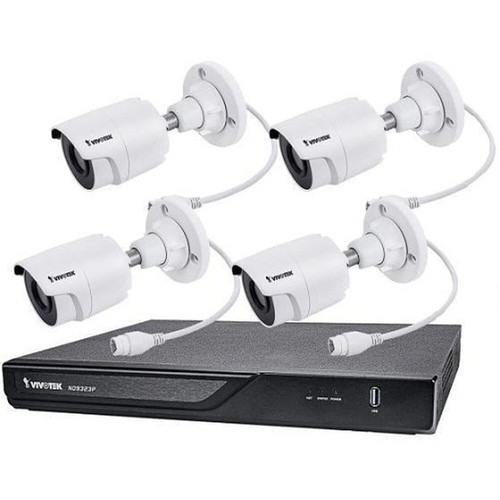
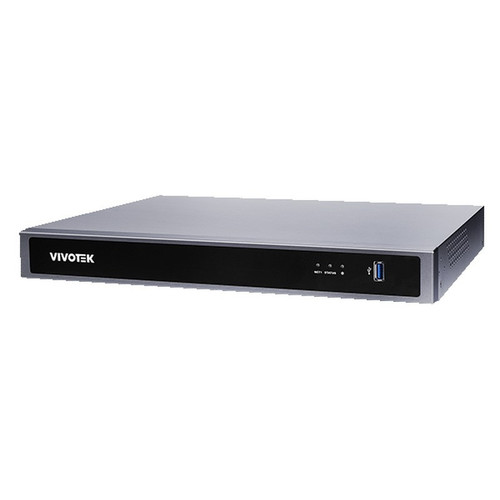
Both the ND9323P and ND9326P are Vivotek 8-channel PoE+ NVRs in the same 1U desktop form factor, targeting small-to-medium IP camera deployments. The ND9323P ships as a bundle with four 2MP IR turret cameras and a 2TB HDD, while the ND9326P is a standalone NVR with no bundled cameras or storage. The comparison covers recording throughput and decode capability, network architecture and operating environment, and analytics, integration, and software ecosystem—the three dimensions most likely to drive a purchasing decision between these two units.
In This Guide
- Which NVR delivers higher recording throughput and decode capability?
- How do the two units differ in network architecture and operating environment?
- Which unit offers broader analytics, integration, and software ecosystem support?
- Which should you choose: the ND9323P or the ND9326P?
- Side-by-Side Specs
- FAQ
Which NVR delivers higher recording throughput and decode capability?
Recording throughput is the clearest performance separator: the ND9326P is rated at 192 Mbps versus the ND9323P's 64 Mbps—a 3× difference. This matters when connecting higher-bitrate 4K or multi-stream cameras; the ND9323P will saturate its recording pipeline significantly sooner under load.
On the decode side, the ND9326P supports hardware decode up to 7680×2560 at 3840×2160/120 fps (4K) or 1920×1080/480 fps (1080p). The ND9323P decodes up to 3840×2160 but is rated at 4K@30 fps (1-CH), 1080p@120 fps (4-CH), or 720p@240 fps (8-CH)—roughly one-quarter the 4K decode bandwidth of the ND9326P. Buyers planning to run high-resolution streams simultaneously across all 8 channels will find the ND9326P's decode headroom substantially larger.
The ND9326P also adds MPEG-2 AAC-LC to its audio codec support (G.711, G.726) compared to the ND9323P's G.711 and G.726 only. The ND9323P's spec lists 'Recording Stream: Single,' which is not stated in the ND9326P spec—buyers requiring dual-stream recording should verify ND9326P capability with Vivotek directly.
How do the two units differ in network architecture and operating environment?
The ND9326P includes two 10/100/1000 Mbps Ethernet ports (RJ-45) with a combined network throughput of 224 Mbps, enabling link aggregation or network redundancy. The ND9323P has one Ethernet port with 88 Mbps total network throughput. For installations where the NVR must connect to both a camera VLAN and a management LAN—or where uplink redundancy is required—the ND9326P's dual-NIC design is a direct advantage.
Operating temperature range differs significantly: the ND9326P is rated −10 °C to 55 °C (14 °F to 131 °F), while the ND9323P is rated 0 °C to 40 °C (32 °F to 104 °F). The ND9326P's wider thermal envelope suits installations in unheated utility closets, warehouses, or locations subject to ambient temperature extremes. Both units share the same humidity rating (0–95%) and safety certifications (CE, FCC, VCCI, C-Tick, UL, CB, BSMI, BIS).
The ND9326P adds a rear-panel Reset button (explicitly listed); this spec is absent from the ND9323P documentation. The ND9326P also adds a second rear USB 2.0 port (Back: x2 USB 2.0 vs. ND9323P's Back: x1 USB 2.0), giving more simultaneous external-storage or peripheral options. Maximum power draw is 190 W for the ND9326P versus 175 W for the ND9323P, consistent with the ND9326P's broader capability set.
Which unit offers broader analytics, integration, and software ecosystem support?
The ND9326P's analytics stack is substantially deeper. It explicitly lists Object Search (People, Vehicle), Scene Search (Line Crossing, Intrusion, Loitering), and Attribute Search (Gender, Age, Clothing Color, Accessories for people; Type and Color for vehicles), plus Smart Search II—none of which appear in the ND9323P spec. Both units support VCA Counting Solution and VCA Event Search.
Event detection is also broader on the ND9326P: it adds Cyber Attack detection and Video Loss to the event types listed for the ND9323P. Event actions on the ND9326P include ePTZ and APP Notification, while the ND9323P lists PTZ (without ePTZ) and no app notification action. The ND9323P's IP Filter protocol is listed; IP Filter is absent from the ND9326P protocol list as documented.
On the software side, the ND9323P ships with Shepherd and VAST 2 support and cites Internet Explorer 10 (32-bit) as a supported web browser. The ND9326P supports Shepherd and VSS (VAST Security Station—Vivotek's current-generation platform) and lists Chrome as the supported browser, which is more consistent with modern IT security policy. The ND9326P's mobile ecosystem adds VORTEX alongside iViewer and VIVOCloud; the ND9323P lists iViewer and VIVOCloud but not VORTEX. The ND9323P's Fisheye Dewarp local modes (1O, 1R, 1O3R, 1O8R) are a subset of the ND9326P's (adds 1P and 1P3R locally).
Which should you choose: the ND9323P or the ND9326P?
Our take: The ND9326P is the stronger choice when recording throughput, decode capacity, operating environment, or advanced analytics are the primary decision criteria. Concretely: the ND9326P records at 192 Mbps versus 64 Mbps on the ND9323P (3× higher), decodes 4K at 120 fps per the spec versus 30 fps on the ND9323P, and operates from −10 °C to 55 °C versus 0 °C to 40 °C—critical for non-climate-controlled spaces. It also ships with a second Ethernet port (dual gigabit, 224 Mbps network throughput) and supports Attribute Search and Smart Search II, which the ND9323P spec does not list. The ND9323P remains the practical choice for budget-conscious deployments where four 2MP IR turret cameras and a 2TB HDD in a single bundle simplify procurement and installation—particularly on existing Vivotek/ONVIF Profile S platforms that do not require higher-bitrate 4K streams or VSS-based forensic analytics.
Side-by-Side Comparison
Spec-for-spec, from manufacturer data.
| Specification | Vivotek ND9323P | Vivotek ND9326P |
|---|---|---|
| Model | ND9323P | ND9326P |
| Channels | 8 | 8 |
| Recording Throughput | 64 Mbps | 192 Mbps |
| Decoding Capability (4K) | 4K @ 30 fps (1-CH) | 4K @ 120 fps (multi-CH) |
| Max Decode Resolution | 3840×2160 | 7680×2560 |
| Ethernet Ports | 1× Gigabit RJ-45 | 2× Gigabit RJ-45 |
| Network Throughput (Total) | 88 Mbps | 224 Mbps |
| Operating Temperature | 0 °C ~ 40 °C | −10 °C ~ 55 °C |
| Max Power Draw | 175 W | 190 W |
| RAID Support | RAID 0, 1 | RAID 0, 1 |
| HDD Bays | 2× internal 3.5" | 2× internal 3.5" |
| Alarm Inputs / Outputs | 4 in / 1 out | 4 in / 1 out |
| Attribute / Object Search | Not listed in spec | People & Vehicle (gender, age, color, type) |
| Software Platform | Shepherd, VAST 2 | Shepherd, VSS (VAST Security Station) |
| Mobile Apps | iViewer (Android & iOS) | iViewer, VIVOCloud, VORTEX (Android & iOS) |
| Bundled Cameras / HDD | 4× 2MP IR turret + 2TB HDD | None (sold separately) |
Frequently Asked Questions
Which should you choose: the ND9323P or the ND9326P?
The ND9326P is the stronger choice when recording throughput, decode capacity, operating environment, or advanced analytics are the primary decision criteria. Concretely: the ND9326P records at 192 Mbps versus 64 Mbps on the ND9323P (3× higher), decodes 4K at 120 fps per the spec versus 30 fps on the ND9323P, and operates from −10 °C to 55 °C versus 0 °C to 40 °C—critical for non-climate-controlled spaces. It also ships with a second Ethernet port (dual gigabit, 224 Mbps network throughput) and supports Attribute Search and Smart Search II, which the ND9323P spec does not list. The ND9323P remains the practical choice for budget-conscious deployments where four 2MP IR turret cameras and a 2TB HDD in a single bundle simplify procurement and installation—particularly on existing Vivotek/ONVIF Profile S platforms that do not require higher-bitrate 4K streams or VSS-based forensic analytics.
Can I connect 4K cameras to either NVR?
Both units support H.265/H.264 video format and hardware decoding up to 3840×2160 display resolution. However, their throughput limits differ: the ND9323P is rated at 64 Mbps recording throughput, which constrains the number of simultaneous high-bitrate 4K streams it can record. The ND9326P is rated at 192 Mbps, making it substantially better suited to multi-channel 4K camera deployments. Confirm per-camera bitrate requirements against these throughput ceilings before specifying either unit.
Is the ND9326P or ND9323P better for an installation in an unheated space?
The ND9326P is rated for −10 °C to 55 °C (14 °F to 131 °F), versus the ND9323P's 0 °C to 40 °C (32 °F to 104 °F). For utility closets, warehouses, or any location where ambient temperature may drop below freezing or exceed 40 °C, the ND9326P's wider thermal envelope is the specification-supported choice. The ND9323P should not be specified for environments outside its 0–40 °C range without additional climate control.
Does the ND9326P include cameras or a hard drive?
Based on the provided specifications, the ND9326P (SKU: ND9326P) does not include cameras or a pre-installed HDD; both are purchased separately, and the spec notes 'HDD purchased separately.' The ND9323P bundle (SKU: ND9323P-2TB-4IB69) includes four 2MP IR turret cameras and a 2TB HDD. Buyers comparing total system cost should factor in the cost of cameras and storage when evaluating the ND9326P standalone unit.
Get a Second Opinion on Your Camera Choice
Share your site layout, coverage goals, and budget. Our team will validate the camera selection, flag anything we would change, and recommend products that match the use case.