
Hanwha XRN-820S vs Hanwha QRN-830S: Specification Comparison
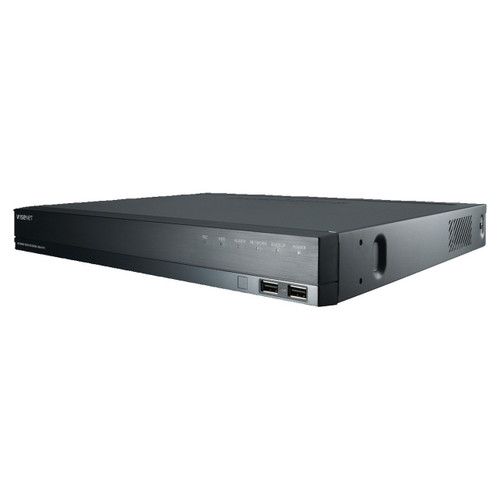
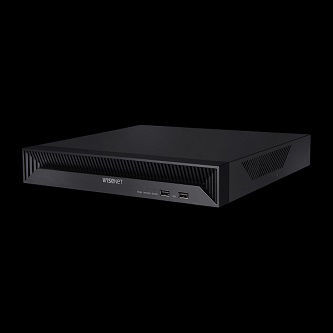
Both the Hanwha XRN-820S and QRN-830S are 8-channel embedded-Linux NVRs from Hanwha's Wisenet line, sharing the same channel count, ONVIF/SUNAPI protocol support, H.265/H.264/MJPEG compression, and N+1 failover with ARB. The core trade-off is resolution ceiling and infrastructure scale: the XRN-820S tops out at 32MP input with 120Mbps recording bandwidth and dual HDD slots, while the QRN-830S caps at 8MP with 80Mbps and a single HDD slot. Buyers cross-shopping these are typically choosing between a mid-range 4K-camera-ready recorder and a compact 8MP entry unit.
In This Guide
- Which NVR handles higher-resolution cameras and greater recording throughput?
- How do the two units differ in storage capacity, power draw, and physical footprint?
- Which unit offers broader integration, management software, and physical I/O options?
- Which should you choose: the XRN-820S or the QRN-830S?
- Side-by-Side Specs
- FAQ
Which NVR handles higher-resolution cameras and greater recording throughput?
The XRN-820S accepts camera inputs up to 32MP and records at a maximum bandwidth of 120Mbps, decoding at 1080p/240fps or 32MP/15fps. Its playback resolution ceiling matches: CIF through 32MP (H.265). The QRN-830S tops out at 8MP input and 80Mbps recording bandwidth, decoding at 8MP/60fps or 1080p/240fps. Playback resolution is similarly bounded at CIF through 8MP.
For deployments using Hanwha AI cameras or any sensor above 8MP—12MP fisheye, 20MP multisensor, or 32MP panoramic—the XRN-820S is the only option of the two. The QRN-830S is adequate for standard 4K (8MP) camera deployments but cannot ingest frames above that threshold regardless of codec.
How do the two units differ in storage capacity, power draw, and physical footprint?
Storage architecture diverges significantly. The XRN-820S has two SATA HDD slots supporting up to 6TB each, yielding a maximum of 12TB raw on-board. The QRN-830S has a single SATA slot with a 6TB ceiling—half the on-board capacity. Both report 'Up to 6TB' per drive per spec.
Power consumption follows the performance gap. The XRN-820S draws up to 160W from AC mains (100–240VAC, 50/60Hz) and delivers a 100W PoE budget across its 8 PoE+ RJ-45 ports, plus two 1Gbps uplink ports. The QRN-830S runs on a 54VDC/1.55A DC adapter, draws a maximum of 84W (287 BTU with one HDD and PoE active), and delivers a 65W PoE budget across its 8 PoE ports and one 1Gbps uplink. The QRN-830S is meaningfully lighter (1.32kg vs 2.7kg) and smaller (300×47.6×238.9mm vs 370×50.7×324.3mm), making it better suited to space-constrained or wall-mount installations.
Which unit offers broader integration, management software, and physical I/O options?
The XRN-820S lists compatibility with Hanwha's WAVE VMS, SSM, Webviewer, Smart Viewer, and Wisenet Mobile, and its PTZ control includes support for the SPC-2000 hardware controller in addition to GUI and Webviewer. Front-panel indicators cover HDD, Alarm, Power, Record, Backup, and Network. Physical I/O includes 4 alarm inputs, 2 alarm outputs, one HDMI (4K/30Hz), one VGA (1080p/60Hz), one 3.5mm audio output, and three USB ports (front 2×USB 2.0, rear 1×USB 3.0). Web viewer is validated on Windows 10 and macOS 10.13.
The QRN-830S lists Webviewer, Mobile App, and SUNAPI Integration—WAVE and SSM are not listed in the provided specs. PTZ control is via GUI and Webviewer only; SPC-2000 is not listed. Front-panel indicators are limited to Power, Record, and Network—no HDD or Alarm LED. Physical I/O includes one HDMI (4K/30Hz, no VGA), two USB ports (front 2×USB 2.0, no rear USB 3.0), and no discrete alarm input/output terminals per the provided specs. Web viewer is validated on Windows 10 and macOS 11. Both units share P2P QR-code easy configuration, 300 PTZ presets, iOS/Android mobile support, and identical remote user limits (Search 3, Live Unicast 10, Multicast 20).
Which should you choose: the XRN-820S or the QRN-830S?
Our take: The XRN-820S is the stronger choice when cameras exceed 8MP, storage headroom beyond 6TB is required, or the deployment demands WAVE/SSM VMS integration and hardware controller support. Concretely: recording bandwidth is 120Mbps vs 80Mbps (50% higher); on-board storage capacity is up to 12TB (dual SATA) vs 6TB (single SATA); and PoE budget is 100W vs 65W, directly affecting how many high-draw cameras—PTZ, multi-sensor, or heater-equipped—can be powered from the NVR itself. The XRN-820S also adds VGA output, a rear USB 3.0 port, four alarm inputs, and two alarm outputs absent from the QRN-830S spec sheet. The QRN-830S is the appropriate choice for compact, cost-sensitive 8MP-or-below deployments where DC-adapter power, a smaller chassis, and lighter weight (1.32kg vs 2.7kg) are priorities and WAVE/SSM VMS is not a requirement.
Side-by-Side Comparison
Spec-for-spec, from manufacturer data.
| Specification | Hanwha XRN-820S | Hanwha QRN-830S |
|---|---|---|
| Product Type | NVR (8-Channel) | NVR (8-Channel) |
| Max Camera Input Resolution | 32MP | 8MP |
| Max Recording Bandwidth | 120Mbps | 80Mbps |
| Max Decoding (local display) | 32MP @ 15fps / 1080p @ 240fps | 8MP @ 60fps / 1080p @ 240fps |
| HDD Slots / Max On-Board Storage | 2× SATA / up to 12TB | 1× SATA / up to 6TB |
| PoE Budget | 100W | 65W |
| PoE Ports | 8× PoE+ RJ-45 (10/100) | 8× PoE RJ-45 (10/100) |
| Uplink Ports | 2× RJ-45 (1Gbps) | 1× RJ-45 (1Gbps) |
| Display Outputs | 1× HDMI (4K/30Hz) + 1× VGA (1080p/60Hz) | 1× HDMI (4K/30Hz) |
| Max Power Draw | 160W (AC 100–240V) | 84W (DC 54V/1.55A adapter) |
| Alarm I/O | 4 inputs / 2 outputs | Not specified |
| USB Ports | 3 (Front 2× USB 2.0, Rear 1× USB 3.0) | 2 (Front 2× USB 2.0) |
| Supported VMS | WAVE, SSM, Webviewer, Smart Viewer, Wisenet Mobile | Webviewer, Mobile App, SUNAPI Integration |
| PTZ Controller Support | GUI, Webviewer, SPC-2000 | GUI, Webviewer |
| Dimensions (W×H×D) | 370 × 50.7 × 324.3 mm | 300 × 47.6 × 238.9 mm |
| Weight | 2.7 kg (5.95 lb) | 1.32 kg (2.91 lb) |
Frequently Asked Questions
Which should you choose: the XRN-820S or the QRN-830S?
The XRN-820S is the stronger choice when cameras exceed 8MP, storage headroom beyond 6TB is required, or the deployment demands WAVE/SSM VMS integration and hardware controller support. Concretely: recording bandwidth is 120Mbps vs 80Mbps (50% higher); on-board storage capacity is up to 12TB (dual SATA) vs 6TB (single SATA); and PoE budget is 100W vs 65W, directly affecting how many high-draw cameras—PTZ, multi-sensor, or heater-equipped—can be powered from the NVR itself. The XRN-820S also adds VGA output, a rear USB 3.0 port, four alarm inputs, and two alarm outputs absent from the QRN-830S spec sheet. The QRN-830S is the appropriate choice for compact, cost-sensitive 8MP-or-below deployments where DC-adapter power, a smaller chassis, and lighter weight (1.32kg vs 2.7kg) are priorities and WAVE/SSM VMS is not a requirement.
Can either NVR record cameras above 8MP, like 12MP or 20MP multisensor units?
Only the XRN-820S supports cameras above 8MP. Its specified input resolution ceiling is 32MP, and it records at up to 32MP/15fps or 1080p/240fps. The QRN-830S is specified with a maximum input and recording resolution of 8MP; cameras above that threshold are not supported per the provided specs.
Which unit gives me more on-board storage and a larger PoE power budget for my cameras?
The XRN-820S provides both. It has two SATA HDD slots for up to 12TB total on-board storage vs the QRN-830S's single slot capped at 6TB. Its PoE budget is 100W vs 65W on the QRN-830S, which matters if you are running PTZ cameras, multi-sensor units, or cameras with built-in heaters that draw 15–25W each.
Is the QRN-830S compatible with Hanwha WAVE or SSM VMS software?
WAVE and SSM are not listed in the QRN-830S's provided specifications; its listed viewer software is Webviewer, Mobile App, and SUNAPI Integration. The XRN-820S explicitly lists WAVE, SSM, Webviewer, Smart Viewer, and Wisenet Mobile. Buyers who require WAVE or SSM as their VMS platform should verify QRN-830S compatibility directly with Hanwha before specifying it.
Get a Second Opinion on Your Camera Choice
Share your site layout, coverage goals, and budget. Our team will validate the camera selection, flag anything we would change, and recommend products that match the use case.