
Hanwha ARN-810S vs Hanwha XRN-820S: Specification Comparison
The Hanwha ARN-810S and XRN-820S are both 8-channel network video recorders from Hanwha's Wisenet lineup, making them direct cross-shop candidates for small-to-medium IP camera deployments. The comparison spans recording bandwidth and maximum resolution, storage architecture and redundancy capabilities, and integration depth including PoE power budgets, display outputs, and VMS ecosystem support. Both units offer H.265 compression and ONVIF compatibility, but they target meaningfully different performance tiers within the 8-channel NVR segment.
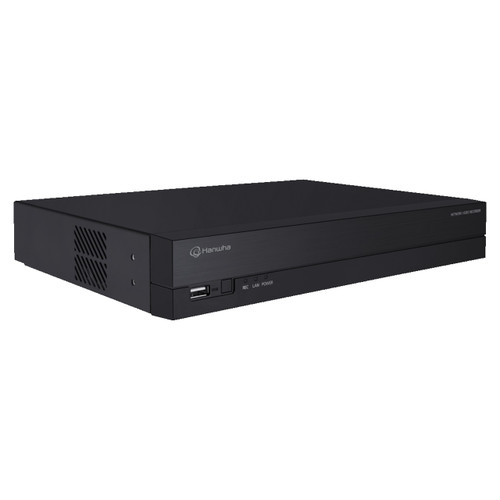
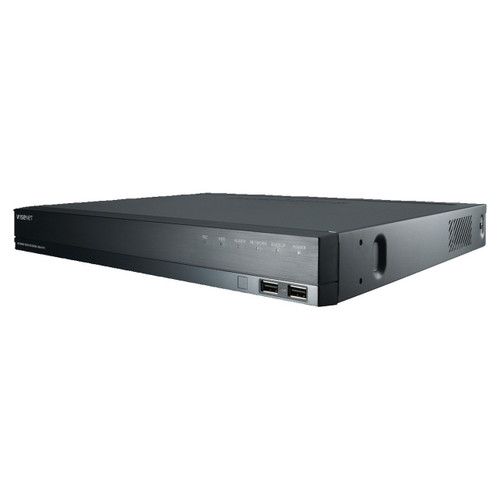
In This Guide
- Which NVR delivers higher recording capacity, bandwidth, and maximum camera resolution?
- How do the two units compare on PoE power budget, display outputs, and operating environment?
- Which unit offers broader integration, redundancy, and management software support?
- Which should you choose: the ARN-810S or the XRN-820S?
- Side-by-Side Specs
- FAQ
Which NVR delivers higher recording capacity, bandwidth, and maximum camera resolution?
The XRN-820S is specified at a maximum recording bandwidth of 120Mbps and supports camera inputs up to 32MP per channel, with a decoding ceiling of 32MP at 15fps or 1080p at 240fps. The ARN-810S is specified at 60Mbps maximum bandwidth and a maximum resolution of 8MP. This represents a 2× bandwidth advantage and a 4× per-channel resolution ceiling advantage for the XRN-820S.
On storage, the XRN-820S provides two SATA HDD bays supporting up to 6TB per drive (12TB total). The ARN-810S lists only microSD as its local storage medium; no internal HDD bay capacity is specified in the provided data. For deployments requiring continuous, high-capacity on-board recording, the XRN-820S's dual-SATA architecture is substantially more capable.
The XRN-820S also supports simultaneous multi-channel playback of up to 32 channels (local 8CH, remote 8CH per user across up to 3 remote users), along with smart search, text search, and calendar-based event retrieval modes. Equivalent playback channel counts and search modes are not specified for the ARN-810S.
How do the two units compare on PoE power budget, display outputs, and operating environment?
The XRN-820S provides a PoE budget of 100W across 8 PoE+ RJ-45 ports (10/100), plus two additional 1Gbps RJ-45 ports for LAN/WAN uplink, and draws a maximum of 160W from AC mains. The ARN-810S specifies a 65W total PoE budget across its 8 PoE ports and a system wattage of 65W. The XRN-820S's 100W PoE budget supports higher-power cameras such as PTZ units with heaters or multi-sensor devices.
For display, the XRN-820S outputs 4K UHD (3840×2160 at 30Hz) via HDMI and 1080p at 60Hz via VGA simultaneously, enabling dual-monitor setups with a forensic review station and a live-view wall. The ARN-810S lists HDMI and USB outputs but does not specify output resolution or VGA availability in the provided specs.
Both units specify an operating temperature range of 0°C to +40°C and are rated for 20–85% RH (XRN-820S specified; ARN-810S operating humidity not stated in provided data). The XRN-820S accepts 100–240 VAC ±10% at 50/60Hz; the ARN-810S input voltage is not specified. The XRN-820S chassis is black metal at 370×50.7×324.3mm, 2.7kg; ARN-810S physical dimensions and weight are not provided.
Which unit offers broader integration, redundancy, and management software support?
The XRN-820S supports N+1 failover redundancy and Automatic Rate Backup (ARB), features that protect recording continuity if a primary NVR fails. Neither feature is listed for the ARN-810S in the provided specifications.
On protocol depth, the XRN-820S lists IPv4, IPv6, TCP/IP, UDP/IP, RTP, RTSP, NTP, HTTP, DHCP, SMTP, ICMP, IGMP, ARP, DNS, DDNS, uPnP, HTTPS, SNMP, ONVIF Profile-S, and SUNAPI (server and client). The ARN-810S confirms ONVIF and SUNAPI compatibility but the full protocol list is not specified. The XRN-820S also includes 802.1x port authentication, IP address filtering, user access logging, device certificates (Hanwha Techwin Root CA), and signed firmware; ARN-810S security feature details are not provided.
VMS compatibility for the XRN-820S includes WAVE, SSM, Webviewer, Smart Viewer, and Wisenet Mobile, with web viewer support on Windows 10 and macOS 10.13 via Chrome, Edge, and Safari. The ARN-810S lists Wisenet Viewer, a mobile app, and ONVIF-compatible VMS. PTZ support on the XRN-820S includes GUI, webviewer, and SPC-2000 controller with 300 presets; equivalent PTZ depth is not specified for the ARN-810S. The XRN-820S additionally supports P2P setup via QR code and up to 20 multicast live viewers; these capabilities are not specified for the ARN-810S.
Which should you choose: the ARN-810S or the XRN-820S?
Our take: The XRN-820S is the stronger choice when the deployment demands higher camera resolution, greater recording bandwidth, enterprise-grade redundancy, or richer integration depth. Concretely: the XRN-820S supports 32MP per-channel input versus 8MP on the ARN-810S; offers 120Mbps recording bandwidth versus 60Mbps; and provides a 100W PoE budget versus 65W, enabling more power-hungry cameras without external injectors. It also adds N+1 failover with ARB, dual SATA bays up to 12TB, 4K HDMI output with simultaneous VGA, and a broader security and protocol stack. The ARN-810S is the appropriate selection for cost-sensitive or space-constrained edge deployments where 8MP resolution, microSD local storage, and a smaller PoE budget are sufficient — particularly in Wisenet-ecosystem sites where Wisenet Viewer coverage meets VMS requirements and the 65W PoE budget aligns with the installed camera mix.
Side-by-Side Comparison
Spec-for-spec, from manufacturer data.
| Specification | Hanwha ARN-810S | Hanwha XRN-820S |
|---|---|---|
| Product Type | NVR | NVR |
| Max Camera Channels | 8 | 8 |
| Max Input Resolution | 8MP | 32MP |
| Recording Bandwidth | 60Mbps | 120Mbps |
| Video Compression | H.265, H.264, WiseStream II | H.265, H.264, MJPEG |
| ONVIF | Yes | Yes (Profile-S) |
| PoE Ports | 8 (PoE) | 8 (PoE+, 10/100) |
| PoE Budget | 65W total | 100W total |
| Uplink Ports | — | 2× RJ-45, 1Gbps |
| Local Storage | microSD | 2× SATA HDD, up to 12TB |
| Display Output | HDMI, USB (resolution not specified) | HDMI 4K UHD + VGA 1080p |
| N+1 Failover / ARB | — | Yes |
| Max Remote Live Users | — | Unicast 10, Multicast 20 |
| VMS Compatibility | Wisenet Viewer, mobile, ONVIF VMS | WAVE, SSM, Webviewer, Smart Viewer, Wisenet Mobile |
| PTZ Presets | — | 300 |
| Housing Color / Material | White (material not specified) | Black / Metal |
| Operating Temperature | — | 0°C to +40°C |
| Max Power Draw | 65W | 160W |
| Warranty | 3 years | — |
Frequently Asked Questions
Which should you choose: the ARN-810S or the XRN-820S?
The XRN-820S is the stronger choice when the deployment demands higher camera resolution, greater recording bandwidth, enterprise-grade redundancy, or richer integration depth. Concretely: the XRN-820S supports 32MP per-channel input versus 8MP on the ARN-810S; offers 120Mbps recording bandwidth versus 60Mbps; and provides a 100W PoE budget versus 65W, enabling more power-hungry cameras without external injectors. It also adds N+1 failover with ARB, dual SATA bays up to 12TB, 4K HDMI output with simultaneous VGA, and a broader security and protocol stack. The ARN-810S is the appropriate selection for cost-sensitive or space-constrained edge deployments where 8MP resolution, microSD local storage, and a smaller PoE budget are sufficient — particularly in Wisenet-ecosystem sites where Wisenet Viewer coverage meets VMS requirements and the 65W PoE budget aligns with the installed camera mix.
Can either NVR handle 4K cameras across all 8 channels simultaneously?
The XRN-820S is specified to accept inputs up to 32MP per channel across all 8 channels with a 120Mbps total recording bandwidth, which encompasses 4K (8MP) cameras. The ARN-810S is specified at a maximum of 8MP per channel with a 60Mbps bandwidth ceiling. Neither unit's spec sheet explicitly states a sustained per-channel 4K frame-rate guarantee across all 8 channels simultaneously; buyers should validate against the manufacturer's channel-bandwidth calculator using their specific camera streams.
Does either unit support hard-drive storage for long-term on-site retention?
The XRN-820S includes two internal SATA HDD bays supporting up to 6TB per drive for a maximum of 12TB on-board storage. The ARN-810S specifies only microSD as its local storage medium; no internal HDD bay is listed in the provided specifications. For deployments requiring days or weeks of continuous on-site retention at full resolution, the XRN-820S's dual-HDD architecture is the only option between these two models.
Is either NVR compatible with third-party cameras and VMS platforms?
Both units confirm ONVIF compatibility, which provides a baseline level of interoperability with ONVIF Profile-S cameras and VMS platforms. The XRN-820S additionally lists SUNAPI (server and client), RTSP, SNMP, and explicit VMS support for Hanwha WAVE and SSM, broadening its integration options in mixed-vendor or enterprise VMS environments. The ARN-810S notes compatibility with ONVIF-compatible VMS platforms generally, but its full protocol stack is not detailed in the provided specifications.
Get a Second Opinion on Your Camera Choice
Share your site layout, coverage goals, and budget. Our team will validate the camera selection, flag anything we would change, and recommend products that match the use case.