
Hanwha ARD-410 vs Speco Technologies D4WVN10TB: Specification Comparison
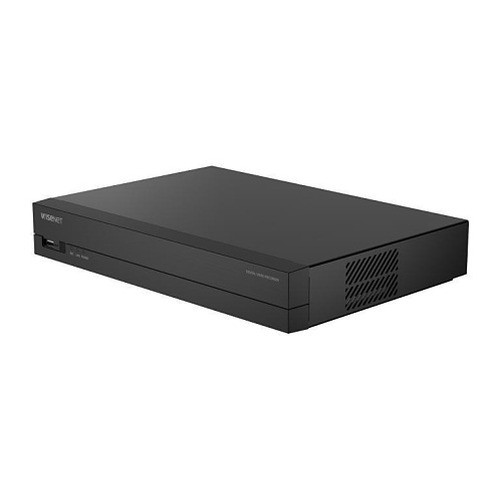
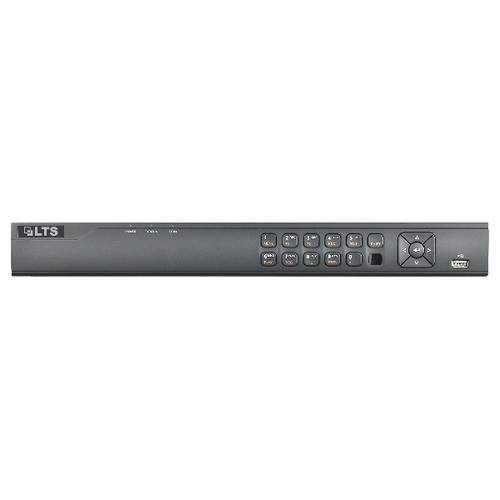
Both the Hanwha ARD-410 and the Speco D4WVN10TB are 4-channel hybrid/analog DVR-class recorders targeting installers who need to consolidate legacy analog cameras with modern compression. The ARD-410 is a desktop/rack pentabrid unit supporting AHD, TVI, CVI, CVBS, and IP inputs; the D4WVN10TB is a wall-mount TVI-focused DVR with 10TB onboard storage and government-compliance certifications. This comparison covers channel and input flexibility, storage and compression, and compliance, connectivity, and ecosystem integration.
In This Guide
- How do the two units differ in camera input flexibility and channel capacity?
- Which unit offers more storage, and how do the two compare on compression and recording throughput?
- How do the units compare on compliance certifications, remote management, and ecosystem integration?
- Which should you choose: the ARD-410 or the D4WVN10TB?
- Side-by-Side Specs
- FAQ
How do the two units differ in camera input flexibility and channel capacity?
The ARD-410 is a pentabrid recorder, accepting AHD, TVI, CVI, CVBS, and IP signals across its 4 analog BNC inputs (1Vp-p, 75Ω). It extends to a maximum of 6 total channels by adding up to 2 additional IP cameras via the network interface, supporting resolutions from CIF up to 5MP on analog and 5MP down to CIF on IP channels. Protocol support includes Hanwha SUNAPI and ONVIF, broadening IP camera compatibility.
The D4WVN10TB is specified as a 4-channel 4K TVI recorder. Its datasheet does not specify support for AHD, CVI, CVBS, or IP camera inputs beyond TVI, nor does it document an expandable IP channel count. ONVIF support is noted in the spec data, but no IP channel expansion count, input impedance, or per-channel resolution breakdown is provided.
For installers working with a mixed installed base of analog formats, the ARD-410's pentabrid architecture and 6-channel IP expansion offer considerably more flexibility. The D4WVN10TB's specs do not confirm multi-format analog support, making it less verifiable for mixed-signal sites.
Which unit offers more storage, and how do the two compare on compression and recording throughput?
The D4WVN10TB ships with 10TB of onboard storage and supports H.265 and H.264 compression. No maximum recording bandwidth figure is provided in the available spec data.
The ARD-410 supports a single SATA HDD bay with a maximum capacity of 6TB (no drive included per spec). It records at up to 30Mbps bandwidth and supports H.265, H.264, and MJPEG compression. Analog record rates are documented at 5MP@12fps, 4MP@15fps, and 2MP@15fps.
On raw storage, the D4WVN10TB's 10TB pre-installed drive is a meaningful advantage over the ARD-410's 6TB ceiling. The ARD-410 provides explicit throughput (30Mbps max) and per-resolution frame-rate data that the D4WVN10TB spec sheet does not include, making direct throughput comparison impossible from available data. Buyers prioritizing storage depth with no expansion need should weight the D4WVN10TB; those needing documented throughput guarantees will find only the ARD-410 provides them.
How do the units compare on compliance certifications, remote management, and ecosystem integration?
The D4WVN10TB carries TAA and NDAA compliance certifications, which are hard requirements for U.S. federal, state, and many regulated-industry procurement programs. Its spec data also notes an IP67 ingress rating and IK10 impact rating, suggesting suitability for environments with exposure to dust, moisture, or physical impact. PoE+ (802.3at) is listed in the spec data, though its application on a DVR is atypical and may reflect a metadata anomaly; buyers should verify against the datasheet.
The ARD-410 carries UL, CE, FCC, and KC certifications but is not documented as TAA or NDAA compliant. Its ecosystem integration is more fully specified: it supports Wisenet DDNS, SUNAPI (server and client), ONVIF Profile-S, a broad protocol stack (TCP/IP, RTSP, SNMP, 802.1x, HTTPS, and more), device certificate authentication via Hanwha Techwin Root CA, and Wisenet mobile app, CMS, and web viewer. Remote management supports up to 10 live unicast and 20 multicast simultaneous users. PTZ control via RS-485 (Pelco-D/P, Samsung-T) is documented.
For government or federally funded projects, the D4WVN10TB's NDAA/TAA standing is a qualifying criterion the ARD-410 cannot meet based on available specs. For commercial or enterprise deployments requiring deep VMS integration, remote user management, and PTZ control, the ARD-410's documented ecosystem is substantially more complete.
Which should you choose: the ARD-410 or the D4WVN10TB?
Our take: The ARD-410 is the stronger choice when input-format flexibility, ecosystem integration depth, and documented recording performance are the primary criteria. It supports five analog signal formats versus the D4WVN10TB's specified TVI-only, expands to 6 total channels via IP, and documents a 30Mbps recording bandwidth ceiling with per-resolution frame rates that the D4WVN10TB spec sheet does not provide. The D4WVN10TB's 10TB onboard storage exceeds the ARD-410's 6TB maximum by 4TB, a meaningful gap for high-resolution continuous recording, and its NDAA and TAA certifications make it the compliant choice for government and federally funded installations where those credentials are a hard procurement gate. Specify the ARD-410 for commercial mixed-analog retrofit projects on the Wisenet platform; specify the D4WVN10TB where government compliance is mandatory and storage depth takes priority over multi-format input support.
Side-by-Side Comparison
Spec-for-spec, from manufacturer data.
| Specification | Hanwha ARD-410 | Speco Technologies D4WVN10TB |
|---|---|---|
| Device Class | Pentabrid DVR/Hybrid | TVI DVR |
| Analog Channels | 4CH BNC (1Vp-p, 75Ω) | 4CH TVI |
| Supported Analog Formats | AHD, TVI, CVI, CVBS | TVI (others not specified) |
| IP Camera Expansion | Up to 2 additional CH (max 6 total) | — |
| Max Analog Resolution | 5MP | 4K TVI |
| Compression | H.265, H.264, MJPEG | H.265, H.264 |
| Max Recording Bandwidth | 30Mbps | — |
| HDD Capacity | 1x SATA, max 6TB (no drive included) | 10TB onboard |
| ONVIF | Yes (Profile-S) | Yes |
| Live Display Output | 1x HDMI, 1x VGA (up to 3840×2160) | — |
| Max Simultaneous Playback | 6CH local / 6CH CMS / 4CH mobile | — |
| Max Remote Live Users | 10 unicast / 20 multicast | — |
| Audio | 1x Line in / 1x Line out, 2-way | Two-way, built-in mic |
| Alarm I/O | 4x in / 1x relay out (NO/NC/COM) | — |
| NDAA / TAA Compliant | Not specified | Yes (both) |
| Certifications | UL, CE, FCC, KC | TAA, NDAA |
| Operating Temperature | 0°C to +40°C | — |
| Ingress / Impact Rating | — | IP67 / IK10 |
| Mount Type | Wall; Rack | Wall Mount |
| Dimensions (WxHxD) | 300 x 47 x 208.7mm (11.85" x 1.89" x 8.22") | 17.5 x 15.5 x 4.8 in |
| Weight | Approx. 1.1 kg (2.4 lb, without HDD) | 8.0 lbs |
| Power | DC 12V, max 19.2W (with 6TB HDD) | — |
| Warranty | — | 3-year |
Frequently Asked Questions
Which should you choose: the ARD-410 or the D4WVN10TB?
The ARD-410 is the stronger choice when input-format flexibility, ecosystem integration depth, and documented recording performance are the primary criteria. It supports five analog signal formats versus the D4WVN10TB's specified TVI-only, expands to 6 total channels via IP, and documents a 30Mbps recording bandwidth ceiling with per-resolution frame rates that the D4WVN10TB spec sheet does not provide. The D4WVN10TB's 10TB onboard storage exceeds the ARD-410's 6TB maximum by 4TB, a meaningful gap for high-resolution continuous recording, and its NDAA and TAA certifications make it the compliant choice for government and federally funded installations where those credentials are a hard procurement gate. Specify the ARD-410 for commercial mixed-analog retrofit projects on the Wisenet platform; specify the D4WVN10TB where government compliance is mandatory and storage depth takes priority over multi-format input support.
Can either unit work with my existing mix of AHD and CVI cameras?
The ARD-410 explicitly supports AHD, TVI, CVI, CVBS, and IP inputs across its 4 BNC channels, making it compatible with mixed analog installed bases. The D4WVN10TB is specified as a 4K TVI recorder; support for AHD or CVI is not documented in the available spec data, so compatibility with non-TVI analog cameras cannot be confirmed from the provided specifications.
Which DVR is approved for government or federally funded projects?
The D4WVN10TB carries both TAA and NDAA compliance certifications per its spec data, which are typically required for U.S. government and federally funded surveillance procurement. The ARD-410's certifications (UL, CE, FCC, KC) do not include TAA or NDAA based on the provided specifications.
Which unit gives me more storage for long-term retention?
The D4WVN10TB includes 10TB of onboard storage. The ARD-410 has a single SATA HDD bay with a documented maximum of 6TB and does not include a drive per spec. If maximizing on-device retention without external NAS or cloud archiving is a priority, the D4WVN10TB's storage ceiling is 67% higher than the ARD-410's.
Get a Second Opinion on Your Camera Choice
Share your site layout, coverage goals, and budget. Our team will validate the camera selection, flag anything we would change, and recommend products that match the use case.