
Hanwha ARD-1610 vs Hanwha QRN-1630S: Specification Comparison
Both the Hanwha ARD-1610 and QRN-1630S are 16-channel, 1U rack-mount NVRs running embedded Linux, positioned for mid-tier surveillance deployments. The ARD-1610 is a hybrid recorder accepting AHD/TVI/CVI/CVBS analog inputs plus up to 2 additional IP channels (18 total), while the QRN-1630S is a pure IP NVR with 16 built-in PoE+ ports. Both record at up to 16 channels, share dual SATA storage bays, and operate on the Wisenet/SUNAPI ecosystem, making them legitimate cross-shop candidates for installers deciding between a hybrid analog-transition system and a full IP deployment.
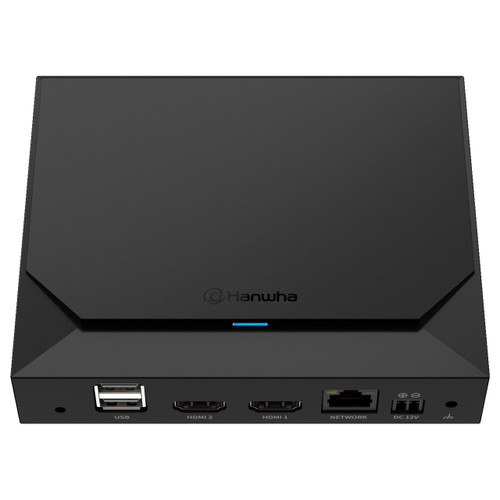
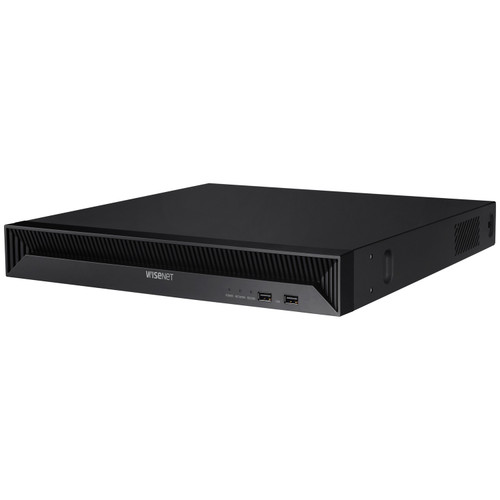
In This Guide
- What channel capacity, maximum resolution, and recording throughput does each NVR deliver?
- How do the two units compare on power delivery, storage capacity, and physical connectivity?
- What local display options, redundancy features, and management software integration does each unit provide?
- Which should you choose: the ARD-1610 or the QRN-1630S?
- Side-by-Side Specs
- FAQ
What channel capacity, maximum resolution, and recording throughput does each NVR deliver?
The ARD-1610 supports 16 analog inputs (AHD/TVI/CVI/CVBS via BNC) plus 2 additional IP channels for a total of 18 channels. Analog recording peaks at 5MP@12fps or 4MP@15fps per the spec sheet; IP channels accept up to 5MP resolution. Maximum recording bandwidth is 100Mbps.
The QRN-1630S accepts up to 16 IP channels only — there are no analog inputs. It records at up to 8MP resolution across all 16 channels, with a decoding rate of 8MP@60fps or 1080p@240fps locally. Maximum recording bandwidth is 128Mbps, with a separate playback bandwidth cap of 32Mbps.
On pure IP resolution, the QRN-1630S has a clear advantage: 8MP ceiling versus 5MP on the ARD-1610, and 128Mbps versus 100Mbps throughput. However, the ARD-1610 uniquely handles existing analog cameras — AHD, TVI, CVI, and CVBS — without separate encoders, which is the defining differentiator for hybrid or transition-era sites.
How do the two units compare on power delivery, storage capacity, and physical connectivity?
The ARD-1610 draws a maximum of 40.8W (with two 6TB HDDs installed) from a DC 12V input. It has no built-in PoE capability; analog cameras connect via 16 BNC inputs, and IP cameras require external PoE switches or injectors. Storage uses dual SATA bays supporting drives up to 6TB each, for a maximum of 12TB. Connectivity includes 1× Gigabit RJ-45, 3× USB 2.0 (front/rear), RS-485 for PTZ, 4× alarm inputs, 1× relay alarm output, and 16 BNC inputs plus 1 BNC spot output.
The QRN-1630S draws up to 200W from 100–240VAC (50/60Hz) and integrates 16× PoE+ (802.3at) RJ-45 ports (10/100) with a total PoE budget of 130W, plus 1× dedicated 1Gbps LAN/WAN uplink port. Storage uses dual SATA bays supporting drives up to 10TB each, for a maximum of 20TB. Connectivity includes 2× HDMI outputs, 1× RCA audio out, 2× USB 2.0 (front), 4× alarm inputs, and 2× alarm outputs.
The QRN-1630S offers significantly higher storage headroom (20TB vs 12TB), two alarm outputs versus one on the ARD-1610, and eliminates the need for any external PoE infrastructure. The ARD-1610's 40.8W draw versus the QRN-1630S's 200W maximum reflects the fundamental difference: the QRN-1630S powers up to 16 cameras internally while the ARD-1610 does not power any.
What local display options, redundancy features, and management software integration does each unit provide?
The ARD-1610 provides 1× HDMI (up to 4K) and 1× VGA output. Local display supports up to 20 screen divisions with 1–9 layout options. Local simultaneous playback is 18 channels; remote CMS playback is 18 channels, mobile 4 channels, and web 1 channel. Fisheye dewarping is supported via web and CMS. Smart search includes Virtual Line with direction and Enter/Exit detection. Supported viewer software includes Webviewer, Wisenet Viewer, and mobile app.
The QRN-1630S provides 2× HDMI outputs — HDMI1 at 3840×2160@30Hz and HDMI2 at 1920×1080@60Hz — with Clone and Expand modes supporting up to 16 divisions per output. Simultaneous playback reaches 40 channels total (16 local, 8 per remote user). Fisheye dewarping is supported via CMS. Viewer software includes WAVE, SSM, Webviewer, Smart Viewer, and Wisenet — a broader VMS ecosystem. Failover redundancy (N+1) is specified; both units support ARB. Camera setup on the QRN-1630S includes advanced per-camera configuration: bitrate, GOP, MD polygon zones, focus, WDR, DIS, and hallway view. The QRN-1630S also adds IPv6 support, signed firmware, and P2P setup via QR code.
The QRN-1630S's dual-HDMI, wider VMS compatibility (WAVE, SSM), N+1 failover, signed firmware, and IPv6 support position it as the more enterprise-capable management platform. The ARD-1610 adds VGA output and RS-485 PTZ serial control, which the QRN-1630S spec sheet does not list, and supports coaxial control (CVBS/Pelco-C, AHD, CVI, TVI) for analog PTZ cameras — a unique capability on hybrid sites.
Which should you choose: the ARD-1610 or the QRN-1630S?
Our take: The ARD-1610 is the stronger choice when an installation must retain existing analog cameras (AHD, TVI, CVI, or CVBS) while adding IP cameras, eliminating the cost of encoders or a full camera swap. For pure-IP deployments, the QRN-1630S is the technically superior recorder: it records at 8MP versus 5MP, delivers 128Mbps versus 100Mbps throughput, supports up to 20TB storage versus 12TB, and integrates 16× PoE+ ports with a 130W budget so no external switching infrastructure is required. The QRN-1630S also offers dual HDMI outputs (4K + 1080p simultaneously), N+1 failover redundancy, broader VMS support (WAVE, SSM), signed firmware, and IPv6 — capabilities absent from the ARD-1610 spec sheet. The ARD-1610 suits hybrid or analog-transition sites on tighter power and budget constraints; the QRN-1630S suits new full-IP builds or enterprise environments requiring higher resolution, greater storage, and integrated camera power.
Side-by-Side Comparison
Spec-for-spec, from manufacturer data.
| Specification | Hanwha ARD-1610 | Hanwha QRN-1630S |
|---|---|---|
| Product Type | Hybrid NVR (Analog + IP) | Pure IP NVR |
| Total Channels | 18 (16 analog + 2 IP) | 16 (IP only) |
| Analog Inputs | 16× BNC (AHD/TVI/CVI/CVBS) | — |
| IP Camera Inputs | 2 additional (max 18 total) | 16 (max 16 total) |
| Max Camera Resolution | 5MP | 8MP |
| Max Recording Bandwidth | 100Mbps | 128Mbps |
| Built-in PoE Ports | — | 16× PoE+ (802.3at) |
| PoE Budget | — | 130W |
| Video Outputs | 1× HDMI (4K), 1× VGA | 2× HDMI (4K@30Hz + 1080p@60Hz) |
| Max Local Display Divisions | 20 | 16 per output (Clone or Expand) |
| HDD Slots / Max Storage | 2× SATA / 12TB (2× 6TB) | 2× SATA / 20TB (2× 10TB) |
| Alarm Inputs / Outputs | 4 in / 1 relay out | 4 in / 2 out |
| USB Ports | 3× USB 2.0 | 2× USB 2.0 |
| Failover (N+1) | — | Supported |
| Max Power Draw | 40.8W (DC 12V) | 200W (100–240VAC) |
| Viewer Software | Webviewer, Wisenet Viewer, mobile app | WAVE, SSM, Webviewer, Smart Viewer, Wisenet |
Frequently Asked Questions
Which should you choose: the ARD-1610 or the QRN-1630S?
The ARD-1610 is the stronger choice when an installation must retain existing analog cameras (AHD, TVI, CVI, or CVBS) while adding IP cameras, eliminating the cost of encoders or a full camera swap. For pure-IP deployments, the QRN-1630S is the technically superior recorder: it records at 8MP versus 5MP, delivers 128Mbps versus 100Mbps throughput, supports up to 20TB storage versus 12TB, and integrates 16× PoE+ ports with a 130W budget so no external switching infrastructure is required. The QRN-1630S also offers dual HDMI outputs (4K + 1080p simultaneously), N+1 failover redundancy, broader VMS support (WAVE, SSM), signed firmware, and IPv6 — capabilities absent from the ARD-1610 spec sheet. The ARD-1610 suits hybrid or analog-transition sites on tighter power and budget constraints; the QRN-1630S suits new full-IP builds or enterprise environments requiring higher resolution, greater storage, and integrated camera power.
Can the ARD-1610 or QRN-1630S power cameras directly without a separate PoE switch?
Only the QRN-1630S can power cameras directly: it has 16 built-in PoE+ (802.3at) ports with a combined 130W PoE budget. The ARD-1610 has no PoE capability — its 16 inputs are BNC connectors for analog cameras, and any IP cameras added to its 2 network inputs require an external PoE switch or injector.
Is the ARD-1610 or QRN-1630S better for sites that still have analog cameras?
The ARD-1610 is the only option of the two that supports analog cameras. It accepts AHD, TVI, CVI, and CVBS signals on 16 BNC inputs and includes coaxial PTZ control (Pelco-C/AHD/CVI/TVI) and RS-485 serial PTZ. The QRN-1630S is a pure IP NVR with no analog inputs whatsoever.
Which unit supports higher-resolution cameras and more total storage?
The QRN-1630S supports higher resolution: its IP channels record up to 8MP, versus 5MP on the ARD-1610. It also supports more storage: dual SATA bays accept drives up to 10TB each for a 20TB maximum, compared to a 12TB maximum (2× 6TB) on the ARD-1610.
Get a Second Opinion on Your Camera Choice
Share your site layout, coverage goals, and budget. Our team will validate the camera selection, flag anything we would change, and recommend products that match the use case.