
Hanwha A6001/KDO vs i-PRO S71300A-F3: Specification Comparison
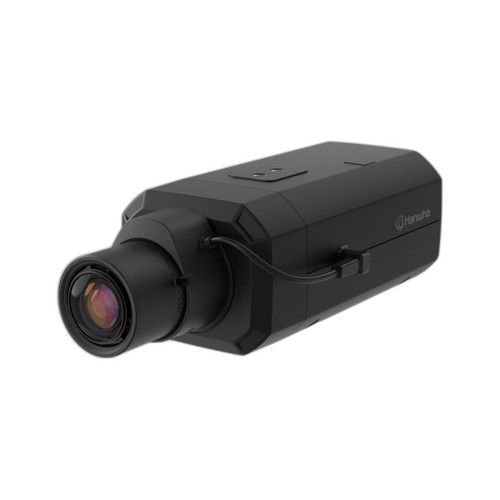
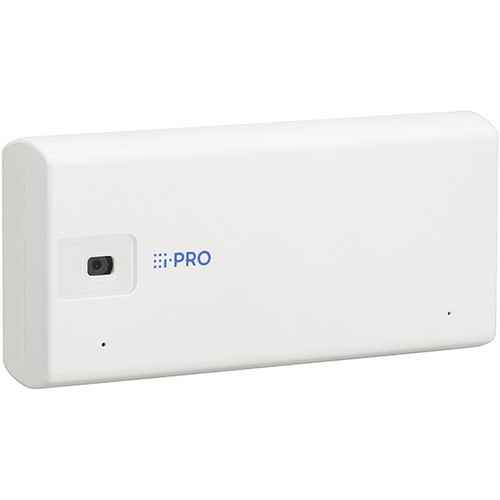
Both the Hanwha PNB-A6001/KDO and the i-PRO WV-S71300A-F3 are 2MP indoor box cameras aimed at integrators needing compact, analytics-capable fixed cameras for access points, LPR lanes, or interior monitoring. They share the same resolution class, fixed (non-PTZ) form factor, PoE power, ONVIF compatibility, and H.265/H.264/MJPEG compression. The comparison below evaluates imaging capability, installation requirements, and ecosystem fit based strictly on the specifications provided by each manufacturer.
In This Guide
How do the imaging specs compare?
The i-PRO WV-S71300A-F3 publishes detailed imaging parameters: a 1/2.8-type CMOS sensor, a fixed 3.2 mm F2.0 lens delivering an 81.1° horizontal field of view, minimum illumination of 0.2 lux (B&W), 30 fps at 1920×1080, and a shutter range of 1/10,000 s to 30 s. It includes integrated IR illumination (spec lists IR range as 0.5 m), SLANT detection distances up to 44.9 m (Detect at 25 ppm), digital noise reduction (0–255 range), Adaptive Black Stretch, BLC/HLC, fog compensation, and AGC (0–11 range). The Hanwha PNB-A6001/KDO specifies 2MP / 1920×1080 resolution but does not provide sensor size, minimum illumination, frame rate, shutter speed, WDR type/range, or lens focal length in the data provided; it uses a motorized varifocal lens, which offers focal-length flexibility the fixed-lens i-PRO unit cannot match.
For low-light performance, the i-PRO unit's 0.2 lux figure and integrated IR (with day/night ICR) are documented; the Hanwha A6001/KDO provides no published lux rating or IR capability in the supplied specifications. The A6001/KDO's motorized varifocal lens allows post-installation zoom adjustment — a practical advantage for LPR or distance-sensitive deployments — while the S71300A-F3's fixed 3.2 mm lens is factory-set. Extra digital zoom (1.0×–3.0×) is available on the i-PRO at 640×360 resolution.
What about installation and environment?
The i-PRO WV-S71300A-F3 carries an IP44 rating (protected against solid objects >1 mm and water splashing from any direction) and an operating temperature range of −10 °C to +40 °C (14 °F to 104 °F). It weighs approximately 157 g (excluding base/cover) and is finished in PC resin and aluminum die-casting. Power is PoE Class 0 (802.3af, approximately 12 W typical). No IK impact rating is stated in the provided specs.
The Hanwha PNB-A6001/KDO accepts PoE 802.3af or 12V DC — giving installers a dual-power option the i-PRO does not list. Its operating temperature is 0 °C to +55 °C, a narrower cold-end range than the i-PRO (which reaches −10 °C) but a higher upper limit (+55 °C vs +40 °C), making it more tolerant of warm indoor environments such as server rooms or sun-exposed enclosures. No IP rating, IK rating, weight, or physical dimensions are stated in the Hanwha specs provided. Both units are specified for indoor use.
Which fits your VMS and analytics better?
The Hanwha PNB-A6001/KDO integrates natively with Wisenet WAVE and SSM VMS platforms and supports ONVIF Profile S, G, and T. Its Wisenet 7 SoC enables AI deep-learning object classification; the spec cites this capability but does not enumerate specific detection types or counts in the data provided. The camera is TAA and NDAA compliant, making it eligible for U.S. federal procurement — a qualification the i-PRO S71300A-F3 spec does not assert in the data provided.
The i-PRO WV-S71300A-F3 lists ONVIF compatibility and enumerates eight AI detection types including people, faces, vehicles, non-mask detection, and occupancy, plus AI sound classification covering gunshot, yell, vehicle horn, and glass break via two built-in omnidirectional electret condenser microphones. It supports up to 14 simultaneous users, microSD edge storage, Video Motion Detection (4 areas), Scene Change Detection (1 area), Privacy Zone masking (up to 8 zones), VIQS (up to 8 zones), image rotation (0°/90°/180°/270°), and signed firmware with HTTPS encryption. Audio compression formats include G.726, G.711, and AAC-LC (16–128 kbps). The Hanwha spec does not list edge storage support, a simultaneous-user count, or specific audio specifications in the data provided. The i-PRO carries a stated 5-year warranty; Hanwha's warranty term is not stated in the provided specs.
Which should you choose: the A6001/KDO or the S71300A-F3?
Our take: The i-PRO WV-S71300A-F3 is the stronger choice when the priority is documented imaging performance, richer enumerated analytics, and audio classification out of the box. Key spec deltas: the i-PRO publishes a 0.2 lux minimum illumination and integrated IR with a −10 °C cold-floor, while the Hanwha provides no lux figure or IR capability in the supplied data; the i-PRO lists eight named AI detection types plus four AI audio classes against Hanwha's unquantified 'deep-learning object classification'; and the i-PRO includes a stated 5-year warranty versus no warranty term disclosed for the Hanwha. Conversely, choose the Hanwha PNB-A6001/KDO when TAA/NDAA federal-procurement compliance is a hard requirement, when a motorized varifocal lens is needed for post-installation framing adjustment, when the deployment environment exceeds +40 °C (the Hanwha is rated to +55 °C), or when the site already runs Wisenet WAVE or SSM as the primary VMS platform.
Side-by-Side Comparison
Spec-for-spec, from manufacturer data.
| Specification | Hanwha A6001/KDO | i-PRO S71300A-F3 |
|---|---|---|
| Resolution | 2MP (1920×1080) | 2MP (1920×1080) |
| Image Sensor | Not specified in provided specs | Approx. 1/2.8-type CMOS |
| Lens Type | Motorized Varifocal | Fixed 3.2 mm, F2.0 |
| Horizontal Field of View | Not specified in provided specs | 81.1° |
| Max Frame Rate | Not specified in provided specs | 30 fps |
| Minimum Illumination | Not specified in provided specs | 0.2 lux (B&W) |
| IR Illumination | Not specified in provided specs | Integrated IR (0.5 m listed) |
| Day/Night (ICR) | Not specified in provided specs | Yes (Auto/Off) |
| Video Compression | H.265 / H.264 / MJPEG / WiseStream II | H.265 / H.264 / MJPEG |
| IP Rating | Not specified in provided specs | IP44 (IEC 60529) |
| Operating Temperature | 0 °C to +55 °C | −10 °C to +40 °C |
| Power Input / PoE Class | PoE 802.3af or 12V DC | PoE Class 0 (802.3af, ~12W) |
| Edge Storage | Not specified in provided specs | microSD |
| Built-in Audio | Not specified in provided specs | 2× omnidirectional microphones; G.726 / G.711 / AAC-LC |
| AI Analytics | Deep-learning object classification (Wisenet 7 SoC) | 8 detection types; AI sound classification (4 types) |
| VMS / Protocol | Wisenet WAVE, SSM, ONVIF Profile S/G/T | ONVIF |
| TAA / NDAA Compliance | Yes | Not specified in provided specs |
| Warranty | Not specified in provided specs | 5-Year |
| Weight | Not specified in provided specs | 157 g (excl. base/cover) |
Frequently Asked Questions
Which should you choose: the A6001/KDO or the S71300A-F3?
The i-PRO WV-S71300A-F3 is the stronger choice when the priority is documented imaging performance, richer enumerated analytics, and audio classification out of the box. Key spec deltas: the i-PRO publishes a 0.2 lux minimum illumination and integrated IR with a −10 °C cold-floor, while the Hanwha provides no lux figure or IR capability in the supplied data; the i-PRO lists eight named AI detection types plus four AI audio classes against Hanwha's unquantified 'deep-learning object classification'; and the i-PRO includes a stated 5-year warranty versus no warranty term disclosed for the Hanwha. Conversely, choose the Hanwha PNB-A6001/KDO when TAA/NDAA federal-procurement compliance is a hard requirement, when a motorized varifocal lens is needed for post-installation framing adjustment, when the deployment environment exceeds +40 °C (the Hanwha is rated to +55 °C), or when the site already runs Wisenet WAVE or SSM as the primary VMS platform.
Is the PNB-A6001/KDO or WV-S71300A-F3 better for low-light performance?
Based on the specifications provided, the i-PRO WV-S71300A-F3 has a documented minimum illumination of 0.2 lux along with integrated IR illumination and a day/night ICR filter. The Hanwha PNB-A6001/KDO does not publish a minimum illumination figure or IR capability in the specs provided, so a direct low-light comparison cannot be made from available data.
Which camera is required for U.S. federal or government procurement?
The Hanwha PNB-A6001/KDO is explicitly specified as TAA and NDAA compliant in the data provided, making it eligible for U.S. federal procurement under the Trade Agreements Act. The i-PRO WV-S71300A-F3 spec does not assert TAA or NDAA compliance in the data provided.
Does either camera include built-in audio, and how do their analytics compare?
The i-PRO WV-S71300A-F3 includes two built-in omnidirectional electret condenser microphones with AI sound classification for gunshot, yell, vehicle horn, and glass break, and lists eight AI detection types (people, faces, vehicles, non-mask, occupancy, and others). The Hanwha PNB-A6001/KDO specifies AI deep-learning object classification via its Wisenet 7 SoC but does not enumerate specific detection types or built-in audio capabilities in the specs provided.
Get a Second Opinion on Your Camera Choice
Share your site layout, coverage goals, and budget. Our team will validate the camera selection, flag anything we would change, and recommend products that match the use case.