
Geovision TBL480W-0010 vs Geovision TDR4702-0F10: Specification Comparison
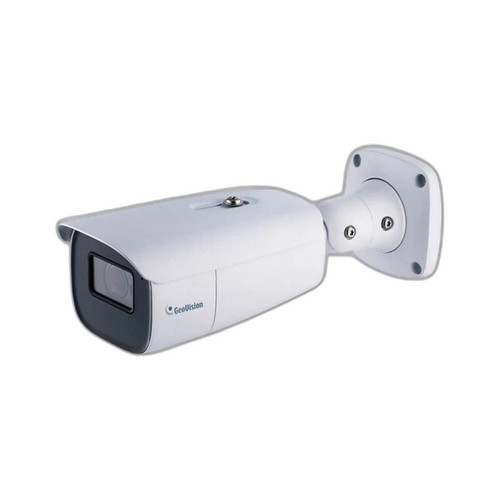
Both the Geovision TBL480W-0010 and TDR4702-0F10 are 4MP bullet-form IP cameras in Geovision's lineup, targeting fixed-installation surveillance deployments. This comparison examines how they differ across imaging capability, installation requirements, and VMS integration—helping installers and IT buyers determine which unit better suits their specific site conditions and infrastructure. Neither model is a PTZ; both share H.265 compression and PoE power delivery, making them legitimate cross-shop candidates for entry-level to mid-tier fixed camera positions.
In This Guide
How do the imaging specs compare?
Both cameras deliver 4MP resolution with H.265 compression, which the specs confirm reduces bandwidth and storage overhead approximately 50% versus H.264. The TBL480W-0010 specifies WDR Pro, a higher-grade wide dynamic range implementation, whereas the TDR4702-0F10 lists only WDR without a tier designation—a meaningful distinction in high-contrast scenes such as backlit entryways or parking structures where dynamic range processing directly determines shadow and highlight detail.
On low-light performance, both cameras use 850nm IR illumination, but the TBL480W-0010 explicitly documents 850nm in its spec set. The TDR4702-0F10 confirms IR presence without specifying wavelength. The TDR4702-0F10 provides a concrete lens specification—2.8mm fixed focal length—whereas no lens data is published for the TBL480W-0010. Buyers selecting the TBL480W-0010 should verify focal length from the datasheet at /content/product-datasheets/84-TBL480W-0010.pdf before committing to a field-of-view layout. Minimum illumination figures, sensor size, and IR range in meters are not specified for either model in the provided data.
What about installation and environment?
The TBL480W-0010 supports wall and ceiling mounting, giving installers flexibility for both overhead and side-wall placements. The TDR4702-0F10 is rated for wall and eave mounting, which suits soffit and overhang installations common at building perimeters and loading docks. Neither model has IP ingress protection rating, IK impact rating, or operating temperature range published in the provided specifications—installers must consult the respective datasheets before deploying in outdoor or harsh environments.
Power delivery differs in specificity: the TDR4702-0F10 explicitly calls out IEEE 802.3af PoE compliance, which caps injector or switch port draw at 15.4W and is the more universally supported standard on mid-tier switches. The TBL480W-0010 documents PoE power without citing an 802.3af or 802.3at class designation—buyers using 802.3af-only infrastructure should confirm compatibility via the TBL480W-0010 datasheet. Neither model lists cable conduit requirements, dimensions, or weight in the provided data.
Which fits your VMS and analytics better?
The TBL480W-0010 explicitly lists ONVIF Profile S compliance alongside Geovision-native VMS support and third-party NVR platform compatibility, making it the documented choice for mixed-vendor deployments. The TDR4702-0F10 also lists ONVIF Profile S but does not enumerate Geovision-native or third-party NVR compatibility in its spec set—this omission does not necessarily mean incompatibility, but it is not confirmed in the available data.
Neither model has edge analytics, on-board storage, audio input/output, or alarm I/O documented in the provided specifications. Buyers requiring these capabilities—motion detection zones, SD card recording, or two-way audio—must reference the full datasheets. The TBL480W-0010 connectivity spec notes PoE with a 'straightforward' integration descriptor; the TDR4702-0F10 uses 'reliable'—neither term carries a quantifiable spec meaning and should not be treated as a differentiator.
Which should you choose: the TBL480W-0010 or the TDR4702-0F10?
Our take: The TBL480W-0010 is the stronger choice when dynamic range performance and multi-VMS integration breadth are priorities. It specifies WDR Pro versus the TDR4702-0F10's untiered WDR—a concrete imaging advantage in high-contrast scenes. It also explicitly documents Geovision-native and third-party NVR compatibility alongside ONVIF Profile S, while the TDR4702-0F10 confirms only ONVIF Profile S. The TDR4702-0F10 holds one clear advantage: its 2.8mm fixed lens is documented, enabling field-of-view planning without a datasheet lookup, and its 802.3af PoE class is explicitly stated—useful on budget switch infrastructure. Neither model publishes IP rating, IK rating, temperature range, IR distance, or minimum illumination in the provided data, so outdoor or low-light-critical deployments require datasheet review before selection. Choose the TBL480W-0010 for mixed-VMS environments with demanding lighting; choose the TDR4702-0F10 where confirmed 802.3af compliance and a known focal length are the deciding constraints.
Side-by-Side Comparison
Spec-for-spec, from manufacturer data.
| Specification | Geovision TBL480W-0010 | Geovision TDR4702-0F10 |
|---|---|---|
| Resolution | 4MP | 4MP |
| Form Factor | Bullet | Bullet |
| Video Compression | H.265 | H.265 |
| WDR | WDR Pro | WDR |
| IR / Low-Light | IR (850nm) | IR (wavelength not specified) |
| Lens / Focal Length | — | 2.8mm fixed |
| Power Input / PoE Class | PoE (class not specified) | PoE (802.3af) |
| Mount Type | Wall; Ceiling | Wall; Eave |
| ONVIF | ONVIF Profile S | ONVIF Profile S |
| VMS Compatibility | ONVIF Profile S; Geovision; Third-party NVR | ONVIF Profile S |
Frequently Asked Questions
Which should you choose: the TBL480W-0010 or the TDR4702-0F10?
The TBL480W-0010 is the stronger choice when dynamic range performance and multi-VMS integration breadth are priorities. It specifies WDR Pro versus the TDR4702-0F10's untiered WDR—a concrete imaging advantage in high-contrast scenes. It also explicitly documents Geovision-native and third-party NVR compatibility alongside ONVIF Profile S, while the TDR4702-0F10 confirms only ONVIF Profile S. The TDR4702-0F10 holds one clear advantage: its 2.8mm fixed lens is documented, enabling field-of-view planning without a datasheet lookup, and its 802.3af PoE class is explicitly stated—useful on budget switch infrastructure. Neither model publishes IP rating, IK rating, temperature range, IR distance, or minimum illumination in the provided data, so outdoor or low-light-critical deployments require datasheet review before selection. Choose the TBL480W-0010 for mixed-VMS environments with demanding lighting; choose the TDR4702-0F10 where confirmed 802.3af compliance and a known focal length are the deciding constraints.
Is the TBL480W-0010 or TDR4702-0F10 better for low-light performance?
Based on available specs, both cameras use IR illumination, but the TBL480W-0010 explicitly documents 850nm IR wavelength while the TDR4702-0F10 confirms IR without specifying wavelength. Neither model publishes minimum illumination (lux) figures or IR range in meters in the provided data, so a definitive low-light ranking requires consulting each camera's datasheet.
Will both cameras work with my existing non-Geovision NVR?
The TBL480W-0010 explicitly lists ONVIF Profile S, Geovision VMS, and third-party NVR platform compatibility. The TDR4702-0F10 lists ONVIF Profile S only—third-party NVR support is not confirmed in its published specs. For mixed-vendor NVR environments, the TBL480W-0010 has stronger documented compatibility claims.
Which camera is safer to deploy on a standard 802.3af PoE switch?
The TDR4702-0F10 explicitly specifies 802.3af PoE compliance, which is the 15.4W standard supported by most mid-tier managed switches. The TBL480W-0010 documents PoE power without citing an 802.3af or 802.3at class, so its draw requirements should be confirmed via its datasheet before deploying on 802.3af-only infrastructure.
Get a Second Opinion on Your Camera Choice
Share your site layout, coverage goals, and budget. Our team will validate the camera selection, flag anything we would change, and recommend products that match the use case.