
Geovision EFD2700-2010 vs Geovision VD25000-001U: Specification Comparison
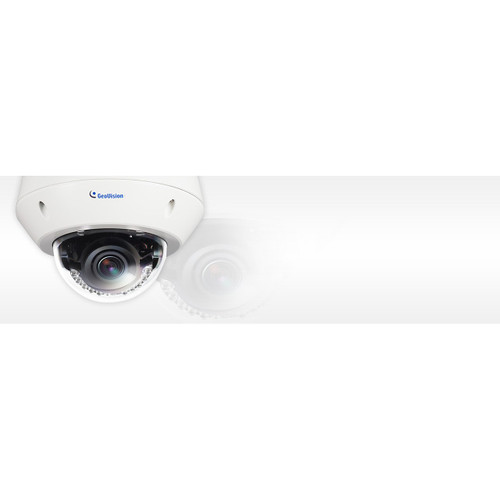
Both the Geovision EFD2700-2010 and the VD25000-001U are 2MP PoE dome cameras from Geovision, designed for indoor or mixed-use IP surveillance deployments. They share a common resolution class, dome form factor, Ethernet connectivity, and ONVIF support, making them legitimate cross-shop candidates for integrators scoping entry-level fixed-camera installations. The comparison centers on where they diverge: environmental hardening, lens flexibility, low-light capability, and VMS protocol depth.

In This Guide
How do the imaging specs compare?
Both cameras deliver 2MP resolution with IR night vision. The EFD2700-2010 lists WDR as a specified feature, which benefits scenes with mixed lighting such as lobbies or doorways where bright backgrounds can wash out subject detail. The VD25000-001U does not list WDR in its provided specs; that capability is therefore not confirmed for that model.
On low-light performance, the VD25000-001U explicitly specifies an IR, Day/Night, and Super Low Lux capability, suggesting a more detailed low-light specification. The EFD2700-2010 lists IR and Night Vision but does not include a Super Low Lux designation. The VD25000-001U also specifies a varifocal 3–9mm lens, allowing field-of-view adjustment at installation without changing optics. The EFD2700-2010 does not have a lens focal length listed in the provided specs. Compression: the EFD2700-2010 specifies H.265; compression codec for the VD25000-001U is not stated in the provided specs.
What about installation and environment?
The VD25000-001U is rated IP66 and specified for an operating temperature range of -40°C to 60°C, making it explicitly suited for outdoor or harsh indoor environments subject to dust, water ingress, and temperature extremes. It is also described as a vandal dome, implying a mechanically hardened housing, though no IK impact rating number is provided in the specs. The EFD2700-2010 carries no IP rating and no operating temperature range in the provided specs, which limits the verifiable suitability claim to controlled interior environments.
Both cameras are PoE-powered over Ethernet, eliminating separate power runs. The VD25000-001U specifies PoE 802.3af/at, confirming compatibility with standard and high-power PoE switches. The EFD2700-2010 lists PoE but does not specify the 802.3 class in the provided specs. Both models support ceiling and wall mounting in a dome form factor.
Which fits your VMS and analytics better?
The VD25000-001U is listed as ONVIF Profile S/T compliant. Profile T adds H.265 streaming, HTTPS, and metadata extensions beyond the baseline Profile S, giving it broader compatibility with modern VMS platforms that leverage those capabilities. The EFD2700-2010 is listed as ONVIF Profile S only, which covers core video streaming and PTZ but lacks the Profile T extensions.
Neither camera lists edge analytics, on-board storage, or audio capabilities in the provided specifications. Integrators requiring those features should consult the respective datasheets. Both cameras reference datasheet documents that may contain additional detail not captured in the specs above.
Which should you choose: the EFD2700-2010 or the VD25000-001U?
Our take: The VD25000-001U is the stronger choice when the deployment involves outdoor exposure, temperature extremes, or vandalism risk. Its IP66 rating, -40°C to 60°C operating range, and vandal-dome construction are all confirmed in the specs, whereas the EFD2700-2010 carries no IP or temperature rating in the provided data. The VD25000-001U also adds a varifocal 3–9mm lens for field-adjustable field of view, Super Low Lux low-light designation, and ONVIF Profile S/T versus the EFD2700-2010's Profile S only. Conversely, the EFD2700-2010 specifies WDR and H.265 compression, neither of which is confirmed for the VD25000-001U in the available specs. For controlled interior environments where WDR and confirmed H.265 efficiency matter more than environmental hardening, the EFD2700-2010 remains a valid option, but buyers should verify compression codec for the VD25000-001U via its datasheet before making a final decision.
Side-by-Side Comparison
Spec-for-spec, from manufacturer data.
| Specification | Geovision EFD2700-2010 | Geovision VD25000-001U |
|---|---|---|
| Resolution | 2 MP | 2 MP |
| Type | Mini Dome IP Camera | IR Vandal Dome Camera |
| Lens / Focal Length | — | Varifocal 3–9mm |
| Low-Light Mode | IR / Night Vision | IR / Day-Night / Super Low Lux |
| WDR | Yes | — |
| Video Compression | H.265 | — |
| IP Rating | — | IP66 |
| IK / Impact Rating | — | — (vandal-resistant; no IK number specified) |
| Operating Temperature | — | -40°C to 60°C |
| Power Input / PoE Class | PoE | PoE (802.3af/at) |
| ONVIF Profile | Profile S | Profile S/T |
| Mount Type | Ceiling; Wall | Ceiling; Wall |
| Form Factor | Dome | Dome |
| Connectivity | Ethernet | Ethernet |
Frequently Asked Questions
Which should you choose: the EFD2700-2010 or the VD25000-001U?
The VD25000-001U is the stronger choice when the deployment involves outdoor exposure, temperature extremes, or vandalism risk. Its IP66 rating, -40°C to 60°C operating range, and vandal-dome construction are all confirmed in the specs, whereas the EFD2700-2010 carries no IP or temperature rating in the provided data. The VD25000-001U also adds a varifocal 3–9mm lens for field-adjustable field of view, Super Low Lux low-light designation, and ONVIF Profile S/T versus the EFD2700-2010's Profile S only. Conversely, the EFD2700-2010 specifies WDR and H.265 compression, neither of which is confirmed for the VD25000-001U in the available specs. For controlled interior environments where WDR and confirmed H.265 efficiency matter more than environmental hardening, the EFD2700-2010 remains a valid option, but buyers should verify compression codec for the VD25000-001U via its datasheet before making a final decision.
Is the EFD2700-2010 or VD25000-001U better for outdoor or harsh-environment use?
The VD25000-001U is the documented choice for outdoor or harsh use. Its IP66 rating and -40°C to 60°C operating range are confirmed in the provided specs. The EFD2700-2010 has no IP rating or operating temperature listed in the available specs, so outdoor suitability cannot be verified from the data provided.
Which camera gives me more VMS compatibility flexibility?
The VD25000-001U specifies ONVIF Profile S/T, which includes Profile T extensions for H.265, HTTPS, and metadata. The EFD2700-2010 specifies ONVIF Profile S only. If your VMS leverages Profile T capabilities, the VD25000-001U has the confirmed advantage; both will work on any Profile S-compatible platform.
Does either camera support audio or on-board storage?
Neither camera lists audio input/output or on-board edge storage in the provided specifications. Consult the individual datasheets at the paths listed for each product before specifying either model for a deployment that requires those features.
Get a Second Opinion on Your Camera Choice
Share your site layout, coverage goals, and budget. Our team will validate the camera selection, flag anything we would change, and recommend products that match the use case.