
Geovision ABL471W-0010 vs Geovision TBL4710-0010: Specification Comparison
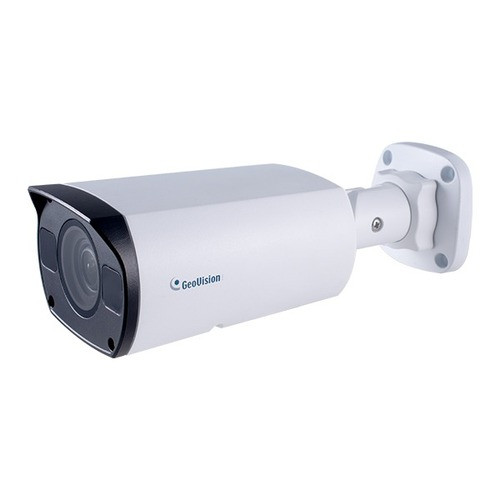
Both the Geovision ABL471W-0010 and TBL4710-0010 are 4MP fixed bullet cameras from the same manufacturer, targeting perimeter and facade surveillance applications with PoE-capable Ethernet connectivity and IR night vision. This comparison covers the spec-documented differences in lens configuration, compression codec support, cable category classification, VMS compatibility scope, and mounting options to help installers and IT buyers determine which model better suits their specific deployment infrastructure.

In This Guide
How do the imaging specs compare?
Both cameras deliver 4MP resolution with WDR Pro and IR-based low-light capability. The ABL471W-0010 specifies a 4.3mm fixed lens and identifies its IR wavelength as 850nm; the TBL4710-0010 does not document a focal length or IR wavelength in the provided specifications, making direct lens and IR-reach comparisons impossible from available data.
Compression support is a documented difference: the ABL471W-0010 supports both H.265 and H.264, giving installers a fallback codec for older NVR platforms. The TBL4710-0010 lists H.265 only. Neither camera's specifications document minimum illumination figures, maximum frame rate, or image sensor size, so no comparison on those parameters is possible.
What about installation and environment?
Both units share a bullet form factor with wall-mount support. The TBL4710-0010 additionally specifies pole mounting, which the ABL471W-0010 does not list. The ABL471W-0010 is classified under cable category IPCAM; the TBL4710-0010 falls under MPCam. Neither model's provided specifications include IP ingress rating, IK impact rating, operating temperature range, or dimensional/weight data, so environmental suitability cannot be compared from the supplied spec sets.
Power input is listed as PoE Ethernet for the ABL471W-0010. The TBL4710-0010 does not explicitly state PoE in the provided specifications, though its cable category (MPCam) and connectivity context suggest powered cabling; buyers should confirm power method from the full datasheet before specifying.
Which fits your VMS and analytics better?
The ABL471W-0010 declares ONVIF Profile S compliance, making it interoperable with any ONVIF Profile S-compatible NVR or VMS platform. The TBL4710-0010 lists compatibility with Geovision software and 'ONVIF-compatible VMS' but does not specify a Profile level (S, T, or G), which may affect feature depth with third-party platforms. Neither camera's provided specifications document edge analytics, audio input/output, or onboard SD card storage, so those integration dimensions cannot be compared.
Which should you choose: the ABL471W-0010 or the TBL4710-0010?
Our take: The ABL471W-0010 is the stronger choice when third-party VMS interoperability and codec flexibility are priorities. It explicitly certifies ONVIF Profile S — a concrete interoperability guarantee the TBL4710-0010 does not match in its provided specs — and supports both H.265 and H.264, accommodating legacy NVR infrastructure the TBL4710-0010's H.265-only codec cannot serve. The ABL471W-0010 also documents a specific 4.3mm focal length and 850nm IR wavelength, giving installers calculable field-of-view and IR-range data; the TBL4710-0010 provides neither figure. Conversely, the TBL4710-0010 is the better fit where pole mounting is required, as that option is absent from the ABL471W-0010's listed mount types. Where IP rating, temperature range, and audio are decision factors, both datasheets must be consulted directly, as neither spec set supplies those values.
Side-by-Side Comparison
Spec-for-spec, from manufacturer data.
| Specification | Geovision ABL471W-0010 | Geovision TBL4710-0010 |
|---|---|---|
| Resolution | 4 MP | 4 MP |
| Form Factor | Bullet | Bullet |
| Lens / Focal Length | 4.3mm fixed | — |
| IR Illumination | Yes — 850nm | Yes — wavelength not specified |
| WDR | WDR Pro | WDR Pro |
| Video Compression | H.265; H.264 | H.265 |
| ONVIF | Profile S | ONVIF-compatible (profile not specified) |
| VMS Compatibility | ONVIF Profile S | Geovision software; ONVIF-compatible VMS |
| Mount Type | Wall | Wall; Pole |
| Power Input | PoE | Not specified in provided specs |
| Cable Category | IPCAM | MPCam |
Frequently Asked Questions
Which should you choose: the ABL471W-0010 or the TBL4710-0010?
The ABL471W-0010 is the stronger choice when third-party VMS interoperability and codec flexibility are priorities. It explicitly certifies ONVIF Profile S — a concrete interoperability guarantee the TBL4710-0010 does not match in its provided specs — and supports both H.265 and H.264, accommodating legacy NVR infrastructure the TBL4710-0010's H.265-only codec cannot serve. The ABL471W-0010 also documents a specific 4.3mm focal length and 850nm IR wavelength, giving installers calculable field-of-view and IR-range data; the TBL4710-0010 provides neither figure. Conversely, the TBL4710-0010 is the better fit where pole mounting is required, as that option is absent from the ABL471W-0010's listed mount types. Where IP rating, temperature range, and audio are decision factors, both datasheets must be consulted directly, as neither spec set supplies those values.
Is the ABL471W-0010 or TBL4710-0010 better for low light?
Both cameras use IR illumination and WDR Pro. Only the ABL471W-0010 documents its IR wavelength (850nm); neither camera provides a minimum illumination lux figure in the supplied specifications, so a definitive low-light performance comparison cannot be made from available data alone. Consult the full datasheets for illumination ratings.
Can I integrate either camera with a non-Geovision NVR?
The ABL471W-0010 explicitly certifies ONVIF Profile S, confirming broad multi-vendor NVR compatibility. The TBL4710-0010 claims general 'ONVIF-compatible VMS' support but does not specify an ONVIF Profile level, which may limit feature availability on some third-party platforms. If third-party VMS integration is critical, the ABL471W-0010's Profile S certification is the safer specified choice.
Which camera supports more flexible mounting?
The TBL4710-0010 lists both wall and pole mounting. The ABL471W-0010 specifies wall mounting only. For pole-mounted perimeter deployments, the TBL4710-0010 has documented mounting flexibility that the ABL471W-0010 does not.
Get a Second Opinion on Your Camera Choice
Share your site layout, coverage goals, and budget. Our team will validate the camera selection, flag anything we would change, and recommend products that match the use case.