
Geovision ABL470W-0010 vs Geovision TBL480W-0010: Specification Comparison
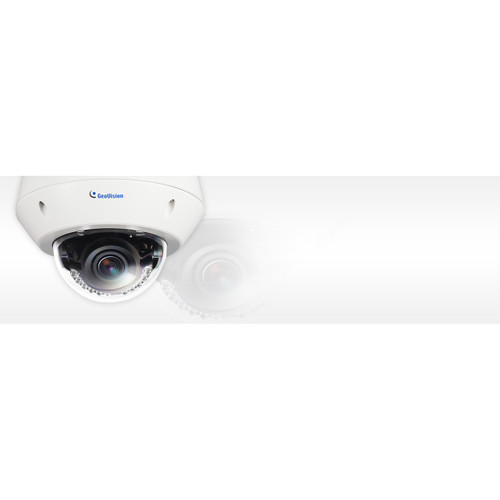
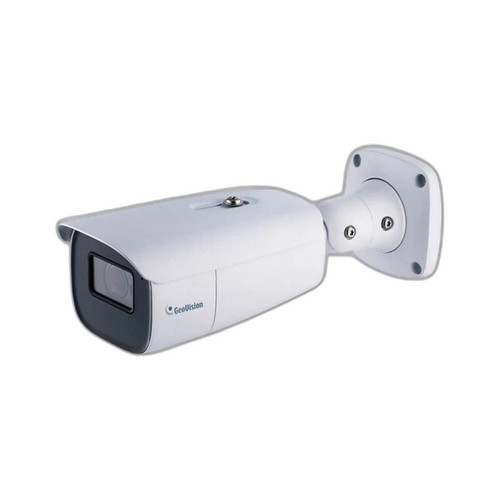
The Geovision ABL470W-0010 and TBL480W-0010 are both 4MP H.265 outdoor bullet IP cameras from Geovision, positioned in the same resolution class and sharing a fixed-lens, bullet form factor. Both support ONVIF Profile S and IR night vision. This comparison examines where their imaging capabilities, installation requirements, and integration characteristics diverge to help installers and IT buyers determine which unit better suits a given deployment.
In This Guide
How do the imaging specs compare?
Both cameras deliver 4MP resolution with H.265 compression, which Geovision rates at approximately 50% bandwidth and storage savings versus H.264. The ABL470W-0010 specifies a 4mm fixed lens, providing a defined field of view for perimeter and mid-range coverage. The TBL480W-0010 does not specify a focal length in the provided data, so lens-to-lens comparison cannot be made from available specs alone.
On low-light and WDR performance, the two models diverge meaningfully. The ABL470W-0010 lists WDR and IR with low-lux capability but does not specify IR wavelength. The TBL480W-0010 specifies 850nm IR and WDR Pro — a higher WDR tier than the standard WDR on the ABL470W-0010 — suggesting improved handling of high-contrast scenes such as entrance/exit points with mixed artificial and ambient light. Minimum illumination figures are not provided for either model.
What about installation and environment?
The ABL470W-0010 supports Wall and Pole mounting, which is well-suited to perimeter fence lines and exterior column installations. The TBL480W-0010 supports Wall and Ceiling mounting, making it more applicable to soffit, overhang, or interior-facing exterior mounting scenarios. Both are bullet form factor cameras. IP/IK ratings, operating temperature range, and physical dimensions are not provided for either model in the supplied specifications.
Power delivery is a notable differentiator: the TBL480W-0010 explicitly lists PoE (Power over Ethernet) as its power source, simplifying cabling by consolidating data and power on a single run. The ABL470W-0010 does not specify PoE or any power input method in the provided specs, meaning power requirements should be confirmed against the product datasheet before designing the power infrastructure.
Which fits your VMS and analytics better?
Both cameras declare ONVIF Profile S compliance, enabling interoperability with standards-compliant VMS platforms and NVRs from multiple manufacturers. The TBL480W-0010 additionally lists explicit compatibility with Geovision VMS and third-party NVR platforms in its VMS_Compatibility field, while the ABL470W-0010 lists ONVIF Profile S only. In practice, both should integrate with any ONVIF Profile S compliant system, but the TBL480W-0010's broader declared compatibility list may reduce pre-deployment validation effort on mixed-vendor projects.
Edge analytics, audio input/output, and onboard storage (SD card) are not specified for either model in the provided data. Buyers requiring local recording, two-way audio, or advanced edge analytics should consult the full datasheets at the paths provided before finalizing selection.
Which should you choose: the ABL470W-0010 or the TBL480W-0010?
Our take: The TBL480W-0010 is the stronger choice when PoE infrastructure is in place, high-contrast scene handling is a priority, and the installation calls for ceiling or soffit mounting. Its specified 850nm IR wavelength, WDR Pro tier (versus standard WDR on the ABL470W-0010), and explicit PoE power delivery are concrete differentiators in scenes with variable lighting. The ABL470W-0010 has the advantage of a specified 4mm fixed lens — giving the installer a known field of view for layout planning — and supports pole mounting, which suits perimeter fence and exterior column deployments. Where the TBL480W-0010's lens, operating temperature, and power draw are unconfirmed from available specs, installers must verify those parameters against the full datasheet before finalizing. If power runs are already conduit-separate, either camera may be viable, but the TBL480W-0010's WDR Pro and PoE make it the default for entrance/exit or high-contrast environments.
Side-by-Side Comparison
Spec-for-spec, from manufacturer data.
| Specification | Geovision ABL470W-0010 | Geovision TBL480W-0010 |
|---|---|---|
| Resolution | 4 MP | 4 MP |
| Camera Type | 4MP IR Bullet Camera | 4MP Bullet IP Camera |
| Form Factor | Bullet | Bullet |
| Lens / Focal Length | 4mm fixed | — |
| IR Night Vision | IR; low-lux | IR (850nm) |
| WDR | WDR | WDR Pro |
| Video Compression | H.265 | H.265 |
| ONVIF | Profile S | Profile S |
| VMS Compatibility | ONVIF Profile S | ONVIF Profile S; Geovision; Third-party NVR |
| Power Input / PoE | — | PoE |
| Mount Type | Wall; Pole | Wall; Ceiling |
Frequently Asked Questions
Which should you choose: the ABL470W-0010 or the TBL480W-0010?
The TBL480W-0010 is the stronger choice when PoE infrastructure is in place, high-contrast scene handling is a priority, and the installation calls for ceiling or soffit mounting. Its specified 850nm IR wavelength, WDR Pro tier (versus standard WDR on the ABL470W-0010), and explicit PoE power delivery are concrete differentiators in scenes with variable lighting. The ABL470W-0010 has the advantage of a specified 4mm fixed lens — giving the installer a known field of view for layout planning — and supports pole mounting, which suits perimeter fence and exterior column deployments. Where the TBL480W-0010's lens, operating temperature, and power draw are unconfirmed from available specs, installers must verify those parameters against the full datasheet before finalizing. If power runs are already conduit-separate, either camera may be viable, but the TBL480W-0010's WDR Pro and PoE make it the default for entrance/exit or high-contrast environments.
Is the ABL470W-0010 or TBL480W-0010 better for low-light performance?
Based on the provided specifications, the TBL480W-0010 has an advantage: it specifies 850nm IR and WDR Pro, a higher WDR tier than the standard WDR listed for the ABL470W-0010. The ABL470W-0010 notes low-lux capability alongside its IR spec, but no IR wavelength or minimum illumination figure is given for either model. For definitive low-light comparison, both datasheets should be consulted for minimum illumination values.
Can I power the ABL470W-0010 over Ethernet the same way as the TBL480W-0010?
The TBL480W-0010 explicitly lists PoE as its power source. The ABL470W-0010 does not specify a power input method in the available specs. Before assuming PoE compatibility on the ABL470W-0010, verify its power requirements in the product datasheet at /content/product-datasheets/84-ABL470W-0010.pdf.
Will both cameras work with my non-Geovision NVR?
Both cameras declare ONVIF Profile S compliance, which is the standard baseline for cross-vendor VMS and NVR interoperability. The TBL480W-0010 additionally lists Geovision VMS and third-party NVR platforms in its compatibility spec, while the ABL470W-0010 lists ONVIF Profile S only. In practice, any ONVIF Profile S compliant recorder should support both; edge-case feature availability (motion events, two-way audio) should be validated per VMS vendor documentation.
Get a Second Opinion on Your Camera Choice
Share your site layout, coverage goals, and budget. Our team will validate the camera selection, flag anything we would change, and recommend products that match the use case.